

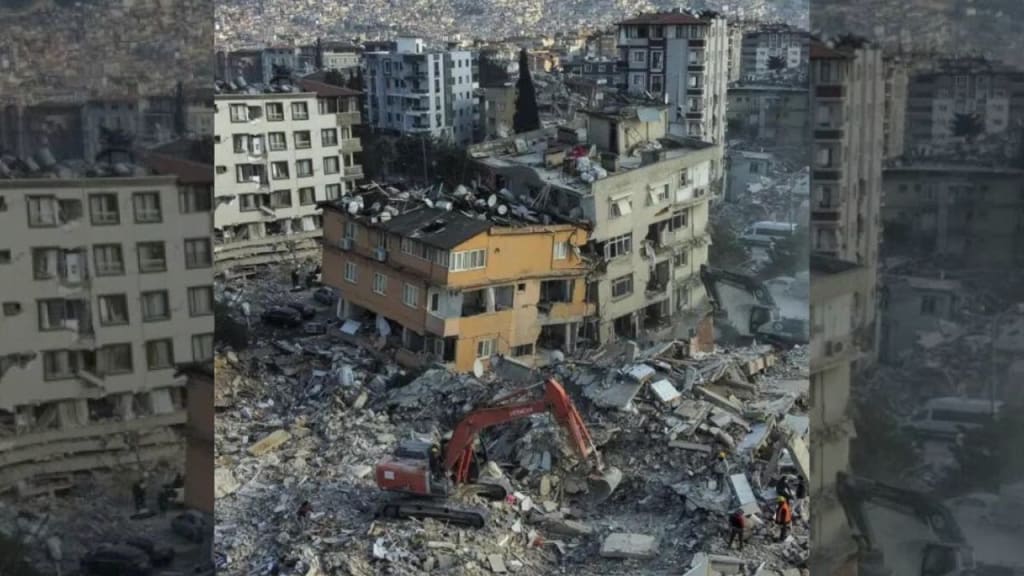
Earthquakes: Nature's Unpredictable Fury
Introduction:
Earthquakes, the relentless force of nature that can strike without warning, have fascinated and terrified humanity throughout history. These ground-shaking events are a result of the Earth's complex and dynamic geological processes. This article will delve into the science of earthquakes, their causes, effects, and the crucial measures we can take to mitigate their impact.
Understanding Earthquakes: A Geological Perspective
An earthquake is a sudden and violent shaking of the Earth's surface. It occurs when there is a release of energy within the Earth's crust, generating seismic waves that ripple outward. The primary cause of earthquakes lies in the movement of tectonic plates.
Tectonic Plate Movements: The Culprit
The Earth's crust is divided into several large and smaller pieces known as tectonic plates. These plates are continually in motion, and when they interact, they can either collide, pull apart, or slide past each other. These interactions create stress along plate boundaries, leading to the eventual release of energy in the form of an earthquake.
Divergent Boundaries: At divergent boundaries, tectonic plates move apart. This movement can lead to the formation of rift valleys and underwater mid-ocean ridges, both often accompanied by seismic activity.
Convergent Boundaries: When tectonic plates collide, they create immense pressure. As the pressure builds up, it's eventually released in the form of powerful earthquakes. These regions are often associated with mountain ranges and subduction zones.
Transform Boundaries: At transform boundaries, tectonic plates slide past each other horizontally. The friction between these plates can result in earthquakes, such as those occurring along the San Andreas Fault in California.
Magnitude Measurement: The Richter Scale
Earthquakes are measured using the Richter scale, which quantifies their magnitude or size. The Richter scale is logarithmic, meaning that each whole number increase represents a tenfold increase in amplitude and approximately 31.6 times more energy release. For instance, a magnitude 6 earthquake releases approximately 31.6 times more energy than a magnitude 5 earthquake.
Earthquake Effects: The Tremor's Impact
Ground Shaking: The most conspicuous effect of an earthquake is the ground shaking, which can vary in intensity from barely perceptible to catastrophic. The severity of shaking depends on the earthquake's depth, magnitude, distance from the epicenter, and local geology.
Surface Rupture: In some cases, earthquakes can cause the ground to rupture along fault lines, creating surface ruptures that can extend for miles. These visible fractures are a testament to the immense forces at work beneath the Earth's surface.
Tsunamis: Underwater earthquakes can generate tsunamis—giant sea waves that can inundate coastlines with devastating consequences. The 2004 Indian Ocean tsunami, triggered by a massive undersea earthquake, is a tragic example of this phenomenon.
Aftershocks: Following the primary earthquake, smaller tremors called aftershocks can persist for days, weeks, or even months, adding to the challenges faced by affected communities.
Mitigating Earthquake Impact: Preparedness and Building Resilience
Minimizing the impact of earthquakes requires a combination of preparedness and well-designed infrastructure. Earthquake-prone regions, like those found along the "Ring of Fire" encircling the Pacific Ocean, have implemented stringent building codes to ensure the construction of earthquake-resistant structures. Additionally, education and emergency preparedness play a pivotal role in reducing the risk of injury and loss of life during an earthquake.
Conclusion:
Earthquakes are an integral part of our planet's dynamic geology. While they can be destructive and devastating, understanding the science behind earthquakes, monitoring seismic activity, and implementing proper preparedness measures can help us better cope with these powerful tremors. Earthquake-resistant infrastructure and public education can significantly reduce their impact on our lives and communities, emphasizing the importance of ongoing research and preparedness to combat this unpredictable force of nature.
About the Creator
deenadhayalan
I'm a freelance writer specializing in small business content. I've worked with companies in a variety of industries like home care to fine leather goods.
Keep reading
More stories from deenadhayalan and writers in Earth and other communities.
Plastic straws
plastic straws don't often end up in the ocean "Currently, more than 460 million metric tons of new plastic are produced globally each year, and that number is increasing year after year," says Jackie Nuñez, founder of The Last Plastic Straw and Plastic Pollution Coalition's advocacy and engagement manager. "The conversation about single-use plastic and the pollution it causes is now mainstream and global."
By deenadhayalan2 years ago in Journal
Time Out Market to Close in Fulton Market
After years of drawing locals and tourists alike to Fulton Market, Time Out Market Chicago is set to close its doors. The popular food hall, known for bringing together some of the city’s best chefs, artisans, and culinary experiences under one roof, has announced that it will cease operations later this year. The closure marks the end of an era for one of Chicago’s most vibrant dining destinations and reflects broader trends in the restaurant and hospitality industry that have reshaped urban dining spaces over the past decade. The Rise of Time Out Market in Fulton Market Time Out Market first opened in Chicago’s Fulton Market District in 2019, quickly gaining a reputation as a destination where visitors could sample some of the city’s most celebrated chefs and street‑food vendors all in one place. The market followed a model that had already been successful in cities like Lisbon and New York: a curated collection of high-quality, chef-driven eateries, communal seating areas, and a lively atmosphere that combined dining with culture and entertainment. Located in a district already famous for its mix of historic meatpacking warehouses and trendy loft conversions, Time Out Market quickly became a hub for both food lovers and tourists seeking an authentic Chicago experience. (timeoutmarket.com) Why the Closure Is Happening While the exact reasons behind the closure are complex, several key factors appear to have contributed: 📉 Shifting Consumer Behavior The COVID-19 pandemic dramatically changed dining habits, with many customers moving toward delivery, takeout, and smaller neighborhood restaurants rather than large food halls. Even as in-person dining rebounded, some communal spaces struggled to maintain consistent foot traffic. 💰 Operational Costs Maintaining a high-quality, multi-vendor space in Fulton Market comes with significant overhead, from leasing costs to staffing and compliance with city regulations. Rising costs for ingredients, labor, and real estate have challenged profitability. 🌆 Urban Development Trends Fulton Market has evolved rapidly, attracting corporate offices, luxury condos, and boutique hotels. While the area’s growth has been positive for real estate, it has also intensified competition for dining options and raised expectations for commercial spaces, putting additional pressure on large-scale food halls. Impact on Local Vendors and Chefs One of the hallmarks of Time Out Market was its curated roster of local vendors. From acclaimed pastry chefs to innovative street-food vendors, many found a platform at Time Out Market that allowed them to reach a wide audience without the overhead of opening a standalone restaurant. The closure will leave dozens of small business owners seeking new spaces or alternative ways to reach their customers. While some may move to other neighborhoods or pop-up concepts, others may struggle to find affordable options in the city’s increasingly expensive food scene. For food lovers, the market’s closure means the loss of a one-stop destination to sample a variety of Chicago’s culinary talent in a single, vibrant location. The Cultural Significance Time Out Market was more than just a food hall—it was a social and cultural gathering place. Its communal tables encouraged interaction, its events showcased local music and arts, and its central location made it a natural meeting point for tourists and locals alike. For many, it represented the spirit of Chicago’s Fulton Market district: a place where history, innovation, and creativity intersected. Its closure will leave a gap not only in dining options but in the neighborhood’s cultural fabric. Industry Experts Weigh In Analysts note that the closure of Time Out Market is part of a broader trend affecting large-scale food halls across the U.S.. While some continue to thrive, particularly in cities with high tourist traffic or strong corporate sponsorship, others have struggled to adapt to post-pandemic consumer habits. In interviews with hospitality experts, several key points emerged: Adaptability Is Key: Food halls that survive often offer flexible layouts, hybrid dining and retail options, or smaller-footprint satellite locations. Experience Still Matters: While convenience and takeout are important, consumers continue to seek memorable experiences. Large markets must find ways to balance these two priorities. Local Partnerships Help: Collaboration with local businesses, breweries, and cultural institutions can drive consistent traffic and community engagement. What’s Next for Fulton Market? The closure of Time Out Market opens up opportunities for other businesses. Fulton Market remains a hotspot for culinary innovation, with new restaurants, bars, and pop-up venues continuing to open each year. Some industry insiders speculate that the space may be repurposed for smaller, boutique eateries, event spaces, or mixed-use commercial developments that cater to the neighborhood’s evolving demographics. Others believe the closure may inspire new concepts that combine food, culture, and technology in innovative ways. Reflections from Visitors For regular patrons, the news is bittersweet. Many recall their first visits to Time Out Market—sampling different cuisines, sharing tables with strangers, or attending weekend events. Social media posts following the announcement highlighted memories of birthday celebrations, first dates, and casual gatherings, underscoring the market’s role in the city’s social life. “It was our go-to spot for trying new chefs,” one visitor commented. “It’s sad to see it go, but we’re hoping whatever comes next keeps that spirit alive.” Conclusion: The End of an Era, and the Beginning of Something New The closure of Time Out Market in Fulton Market represents the end of a significant chapter in Chicago’s food and cultural scene. While it may be disappointing for fans and vendors alike, it also reflects broader trends shaping urban dining, commercial real estate, and consumer behavior. As the neighborhood continues to grow and evolve, there’s hope that new concepts will emerge, preserving the community-focused, culinary-driven spirit that made Time Out Market special. In the meantime, Chicagoans and visitors alike will treasure the memories and flavors that the market brought to Fulton Market, even as the city’s food scene moves forward into a new chapter.
By Muhammad Hassan5 days ago in Earth
Trump Promised to Cut Energy Bills in Half. One Year Later, Has He Delivered?
One year ago, former President Donald Trump made headlines with a bold promise: he would slash Americans’ energy bills by 50%. The pledge was ambitious, aiming to address the dual challenges of rising utility costs and economic strain on households. As energy prices have continued to fluctuate over the past year, the question on everyone’s mind is simple: has Trump delivered on his promise?
By Muhammad Hassanabout 8 hours ago in Earth



Comments
There are no comments for this story
Be the first to respond and start the conversation.