
Earthquake
What's Earthquake & How we're protected?
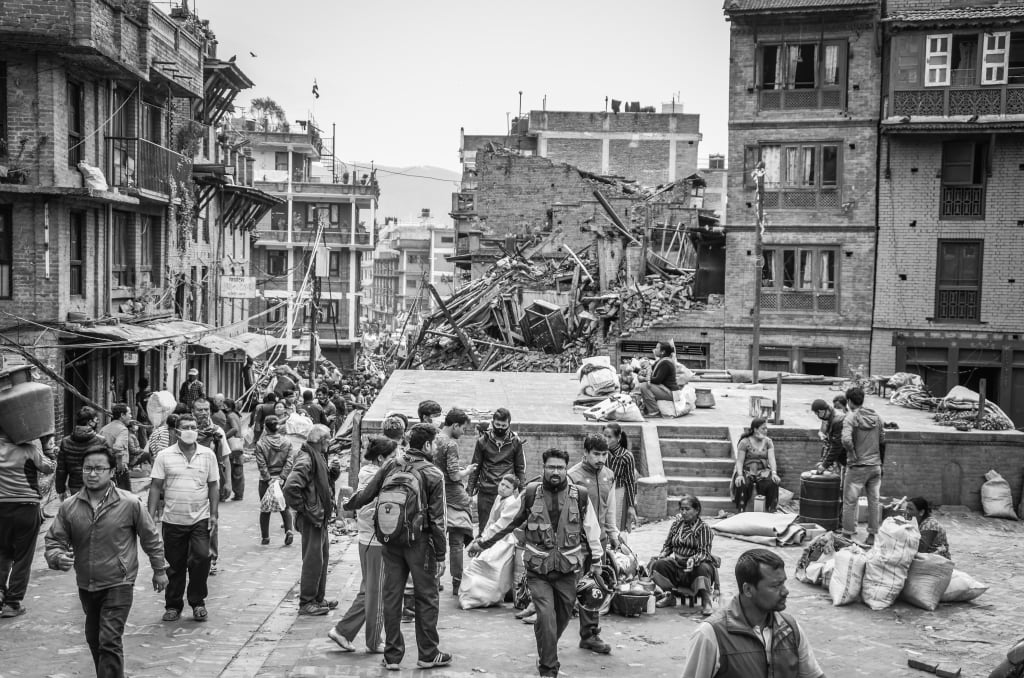
What's Earthquake?
An earthquake is a geological event that occurs when two tectonic plates suddenly slip past one another, causing the Earth's surface to shake. Earthquakes are caused by the release of stored energy in the Earth's crust, which can be caused by the movement of tectonic plates or by volcanic activity.
Tectonic plates are large pieces of the Earth's crust that move and interact with one another, sometimes colliding and sometimes slipping past each other. When two plates suddenly slip past one another, they release a large amount of stored energy in the form of seismic waves. These waves cause the ground to shake and can result in an earthquake.
The strength of an earthquake is measured using a scale known as the Richter scale, which ranges from 1 to 10. The Richter scale measures the magnitude, or strength, of an earthquake based on the size of the seismic waves it generates. Earthquakes with a magnitude of less than 2.0 are typically not felt by people, while earthquakes with a magnitude of 7.0 or greater can cause widespread damage and loss of life.
Earthquakes can also trigger other natural disasters, such as tsunamis and volcanic eruptions. Because of their potential for causing damage and loss of life, earthquakes are a serious concern for many people, and efforts are underway to improve our ability to predict and prepare for them.
How we're protected?
Protecting yourself from earthquakes requires preparation and planning. Here are some steps you can take to prepare for and protect yourself during an earthquake:
1)Conduct a hazard assessment: Determine the specific hazards in your area and identify the safest places in your home, such as under a desk or table, to protect yourself during an earthquake.
2)Secure your home: Fasten shelves and heavy objects to the wall, and secure water heaters, appliances, and large furniture to reduce the risk of them tipping over.
3)Plan an evacuation route: Know the quickest and safest route to evacuate your home or workplace in case of an earthquake.
4)Create an emergency kit: Store a supply of food, water, and first aid supplies in a readily accessible location.
5)Learn first aid and CPR: Knowledge of first aid and CPR can help you provide immediate assistance to others in case of an injury.
6)Practice earthquake drills: Regularly practice "drop, cover, and hold on" with your family or coworkers so that you will know what to do during an earthquake.
İf you want to get out of the earthquake in an easier way, "CLİCK HERE"
7)Install safety devices: Consider installing safety devices, such as seismic gas shutoff valves and seismic bracing for heavy appliances, to further protect your home and family.
8)Stay informed: Stay informed about earthquakes and other natural disasters in your area, and listen to the advice of emergency management officials during and after an earthquake.
9)Remember, during an earthquake, the most important thing is to protect yourself. Drop to the ground, take cover under a desk or table, and hold on until the shaking stops.
And let's convey our wishes to get well soon for the catastrophic earthquake that happened in Turkey recently.
About the Creator
Keep reading
More stories from Selim Utku Bildirici and writers in Earth and other communities.
The Universe That Dreams Us
For centuries, humanity believed the universe was expanding. Galaxies drifting farther apart. Space stretching endlessly like an invisible fabric. The theory had been supported by decades of observations, especially from the famous Hubble Space Telescope, which showed distant galaxies moving away from Earth in every direction.
By Abubakar2207 days ago in Earth




Comments