
Earth: The Living Planet
Unveiling the Wonders, Challenges, and Future of Our Only Home
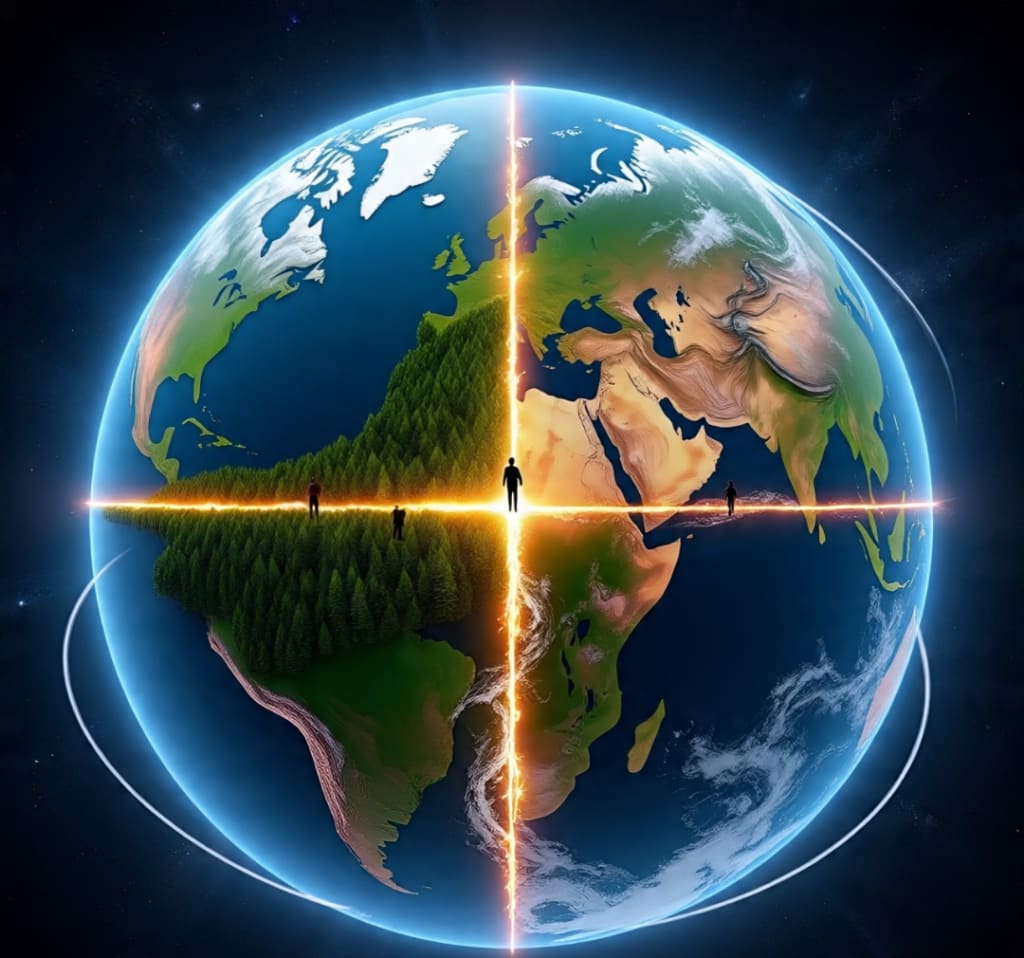
Unveiling the Wonders, Challenges, and Future of Our Only Home
From the silent depths of the Mariana Trench to the swirling auroras dancing over the Arctic sky, Earth pulses with life. It is not just a rock drifting through space—it breathes, grows, and evolves. It is our home, and for now, the only one we know that harbors life.
For billions of years, Earth has been shaped by forces seen and unseen. Volcanoes forged continents, glaciers carved valleys, and oceans teemed with the first stirrings of life. From single-celled organisms came coral reefs, rainforests, birds, and eventually, us—human beings, capable of shaping the world as no species before.
Earth’s wonders are everywhere. In the heart of the Amazon, trees rise like green cathedrals, each leaf a factory of oxygen. In the Sahara, sand dunes whisper the ancient history of a once-lush land. Beneath Antarctic ice, microbes thrive in subglacial lakes, hinting at the possibility of life beyond our planet. Every biome, every ecosystem, is a chapter in the grand story of life on Earth.
Yet, the deeper we explore Earth’s beauty, the more we uncover its fragility. The living planet is under strain.
Over the last century, human activity has altered Earth at an unprecedented rate. Forests vanish to make way for cities and crops. Rivers are dammed, oceans are overfished, and species disappear before they are even discovered. Climate change, driven by fossil fuel emissions, melts glaciers and intensifies storms. The balance that allowed civilizations to flourish is shifting.
The challenges are complex. Rising sea levels threaten to swallow coastal cities. Air pollution chokes urban centers. Plastic waste litters the remotest islands. Even the planet’s rhythms—its seasons, currents, and jet streams—are being disrupted.
But the story does not end in despair. Earth is resilient, and so are we.
Across the globe, people are rising to meet these challenges. Solar panels shimmer on rooftops where coal once reigned. Rivers long considered dead flow clean again. Endangered species, like the California condor and the giant panda, are making slow comebacks thanks to conservation efforts.
Science and technology are part of the solution, but so is something more ancient—connection. Indigenous communities have long known that humans are not separate from nature but a part of it. Their traditions offer valuable lessons in sustainability and stewardship.
Young people, too, are refusing to accept a dying planet. They organize, march, and innovate—building a movement that spans continents and generations. For many, climate action is not just about protecting nature; it's about justice, equity, and the right to a livable future.
Looking forward, Earth’s fate is not sealed—it is still being written. The choices we make today will echo for centuries. Will we continue to mine and burn, or will we heal and restore? Will we see ourselves as masters of nature, or as caretakers of it?
There is hope in reimagining our relationship with the planet. Cities can become green and breathable, powered by wind and sun. Farms can feed us without destroying soil or water. Oceans can be protected to replenish fish stocks and coral reefs. Forests can regrow where chainsaws once roared.
The path is not easy, but it is possible. We have the knowledge, the tools, and, increasingly, the will.
Earth has given us everything—air to breathe, water to drink, beauty to inspire. It asks for care in return. Not just for its sake, but for ours.
As we unveil its wonders, confront its challenges, and imagine its future, we must remember one truth above all: there is no Planet B. Earth is irreplaceable. It is alive, dynamic, and breathtaking. And it is our only home.
About the Creator
Keep reading
More stories from Muhammad Saad and writers in Earth and other communities.
The Last Drop: How Water Scarcity is Shaping Our Future
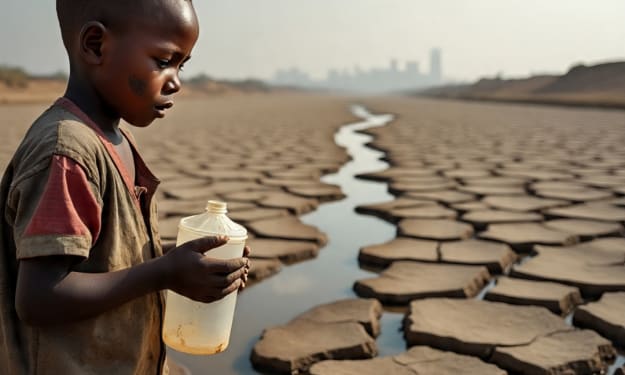
In a dusty village on the edge of Rajasthan, India, a 10-year-old girl named Asha begins her day before the sun rises. Her task is simple, yet vital: fetch water. With an empty jug balanced on her head, she walks over three miles to reach the nearest functioning well. By the time she returns home, hours have passed, and the heat is already climbing past 90 degrees Fahrenheit. For Asha, and millions like her, water isn’t just a resource—it’s a daily battle. Water scarcity is no longer a distant concern confined to arid regions. It is a global crisis affecting over 2 billion people, according to the United Nations. Climate change, population growth, pollution, and poor infrastructure are converging to create an increasingly fragile water future. In cities and rural communities alike, the ripple effects are changing the way people live, grow food, and even govern. In Cape Town, South Africa, the term "Day Zero" entered the public consciousness in 2018 when the city nearly ran out of water. A mix of prolonged drought and increased demand pushed reservoirs to historic lows. Residents were restricted to 50 liters (13 gallons) of water per person per day—barely enough for drinking, cooking, and basic hygiene. While Day Zero was narrowly avoided through emergency policies and public cooperation, the warning shot was clear: even modern cities are not immune. The underlying causes of water scarcity are complex and intertwined. Agriculture consumes about 70% of the world’s freshwater, yet inefficient irrigation and outdated farming practices lead to massive losses. In many places, groundwater is being pumped faster than it can be replenished. Rivers like the Colorado in the U.S. and the Yellow River in China often no longer reach the sea, as water is diverted upstream for human use. Meanwhile, pollution from factories, sewage, and pesticides renders vast amounts of water unsafe to drink or use. But scarcity is not just about the physical absence of water—it’s about access and equity. In many parts of the world, water may exist, but is out of reach due to poor infrastructure, privatization, or political conflict. In sub-Saharan Africa, women and children spend a collective 200 million hours each day walking for water. In the Middle East, disputes over rivers like the Tigris and the Jordan have fueled tensions between neighboring nations for decades. Yet, amidst the looming crisis, innovation and resilience are offering glimmers of hope. Countries like Israel have become global leaders in water efficiency, reusing nearly 90% of their wastewater and pioneering drip irrigation systems. In Singapore, a city with few natural water sources, a combination of rainwater collection, desalination, and water recycling ensures a sustainable supply. Technology is also playing a vital role. Low-cost sensors and satellite data now allow farmers to monitor soil moisture and use water more precisely. Solar-powered pumps are providing rural communities with clean water without the need for expensive fuel or infrastructure. And in coastal regions, advances in desalination are making seawater a more viable option—though energy costs remain a hurdle. However, technical solutions alone won't solve the problem. Real progress requires policy reform, public awareness, and international cooperation. Governments must invest in resilient infrastructure and enforce regulations that protect watersheds and aquifers. Education campaigns can change wasteful habits, especially in urban areas where water is often taken for granted. And global partnerships must recognize that water is a shared resource—one that transcends borders and political ideologies. Back in Rajasthan, change is beginning to trickle in. Local NGOs are working with villagers to restore traditional water-harvesting systems called "johads"—small earthen dams that collect monsoon rain and recharge the groundwater. In Asha’s village, the rebuilt johad now fills during the rainy season, cutting her walk for water by more than half. It's a small victory, but one that echoes the larger message of the global water crisis: local actions matter. As climate change accelerates and populations continue to grow, the world faces a stark choice. We can either confront water scarcity with urgency, innovation, and empathy—or wait until the last drop forces us to. The future of water is not set in stone. But it is running out—and the time to act is now.
By Muhammad Saad 8 months ago in Earth
Watering Wisely: Techniques for Deep Roots and Drought Tolerance
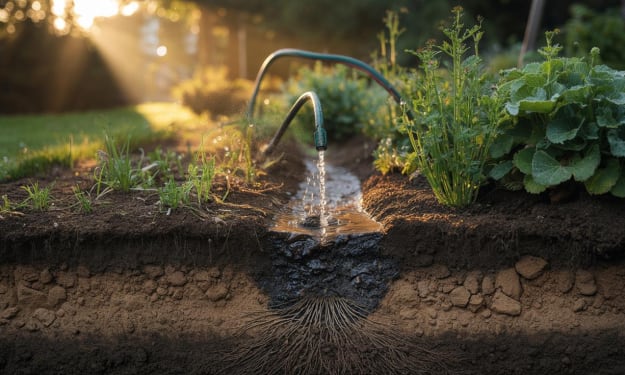
But beneath the surface, that shallow sprinkle is doing more harm than good. It encourages shallow roots that stay near the surface, dependent on your daily attention. When you forget to water—or when vacation or life intervenes—those shallow roots have no way to reach deeper moisture. Your plants wilt, stress, and sometimes die.
By Emma Wallace2 days ago in Earth


Comments
There are no comments for this story
Be the first to respond and start the conversation.