
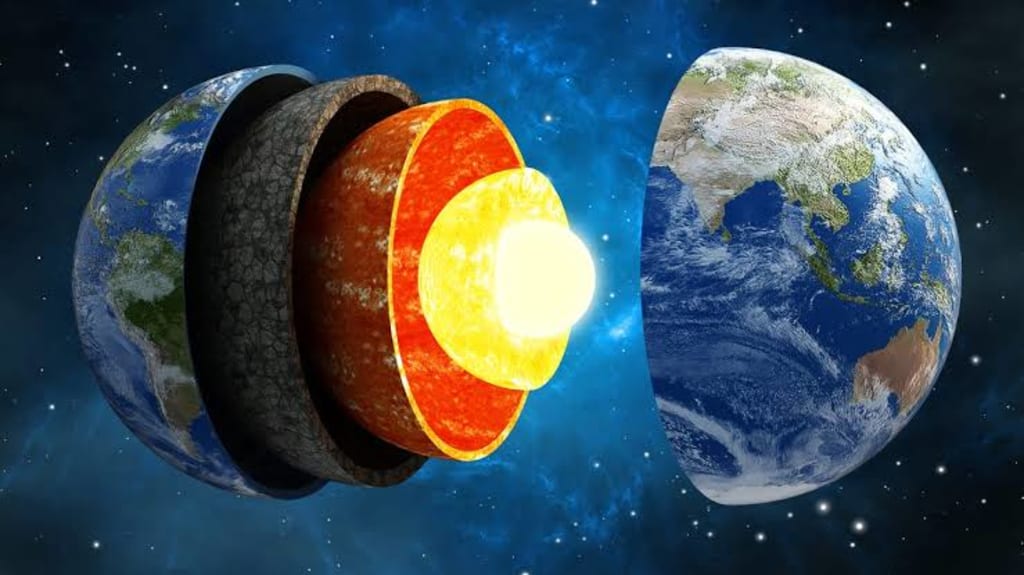
Once upon a time, in the vast expanse of the universe, there existed a beautiful blue planet known as Earth. This remarkable planet, situated in the solar system's habitable zone, possessed a diverse and magnificent surface.
Billions of years ago, Earth's surface was an untamed and volatile place. Molten lava spewed from countless volcanoes, forming a fiery landscape. Over time, as the planet cooled, a solid crust formed, creating the foundation for the incredible variety of geological features that would come to adorn the surface.
Mountains emerged, their majestic peaks reaching towards the heavens. Great tectonic forces pushed and pulled, creating colossal ranges such as the Himalayas, the Andes, and the Rocky Mountains. These mighty structures stood as testaments to the Earth's geological history, each range telling its own story of the forces that shaped it.
Rivers meandered across the land, carving deep valleys and leaving behind fertile plains. The mighty Amazon, the lifeblood of the rainforest, flowed through vast expanses of lush greenery. The Nile, the Ganges, and the Mississippi nourished civilizations and supported thriving communities throughout history.
Oceans covered much of the Earth's surface, their sparkling blue waters stretching as far as the eye could see. Coral reefs, vibrant and teeming with life, formed beneath the waves, creating underwater cities of stunning beauty and biodiversity. Vast underwater mountain ranges, known as mid-ocean ridges, snaked through the depths, where volcanic activity continued to shape the seafloor.
Deserts, both vast and arid, spread across Earth's surface, their golden dunes shifting with the wind. The Sahara, the Gobi, and the Atacama stood as reminders of the Earth's varied climates and the resilience of life that adapted to survive in these harsh environments.
Forests covered large swaths of land, from dense rainforests to sprawling taigas and temperate woodlands. These green lungs of the planet provided habitats for countless species and played a crucial role in maintaining the Earth's delicate ecological balance.
As time went on, humans emerged and began to leave their mark on the Earth's surface. They built magnificent cities, monuments, and structures, blending their creations with the natural wonders that surrounded them. They explored the depths of the oceans and the heights of the mountains, continually expanding their understanding of the planet they called home.
Yet, as humanity prospered, it also faced challenges. Climate change and environmental degradation began to take their toll on Earth's surface. Rising temperatures, melting glaciers, and deforestation threatened the delicate ecosystems that had flourished for millennia.
Realizing the urgency of the situation, people from all walks of life came together to protect and restore the Earth's surface. They championed sustainable practices, embraced renewable energy, and worked tirelessly to preserve the planet's natural beauty.
Through collective efforts, Earth's surface began to heal. Reforestation projects brought back verdant forests, while innovative technologies mitigated the impacts of climate change. The oceans, once polluted and overfished, began to recover as marine sanctuaries were established and sustainable fishing practices implemented.
Today, the Earth's surface stands as a testament to the resilience of life and the power of human determination. It is a mosaic of awe-inspiring landscapes, vibrant ecosystems, and human ingenuity. The challenges may persist, but the spirit of preservation and stewardship burns brightly, ensuring that the Earth's surface remains a treasure for generations to come.
About the Creator
Keep reading
More stories from chibueze blessed and writers in Earth and other communities.
Everlasting love journey
Once upon a time, in a quaint little town, there lived a young woman named Emma. She possessed a heart full of kindness, a vibrant spirit, and an unwavering belief in love. Emma had always dreamed of finding a love that would sweep her off her feet, a love that would make her heart soar.
By chibueze blessed3 years ago in Earth
True Happiness
On a sturdy apple tree, a mother dove lived peacefully with her tiny baby. The tree provided them with shelter, shade, and a sense of security. Every day, the mother dove would watch over her little one, teaching it to flap its wings, coo softly, and enjoy the calm of the natural world. Life had been simple, quiet, and safe for them, and she felt content in the little world that belonged entirely to her and her chick.
By Sudais Zakwan7 days ago in Earth



Comments
There are no comments for this story
Be the first to respond and start the conversation.