
Earth is Flat ?or Not?
Non Believers accidentally proved Earth is Sphere

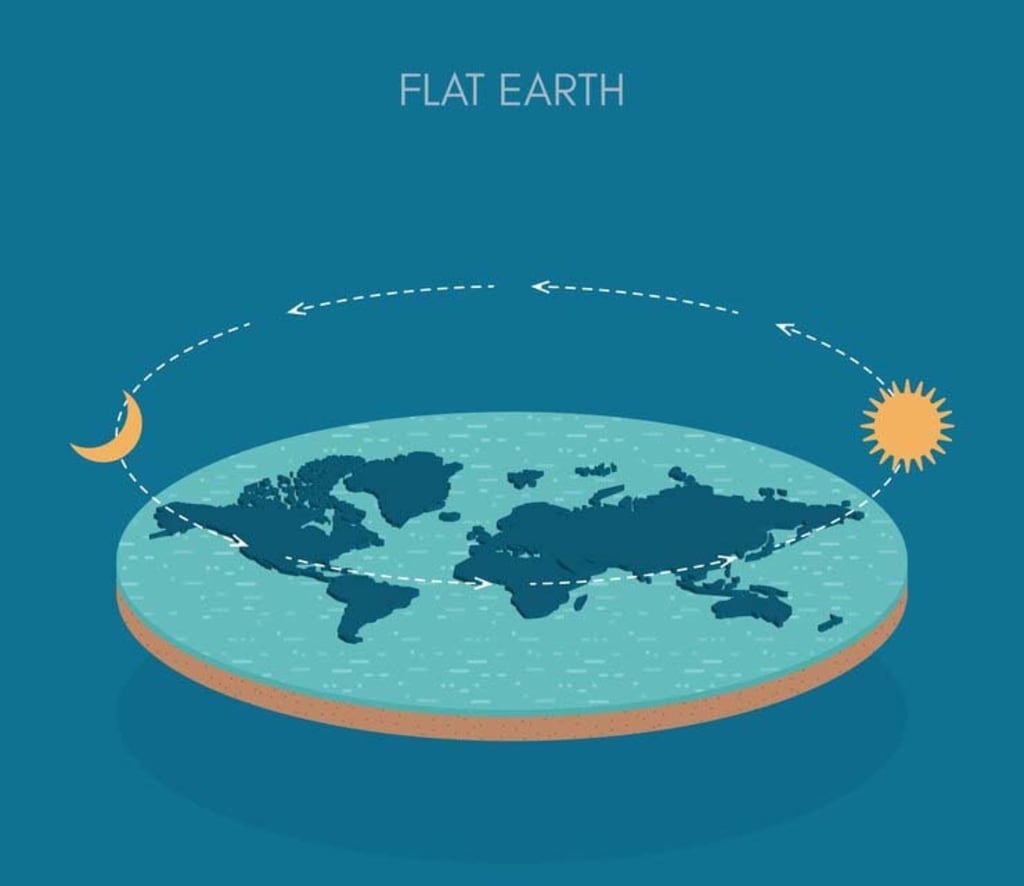
Discover the rise of the modern flat Earth movement, its experiments, and the challenges it faces from scientific evidence. Dive into the historical context and the dynamics of belief in the digital age.
In 2019, a group of passionate individuals who identified as flat Earthers embarked on a mission to challenge the long-standing scientific consensus that the Earth is an oblate spheroid. Their aim was not just to theorize but to provide tangible evidence that could bolster their beliefs. Among these individuals were prominent figures such as David Weiss and Robbie Davidson, who became central to the movement. They conducted various experiments, some of which included using spirit levels on airplanes to prove that the Earth is flat. These efforts, however, lacked rigorous scientific validation and failed to align with established scientific principles. Despite this, the movement persisted, driven by a deep-seated skepticism of mainstream science.
Flat Earth moment
Interestingly, the flat Earth movement gained unexpected traction over the years, growing far beyond its initial niche community. Conferences and events began popping up, drawing attendees from diverse backgrounds who were eager to explore and promote these unconventional ideas. These gatherings became hubs for like-minded individuals to share theories, devise experiments, and challenge the prevailing scientific worldview. The movement also found an ally in the digital age, leveraging social media platforms to amplify its voice. The viral nature of the internet allowed these ideas to spread rapidly, reaching audiences that might not have encountered them otherwise.
The movement’s rise was further fueled by the involvement of celebrities and public figures who endorsed or sympathized with the flat Earth perspective. Their participation brought increased visibility, sparking widespread public discussions and debates. However, this also attracted significant criticism and ridicule from the scientific community and skeptics, who were quick to debunk the movement's claims using evidence-based research.
It's crucial to recognize that the belief in a flat Earth is not a novel phenomenon. Historically, such views were prevalent in many ancient civilizations, but they were based on observations and interpretations that predated the development of modern astronomy. The concept of a spherical Earth emerged among ancient Greek scholars, with philosophers like Pythagoras and Aristotle providing early evidence for this idea. By the time of the Late Middle Ages, the notion of a flat Earth had largely faded among educated Europeans, thanks to advancements in navigation and the works of influential thinkers like Copernicus.
Despite its historical inaccuracies, the flat Earth movement of today represents more than just a scientific debate. It serves as a case study in the dynamics of belief, skepticism, and the spread of ideas in the digital age. It highlights the challenges of combating misinformation and the importance of critical thinking in a world where information—and misinformation—is just a click away. While the scientific consensus remains unwavering in support of a spherical Earth, the persistence of flat Earth beliefs reminds us of the complexity of human psychology and the power of community in shaping our perceptions of reality.
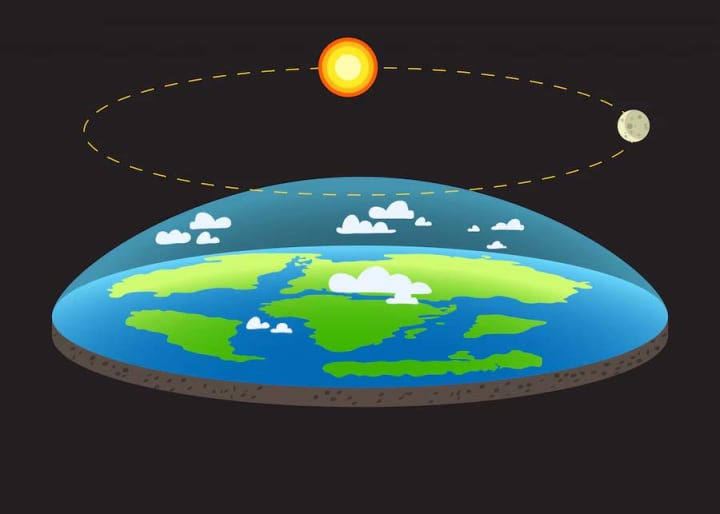
How Accidentally They proved Earth is not flat
Flat Earthers accidentally provided evidence supporting a spherical Earth during experiments designed to prove their flat Earth hypothesis. One well-known instance involved an experiment filmed for the documentary Behind the Curve.
In the experiment, Flat Earthers set up two vertical poles positioned at equal heights, spaced several miles apart. They used a high-powered laser to measure whether the beam remained perfectly level, as they believed it would if the Earth were flat. However, their findings unexpectedly demonstrated that the beam deviated and had to be adjusted vertically to hit the target, consistent with the Earth's curvature.
Another similar attempt involved using a gyroscope to measure motion. Flat Earthers predicted that the gyroscope would show no drift, assuming the Earth was stationary and flat. Yet, the gyroscope registered a drift of approximately 15 degrees per hour, which is exactly the rate of rotation one would expect on a spherical Earth.
These unintended results highlighted how scientific principles and measurements consistently support the established understanding of a round Earth. These experiments, ironically, reinforced the scientific consensus rather than disproving it.
About the Creator
Nav k Aidan
i am an author i am a ghost writer and also working on fictional books
i am in this field from past 15 year ,
i wrote more than 400 blog post for different blogsites,
Keep reading
More stories from Nav k Aidan and writers in Earth and other communities.
Wanda Witter: The Homeless Woman Who Won Her Fight Against Social Security Errors
Discover the inspiring story of Wanda Witter, who battled homelessness for 16 years while exposing Social Security payment errors. Learn how her persistence led to victory, a $99,999 payout, and a new lease on life.
By Nav k Aidan11 months ago in Motivation
It’s too warm': Greenland’s fishermen are under threat from climate change
Greenland’s traditional fishing communities are facing an uncertain future as the Arctic warms faster than any other region on Earth, dramatically reshaping the landscapes and livelihoods of the semiautonomous Danish territory. Local fishermen, whose lives have long been tied to sea ice and predictable seasonal patterns, are now confronting unpredictable weather, shifting fish populations, and economic pressures that threaten both their culture and the local economy. A Changing Arctic Reality In the small coastal town of Ilulissat, veteran fisherman Helgi Áargil described how climate change has upended his routines. Where once he relied on stable sea ice and consistent fishing grounds, he now finds warmer waters, rainier conditions, and fish moving to deeper, cooler waters. Last year his boat became trapped in ice that calved from a nearby glacier; this year, instead of strengthening ice, it has been unusually wet — making conditions less predictable and incomes more volatile. Fishing accounts for up to 95 percent of Greenland’s exports, with key markets including China, the United States, Japan and Europe. This heavy economic reliance amplifies the impact of climate effects on fish patterns and harvests. Disappearing Ice, Changing Practices Traditional ice fishing — once conducted on sea ice more than a metre thick — has declined sharply. Older generations recall times when they could easily drill holes in stable ice to fish for cod, halibut, shrimp and snow crab. Today, sea ice is retreating earlier and forming later, forcing many fishermen to rely on boats even in the coldest months. While boats allow access to broader waters, they come with higher fuel costs and greater exposure to the elements, challenging sustainability. Karl Sandgreen, head of the Icefjord Center in Ilulissat, noted that ice thick enough to support traditional fishing began disappearing roughly three decades ago. The shift has not only changed how fishers operate but also increased competition and pressure on stocks closer to shore. Ecological and Economic Pressures Warmer conditions are also affecting fish behavior. Many species are moving deeper or into new areas as they seek cooler waters, complicating efforts to maintain stable catches. A warming ocean can temporarily boost plankton growth — potentially increasing some fish stocks — but it also alters ecosystems in unpredictable ways. Experts warn that fish may not behave as they once did, complicating traditional fishing forecasts and practices. The head of Royal Greenland, the territory’s largest employer, has expressed concern about a future with significantly diminished sea ice, which could push more traditional fishers toward larger, commercial fishing operations. However, this transition is not without risks. Increased fishing pressure near shorelines already shows early signs of overfishing; halibut are getting smaller, a classic indicator of stock stress noted by experts. Cultural Identity at Risk Fishing in Greenland is more than an economic activity; it is a cultural bedrock. In towns and villages across the island, harbours where daily catches are unloaded and sold remain central to community life. Many Greenlanders associate fishing with identity and tradition, and climate change is directly threatening these cultural ties as environmental conditions change faster than adaptation measures can keep pace. “You can have too much ice to sail and yet too little to qualify for safe ice fishing,” noted Toke Binzer, describing the paradoxical challenges fishermen now face. The unpredictability makes planning difficult and income erratic — one trip might bring significant earnings, while the next yields little or nothing. Limited Alternatives and Future Paths Beyond fishing, economic alternatives in Greenland remain limited. Tourism is growing but not at a pace that could offset losses in the fishing sector. With a total population barely over 50,000, opportunities outside harvesting marine resources are comparatively sparse. As dog sledding and other ice‑based traditions also diminish due to changing conditions, entire ways of life are under threat. Efforts to support traditional fishers include loans for boats and business assistance, but long‑term resilience will likely require broader strategies. These could involve sustainable fishing quotas, diversification into aquaculture, and investments in climate adaptation infrastructure. Yet many local observers emphasize that meaningful change must also address the root causes of warming — a challenge far beyond Greenland’s shores. A Climate Warning Sign Greenland’s fishermen are becoming a human indicator of rapid Arctic change. The region is warming faster than the global average, reshaping ecosystems and economies alike. As these communities adapt or struggle, their challenges shed light on the broader global consequences of climate change — illustrating how environmental shifts ripple through cultures, industries and livelihoods thousands of kilometres from major industrial centres.
By Fiaz Ahmed 6 days ago in Earth
Top tipple tricks
Been thinking a lot about drinking, lately. Not least because of a recent episode of over-indulgence and the inevitable after effects. Some readers may recall the earlier articles I wrote about beating the booze. Here I set out an experiment in techniques for cutting down on my alcohol intake. The experiment was successful, the techniques worked, and I have armed myself with an arsenal of weapons in the war against the demon drink. I have yet to fire the first round however. It's all a question of timing (perhaps procrastination).
By Raymond G. Taylora day ago in Psyche



Comments
There are no comments for this story
Be the first to respond and start the conversation.