
Earth: A Unique Planet and Its Wonders
Earth: A Tapestry of Life, Beauty, and Responsibility


Earth: A Unique Planet and Its Wonders:
Earth, the third planet from the Sun, is the only known planet that supports life. With its vast oceans, towering mountains, rich biodiversity, and life-sustaining environment, Earth is truly a remarkable place. Its ability to sustain life is due to a combination of factors: liquid water, breathable air, a stable climate, and a variety of ecosystems. Earth is a rare gem in the vast universe, but human activities continue to affect its health, making it crucial to preserve it for future generations. This article explores Earth’s unique features, its importance, and the need for preservation.
The Structure of Earth :

Earth has a complex internal structure, composed of several layers, each with distinct characteristics. The innermost layer is the **inner core**, a dense ball of iron and nickel that is extremely hot. Surrounding the inner core is the **outer core**, a liquid layer of iron and nickel responsible for generating Earth’s magnetic field, which shields the planet from harmful solar radiation.
Above the core is the **mantle**, Earth’s thickest layer, made of semi-solid silicate rocks and minerals. The movement of material in the mantle causes tectonic plates to shift, leading to earthquakes, volcanic eruptions, and the formation of mountain ranges. The outermost layer, the **crust**, is solid and thin compared to the mantle. It forms Earth’s surface and is divided into large sections called tectonic plates. The movement of these plates shapes Earth’s surface, creating continents, oceans, and mountain ranges.
Earth’s Oceans :
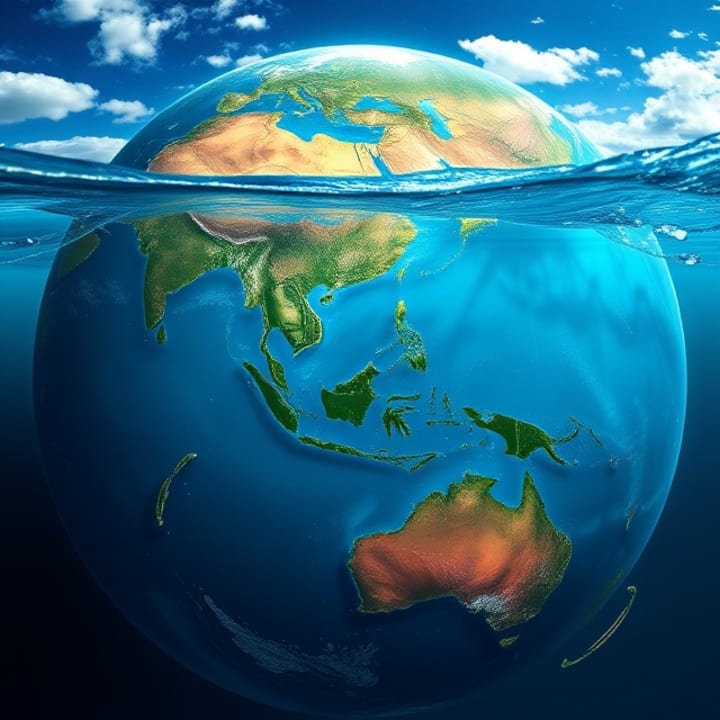
Water covers about 71% of Earth’s surface, and oceans make up the majority of this water. Oceans are vast bodies of saltwater that help regulate the global climate and support marine life. The five major oceans—Atlantic, Pacific, Indian, Southern, and Arctic—play a critical role in distributing heat around the globe, influencing weather patterns, and maintaining global temperatures. Oceans are also essential for the water cycle, as water evaporates, forms clouds, and returns as precipitation.

The remaining 29% of Earth’s surface is land, consisting of continents and islands.
Continents:
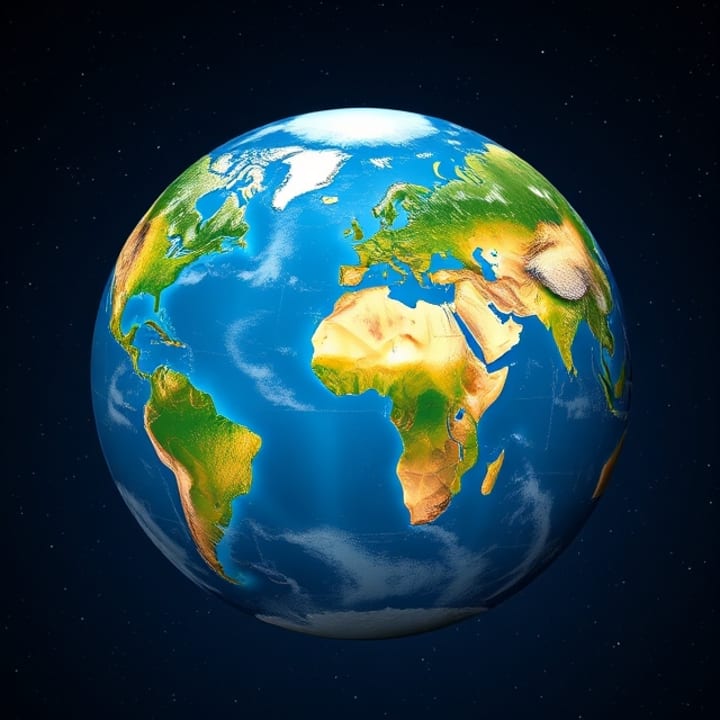
Earth has seven continents: Asia, Africa, North America, South America, Antarctica, Europe, and Australia. These continents vary in size, climate, and geography, providing diverse habitats for many species. Mountain ranges like the Himalayas and Andes, fertile plains, and large rivers all support human civilization and biodiversity.
The Atmosphere and Climate:

Earth’s atmosphere is a mixture of gases, primarily nitrogen (78%) and oxygen (21%), with smaller amounts of carbon dioxide, argon, and other gases. This atmosphere is essential for life, providing breathable air and protecting the planet from harmful ultraviolet radiation from the Sun. The atmosphere also regulates Earth’s temperature through the greenhouse effect, which traps heat and maintains a warm environment suitable for life.
Earth’s climate varies greatly, depending on the region. Near the equator, the climate is hot and humid, while the polar regions are cold and dry. Factors such as latitude, altitude, ocean currents, and atmospheric circulation patterns influence local climates. However, human activities, particularly the burning of fossil fuels and deforestation, have significantly altered the climate. Rising global temperatures, melting ice caps, extreme weather events, and shifting ecosystems are some of the consequences of climate change. Mitigating these effects is critical to preserving the planet’s delicate balance.
Biodiversity: Earth’s Rich Tapestry of Life:

Earth’s biodiversity, the variety of life forms inhabiting the planet, is one of its most remarkable features. From microscopic organisms to the largest mammals, life on Earth is incredibly diverse. Earth’s ecosystems, including tropical rainforests, deserts, wetlands, and coral reefs, are home to millions of species of plants, animals, fungi, and microorganisms. Each species plays a vital role in maintaining the balance of ecosystems.
The oceans, in particular, are teeming with biodiversity. Coral reefs, often referred to as the "rainforests of the sea," support thousands of species, many of which are unique to these ecosystems. Coral reefs provide essential resources, such as food and medicine, to humans. However, biodiversity is under threat from human activities. Deforestation, pollution, overfishing, and the introduction of invasive species have caused habitat destruction and the decline of many species. The loss of biodiversity has long-term consequences for ecosystems and human well-being. Protecting biodiversity is crucial for maintaining healthy ecosystems and ensuring the survival of future generations.
Earth’s Resources and Their Importance:
Earth’s resources—water, minerals, fossil fuels, and fertile land—are essential for human survival and progress. Freshwater is vital for drinking, agriculture, and industry, while minerals and metals are used in everything from buildings to electronics. Fossil fuels, such as coal, oil, and natural gas, have powered the global economy for centuries, providing energy for transportation, heating, and electricity.
However, the overexploitation of these resources has led to environmental degradation. The extraction of fossil fuels and minerals, deforestation, and pollution have resulted in habitat loss, reduced biodiversity, and climate change. The burning of fossil fuels has released large amounts of carbon dioxide and other greenhouse gases into the atmosphere, contributing to global warming and extreme weather events.
To ensure a sustainable future, it is crucial to transition to renewable energy sources like wind, solar, and hydropower. These sources are cleaner and have less impact on the environment. Efforts to conserve water, protect forests, and reduce waste are also necessary to ensure Earth’s resources remain available for future generations.
The Need for Preservation:

Earth faces several challenges, including climate change, pollution, and habitat destruction. It is vital that we take action to preserve the planet and its resources. Human activities have contributed significantly to environmental degradation, and it is our responsibility to mitigate these impacts. Conservation is key to protecting biodiversity, reducing carbon emissions, and restoring ecosystems.
Governments, businesses, and individuals all have roles to play in preserving the planet. Governments can implement policies to reduce carbon emissions, protect endangered species, and promote sustainable practices. Businesses can adopt environmentally friendly technologies, while individuals can reduce waste, conserve water, and use renewable energy sources.
Conservation efforts, such as protecting endangered species, restoring damaged ecosystems, and reducing carbon footprints, are essential for maintaining Earth’s health. Sustainable development and responsible resource management are crucial to ensuring that future generations inherit a planet that can continue to support life.
Conclusion:
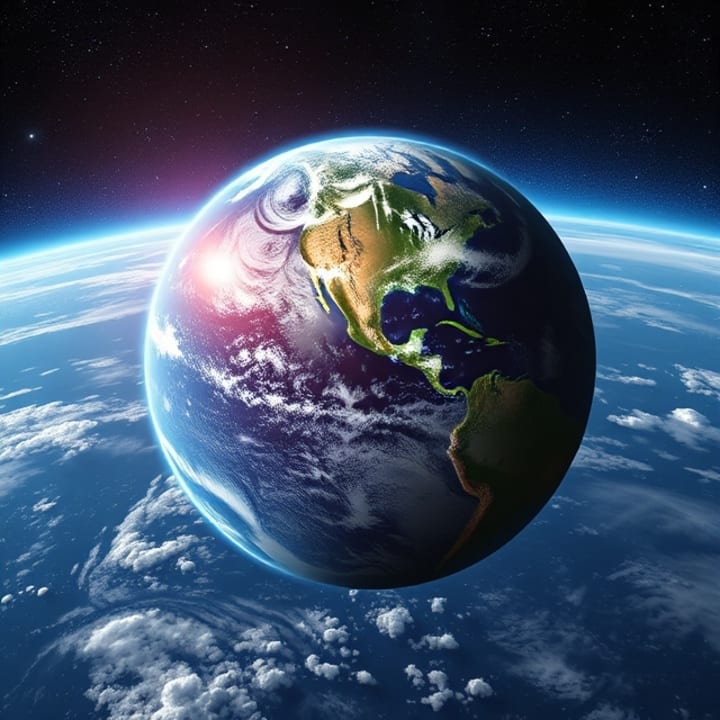
Earth is a beautiful and unique planet, full of life and natural wonders. It is the only known planet capable of supporting life, and it is our responsibility to protect and preserve it. Human activities have significantly impacted the planet, but by adopting sustainable practices, conserving resources, and taking collective action, we can ensure Earth remains a thriving, life-supporting planet for generations to come. Protecting the environment is not just about preserving nature—it’s about securing a future for all life on Earth, including humanity. By working together, we can create a healthier, more sustainable world for everyone.
About the Creator
Sanjeev Kumar
I am a writer who specializes in Article, content, news writer. I'm enjoys sharing ideas and information in a way that’s easy to understand.
Reader insights
Outstanding
Excellent work. Looking forward to reading more!
Top insights
Easy to read and follow
Well-structured & engaging content
Excellent storytelling
Original narrative & well developed characters
On-point and relevant
Writing reflected the title & theme
Keep reading
More stories from Sanjeev Kumar and writers in Earth and other communities.
The White Tiger : Threats and Conservation Efforts
Abstract: White tigers are a rare hereditary variety of the Bengal tiger. They are nearly annihilation because of inbreeding, poaching, and ecological issues. The latent trademark that renders them white makes hereditary issues during thoughtless reproducing. Effective preservation of the subspecies ought to underscore the conservation of hereditary changeability, natural surroundings security, and hostile to poaching measures. Terrific breeding, strong points for the task and broad world soul, that would be the beginning to make this superb subspecies won't ever waste away. To get their future endurance
By Sanjeev Kumarabout a year ago in Earth
Half of World’s CO2 Emissions Come From Just 32 Fossil Fuel Firms, Study Shows
A groundbreaking new study has revealed that 32 fossil fuel companies are responsible for half of global carbon dioxide emissions since the industrial era began. The findings highlight the outsized influence of major oil, gas, and coal producers on climate change, and raise urgent questions about accountability, regulation, and the transition to cleaner energy.
By Aarif Lashari7 days ago in Earth
“Do Not Copy This Site’s Content”: Why Originality Matters More Than Ever in the Digital Age
“Do not copy this site’s content.” It’s a warning most internet users have seen countless times, often at the bottom of webpages or buried in terms and conditions. Many scroll past it without a second thought. But in today’s digital world, that simple sentence carries far more weight than people realize.
By Muhammad Hassan3 days ago in Earth



Comments
There are no comments for this story
Be the first to respond and start the conversation.