
Double typhoon effect
What will happen if 2 typhoons collide together?

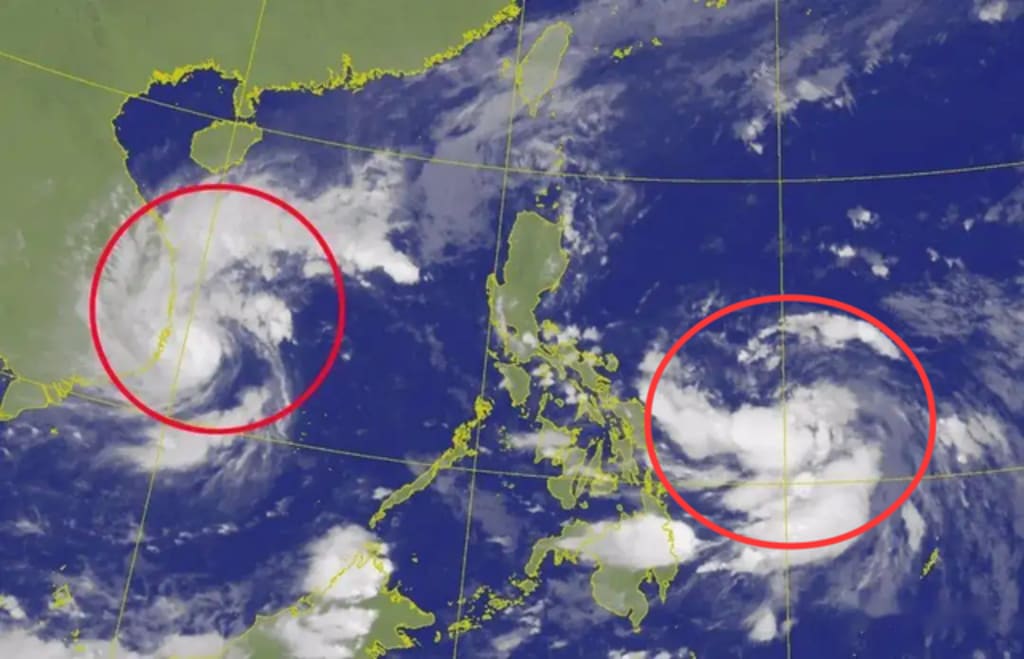
Typhoons are probably one of the most common weather disasters in coastal areas, especially in cities like Fujian, Hainan, Guangxi, Zhejiang, and other parts of the country, which have endured typhoons almost as a matter of routine over the years.
Typhoon transit is bound to be accompanied by violent storms, sometimes that hurricane can lift the tin roof, and break windows, this time, not to mention going out, hurrying to fix the doors and windows at home, back to the safe position is the best policy.
But have you seen the "double typhoon effect"? A typhoon brought disaster to coastal cities has been full of destruction, if two typhoons collide together, what will happen? Or damage offset, or double the scope? It all depends on the actual situation!
How typhoons are formed
I'm sure many people have heard about the power of typhoons, so do you know how they are formed?
Simply put, for a typhoon to appear in front of everyone's eyes, it must first meet three conditions: water vapor conditions, thermal conditions, and power conditions. First of all, typhoons originate from the sea, why choose the sea rather than land? Because the sea can produce a constant stream of water vapor.
But the water vapor is not enough, we must wait until the summer, the strong light directly to the sea on the hot heat will make the water vapor rise, so that rainfall can be produced.
But before the arrival of rainfall, the evaporation of hot air will be put on the sea to form a low-pressure center, when the outside clouds and air backed up into the formation of the wind. A typhoon is also a form of wind, how to let the wind evolve into a typhoon, requires the use of the third condition we mentioned above: power.
By the influence of the earth's deflection force, the northern hemisphere is easy to form counterclockwise and to the center of the spokes of the maelstrom, while the southern hemisphere is the formation of clockwise maelstrom; when the vapor up in the vortex to form rainfall, and leads to clouds and wind backflow, the power provided by the vortex is sufficient to form a certain scale of the typhoon.
Water vapor and wind are often found on the sea surface, but maelstroms are very rare, and typhoons lacking that power are not easily formed.
But once a typhoon is generated by the interaction of the three conditions and gradually approaches coastal cities, it is very likely to cause a series of disasters.
Common typhoon disasters include "gale force winds", "very heavy rainfall" and "storm surge", with gale force winds of 12 or more having a serious impact on people's lives, destroying houses, breaking high-altitude facilities are broken, and those communication lines.
For coastal cities, heavy rainfall can easily lead to flooding, and in some places near mountainous areas, mudslides and landslides can be induced.
The disaster of storm surge is mainly concentrated in the sea, if there is a ship underway when encountering storm surge, fear is very easy to be overturned; storm surge will also affect the seawall stability, if the scale of the storm surge is too large, it will lead to submarine breaches, seawater back up, these disasters can not be considered not serious.
Then some friends are curious since a typhoon has such destructive power, then if two typhoons meet? They will not form a larger cyclone, which in turn brings serious threats to coastal and surrounding cities.
You do not say, this happened! There is a professional term for this phenomenon called the "double-stand effect", or "Fujiwara effect".
The Double Stage Effect
The double-stand effect was first conceptualized by Japanese meteorologist Dr. Fujiwara in 1923 when Dr. Fujiwara derived the typhoon evolution through vortex experiments: when two cyclonic vortices are close to each other, their rotational paths will be influenced by each other, and then show a tendency to approach or even merge.
However, Dr. Fujiwara's concept is rather idealistic, because, in reality, it is impossible to allow typhoons of equal size to come close to each other.
But Dr. Fujiwara's conjecture also inspired future generations, and modern meteorologists, through meticulous judgment, have classified the effects of twin typhoons into three categories: one-way influence, mutual influence, and merger.
Dr. Fujiwara was talking about mutual influence, but in reality, when twin typhoons meet, most of them are one-way influence and merger; that is, the stronger typhoon will completely take over the trajectory of the weaker typhoon, making the weaker typhoon continue to do counterclockwise movement around the stronger typhoon.
For example, Typhoon Timu, which erupted in the Philippine Islands in 1994, kept the surrounding tropical storm, Vanessa, firmly in its grip. Although Yunisha is in the sea and raises a lot of wind and waves, in the go, Tim is currently without the slightest resistance, but only arothe Tim near the continuous circle, which is undoubtedly a greater disaster for the surrounding.
But as said above, not all typhoons can do this integration, sometimes two typhoons meet either expulsion or engulfment, and human civilization is rather a lot of similarities. For example, the outbreak of super typhoon "Morakot" in 2009, Morakot made landfall near Kaohsiung County on the island of Taiwan, causing 461 residents to be killed and several thousand injured.
What we don't know is that as early as before Morakot landed in Kaohsiung, there was another typhoon "Swan" that was present in the surrounding waters. Typhoon Swan was first on the coast of Guangdong, then entered the Gulf of Tonkin and suddenly circled the western part of Hainan, and finally disappeared.
In fact, by the normal trajectory of the "Swan", it should land in Guangdong to the East China Sea after circling, but it suddenly changed its direction of travel westward, in addition to the influence of atmospheric circulation, for the "Morakot" landing to vacate the location is also the main reason. Who let "Morakot" is too dominant, "swan," said they really can not afford to mess with ah!
Double Taiwan effect in the real world is still relatively rare, especially the two evenly matched typhoons meet, which will indeed bring greater disaster to the surrounding coastal cities.
But the number of such cases is very small, especially in modern society, we have long accumulated a lot of experience on how to prevent the arrival of typhoons, and typhoons also continue to reduce the casualties. But in any case, when a typhoon comes, careful prevention is not a bad thing, evacuate the coast as soon as possible if necessary.
About the Creator
Karen Gillanah
The aggravation that can be told is not aggravation; the lover that can be snatched away is not a lover.
Keep reading
More stories from Karen Gillanah and writers in Earth and other communities.
Throw a brick into the Marianas Trench
Mankind's exploration of the unknown is not simultaneous but must be a comprehensive exploration. When humans buy into space, they also think about "catching turtles in five oceans", especially on the earth where 70% of the earth is the ocean.
By Karen Gillanah3 years ago in Earth
Supreme Court Set to Issue Rulings, with Trump Tariffs Case Still Pending
The U.S. Supreme Court is gearing up for a series of critical rulings that could have far-reaching effects on American politics, the economy, and ongoing legal controversies involving former President Donald Trump. Among these high-profile cases is the long-awaited decision on the Trump tariffs case, which remains unresolved and continues to draw national attention. A Pivotal Moment for the Supreme Court The Supreme Court, as the highest judicial body in the United States, has the power to shape not only legal precedent but also economic and political landscapes. Every term, the Court issues decisions that can influence everything from civil liberties to federal policies. This session, observers are particularly focused on cases involving trade, executive power, and regulations implemented during Trump’s administration. The Trump tariffs case, in particular, highlights the tension between presidential authority and congressional oversight. The case challenges certain tariffs imposed by Trump on imports from countries like China, Mexico, and the European Union, arguing that they exceeded the executive branch’s authority and bypassed proper legislative procedures. What the Trump Tariffs Case Is About During his presidency, Donald Trump frequently used tariffs as a tool to bolster U.S. manufacturing, address trade imbalances, and pressure foreign governments into renegotiating trade deals. While some praised these measures for protecting domestic industries, critics argued that they overstepped legal boundaries and caused economic strain on American consumers. The case currently pending before the Supreme Court examines whether Trump acted within his executive authority when imposing these tariffs. Legal analysts note that a ruling against Trump could set a precedent limiting future presidents’ power to unilaterally impose trade restrictions without congressional approval. Conversely, a ruling in his favor could reinforce broad executive powers in trade matters. Broader Implications for Trade and the Economy The Supreme Court’s decision is more than just a legal formality—it has significant economic implications. If the Court rules that the tariffs were unlawful, the U.S. could face demands to refund millions in duties collected, impacting businesses and international trade relations. Companies that relied on protective tariffs to compete in global markets might also face increased competition from foreign imports. On the other hand, upholding the tariffs could embolden future administrations to take aggressive action in trade disputes, potentially triggering new tensions with other countries. Investors, trade associations, and policymakers are closely monitoring these developments, as the ruling could influence stock markets, trade negotiations, and long-term economic strategies. Political Stakes Remain High Beyond economics, the Trump tariffs case has political dimensions. Donald Trump’s legal and political team is watching the case closely, as the outcome could influence his broader legal battles and political ambitions. While the case focuses on trade, it also touches on questions of executive authority, a topic central to debates about checks and balances in the U.S. government. Democrats and Republicans alike are analyzing the case for its potential impact on future administrations. Some lawmakers have expressed concern that a broad interpretation of executive power could set a dangerous precedent, allowing presidents to implement sweeping economic measures without sufficient legislative oversight. Other Supreme Court Decisions to Watch While the Trump tariffs case is the most high-profile, the Supreme Court is expected to issue rulings on several other major issues this session, including voting rights, environmental regulations, and federal agency authority. Each decision could have ripple effects across the nation, shaping laws and policies for years to come. Observers are particularly interested in cases that intersect with current political debates. With midterm elections approaching, the timing of these rulings could influence public opinion, political campaigns, and legislative priorities. What Comes Next For now, all eyes remain on the Supreme Court. Legal experts are divided on the likely outcome of the Trump tariffs case, with some predicting a narrow decision and others expecting broader implications. Regardless of the verdict, the ruling will be closely studied by policymakers, businesses, and citizens alike. In the meantime, companies affected by tariffs, trade advocates, and political analysts continue to prepare for potential scenarios. Whether the Court sides with Trump or challenges his administration’s actions, the ruling will shape the legal landscape for presidential authority and U.S. trade policy for years to come. Final Thoughts The Supreme Court’s upcoming rulings, particularly on the Trump tariffs case, underscore the enduring tension between executive authority, congressional oversight, and judicial interpretation. These decisions will not only influence the immediate legal battle but could also redefine the boundaries of presidential power and trade policy in the United States. For citizens, investors, and policymakers, understanding the implications of these rulings is crucial. As the nation waits for the Court’s verdict, one thing is clear: the outcome will resonate far beyond the courtroom, affecting politics, economics, and the balance of power in Washington, D.C.
By Muhammad Hassana day ago in Earth
Arrests After Responders Are Struck at Scene of Crash
Emergencies often put first responders on the front line, but a recent incident has highlighted the risks they face from more than just the crisis at hand. Authorities have confirmed multiple arrests after paramedics and police officers were struck while attending the scene of a serious crash. The shocking episode has sparked widespread concern about the safety of emergency personnel and the growing need for stricter enforcement and public awareness. The incident, which unfolded during the early evening rush hour, underscores the vulnerability of those who rush toward danger to protect others, and serves as a grim reminder that not all threats come from the scene itself. The Incident Unfolds According to police reports, first responders were attending a multi-vehicle collision on a busy highway when the situation escalated. While traffic was being controlled and victims assisted, several responders were struck. Initial reports suggest that at least two officers and one paramedic sustained injuries, though thankfully none are life-threatening. Eyewitnesses described scenes of confusion and panic as vehicles failed to slow down near the crash site. Some drivers reportedly ignored cones, flares, and law enforcement instructions, creating dangerous conditions that forced responders to take evasive action. The risk was compounded by poor visibility due to evening darkness and wet road conditions. Arrests and Legal Action Police confirmed that multiple individuals were arrested in connection with the incident. Charges include reckless driving, assault on emergency personnel, and obstruction of justice. Authorities stressed that this kind of behaviour will not be tolerated, emphasizing the seriousness of endangering first responders. The arrests have been welcomed by both local officials and the wider emergency services community. Speaking to the media, a senior officer stated, “We will pursue anyone who puts our officers and paramedics at risk. Responders deserve respect and protection while performing their duties.” The Growing Danger for First Responders This event is part of a troubling trend seen in many regions worldwide. First responders—paramedics, firefighters, and police officers—are increasingly exposed to risks not only from the emergencies they attend but also from the public they serve. Distracted driving, aggressive behaviour, and disregard for traffic laws can transform even routine call-outs into life-threatening situations. According to safety studies, responders are far more likely to be injured at crash scenes than the individuals involved in the accidents themselves. Officials say the combination of high-speed traffic, congestion, and public impatience can make emergency scenes extremely hazardous, highlighting the need for both public awareness campaigns and strict enforcement of safety regulations. Eyewitness Accounts Bystanders at the scene described scenes of confusion and bravery. One witness said, “The responders were working quickly to help victims, but some drivers just didn’t stop or move over. It was terrifying to see them getting hit while trying to save lives.” Another observer praised the quick action of law enforcement, stating, “The officers and paramedics kept calm under pressure, directing traffic and helping the injured. It could have been much worse if they hadn’t acted so decisively.” These accounts underscore the thin line between order and chaos at crash sites, and the courage required to navigate it. Emergency Services Speak Out The incident has prompted statements from multiple emergency service organisations, calling for public cooperation and respect for responders. Paramedics and police unions highlighted that assaults on personnel are not just a legal issue—they are a public safety issue. Officials reiterated that the presence of cones, flares, and law enforcement officers is not optional. They are part of critical safety protocols designed to protect both responders and the general public. Ignoring these warnings can lead to serious legal consequences, including arrest. Public Responsibility Experts say that public behaviour plays a crucial role in preventing these incidents. Simple actions such as slowing down near crash sites, following police directions, and keeping a safe distance from emergency personnel can dramatically reduce risk. In many countries, laws require drivers to move over for emergency vehicles and personnel on highways. Failure to comply can result in fines, points on a driver’s license, or even criminal charges if someone is injured. The recent arrests serve as a high-profile reminder that such laws are actively enforced. Broader Implications for Road Safety The incident also raises questions about infrastructure and traffic management near high-risk areas. Emergency planners emphasise the need for proper signage, road design, and public education campaigns to reduce the likelihood of similar events. Technology may play a role in the future. From warning lights and automated traffic alerts to smart navigation apps that alert drivers to emergency scenes, modern solutions can help protect responders from harm while improving overall traffic safety. Community Response Community reactions have been largely supportive of the responders. Social media has seen a wave of messages praising first responders for their bravery, while calling out dangerous driving and reckless behaviour. Local leaders have echoed these sentiments, stressing that safety is a shared responsibility. “Every driver has a role to play in protecting those who protect us,” one official stated. “Incidents like this are a wake-up call for everyone to follow the rules and act responsibly.” Moving Forward Authorities have pledged continued vigilance and enforcement, while also reviewing protocols to enhance responder safety. Emergency services are exploring additional measures such as temporary road closures, enhanced signage, and public education initiatives to minimise risk during high-traffic incidents. For the public, the message is clear: cooperation saves lives. Respecting safety zones, following directions, and remaining calm around emergency scenes is not just courteous—it can prevent tragedy. Conclusion The arrests following the attack on responders at the crash scene highlight a troubling reality: those who rush toward danger to save lives often face hazards from the public they serve. While the legal consequences are immediate, the broader lesson is one of awareness, respect, and shared responsibility. As winter travel continues and roads remain busy, communities must remember that emergency responders are working under pressure to protect everyone. Simple acts—slowing down, moving over, and staying alert—can prevent incidents like this from happening again. In the end, safety at emergency scenes is not just the responsibility of responders—it belongs to all of us. Respecting that responsibility ensures that those who help others can return home safely at the end of the day.
By Muhammad Hassan5 days ago in Earth

Comments
There are no comments for this story
Be the first to respond and start the conversation.