
DOE report assesses the economic and social benefits of wind energy development in the United States.
Wind power can be economically deployed to provide renewable energy to 50 states in the United States.

On March 12, 2015, the U.S. Department of Energy (DOE) released a report entitled "Wind Vision: a New era of Wind Power in the United States" (WindVision: A New Era for Wind Power in the United States), which focuses on the future of US wind energy in 2050 and the economic benefits of a healthy wind energy industry, pointing out that technological advances will drive down expected costs, combined with sustainable development of location and transmission.
The report emphasizes the importance of wind energy in the energy structure of the United States and its key role in improving the position of wind energy in the energy market to maintain the existing wind energy production infrastructure and economic benefits in the United States.
The report includes a road map defining the actions needed to achieve the enormous economic and social benefits of healthy wind energy in the future.
Through continued cost reduction and further investment in wind energy systems, wind power is expected to compete directly with conventional energy technologies over the next decade.
(2) Wind energy supports a strong domestic supply chain.
By 2050, wind energy has the potential to provide more than 600000 jobs for manufacturing, installation, maintenance and support services.
By 2050, most wind turbine components will be manufactured in the United States.
(3) Wind energy is affordable.
As wind power agreements typically provide fixed pricing for 20 years, the power sector is not expected to be sensitive to fluctuations in natural gas and coal prices as wind power generation increases.
Using long-term pricing to reduce the country's vulnerability to price increases and supply disruptions, wind energy is expected to save consumers $280 billion by 2050.
(4) Wind energy reduces the emission of air pollutants.
By 2050, wind energy will help avoid emissions of more than 250000 metric tons of air pollutants, including SO2, NO, NO2, particulate matter, and 12.3 billion metric tons of greenhouse gases.
(5) Wind energy protects water resources.
By 2050, wind energy will save 260 billion gallons of water, the equivalent of 400000 Olympic standard swimming pools, which can be used by the power sector.
(6) Wind energy deployment increases community income.
Local communities will receive additional tax revenue from land leases and property taxes, which will reach $3.2 billion a year by 2050.
The report does not make any policy recommendations, but provides a road map for targeted actions that can be taken by the wind energy industry, the research community and others to accelerate wind energy deployment in the United States.
The report divides the core road map actions into nine "areas of action": wind power resources and site characteristics; wind farm technological progress; supply chain, production and logistics; wind power performance, reliability and safety; wind power transmission and integration; wind power location and approval; cooperation, education and outreach; workforce development; and policy analysis.
These nine areas of action provide a comprehensive framework for future wind power deployment and further cost reduction.
Key actions that can help achieve research scenarios include:
(1) reduce the cost of wind power generation.
The reduction of wind energy cost will be mainly affected by the progress of overall wind energy technology and the continuous decline of cost.
(2) expand the exploitable field of wind power generation.
This involves expanding wind power to new areas, such as the southeastern United States, and installing new transmission lines for areas with high-quality wind resources.
(3) deploy wind energy in a way that increases the value of the country.
This includes the use of domestically produced components at all stages of the development of wind energy projects, taking into account the impact of wind energy growth on surrounding communities, the environment, wildlife and the public.
About the Creator
O-Ring Seals Market Size and Forecast 2025–2033
Introduction In an era defined by advanced engineering, sustainability goals, and performance efficiency, the smallest components often play the biggest roles. Among these unsung heroes of modern manufacturing are O-ring seals—simple, circular devices that quietly prevent leaks, ensure safety, and keep critical systems functioning under extreme conditions.
By Aaina Oberoi6 days ago in Earth
Tidal Barrier to Be 10m Shorter to Save Money
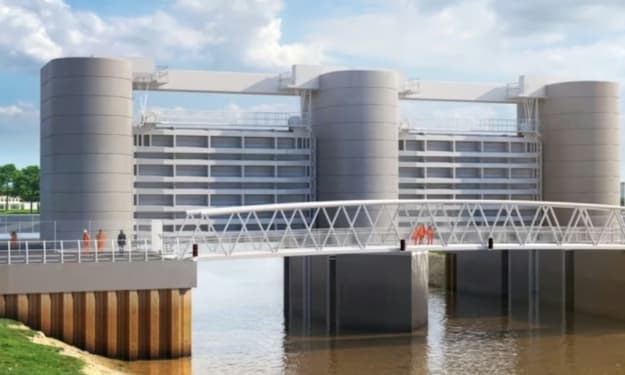
Rethinking Flood Protection in Somerset If you live near the coast, the threat of flooding isn’t just news — it’s a reality you can feel. That’s the situation in Bridgwater, Somerset, a historic market town near the Bristol Channel. For years, plans have been underway to build a tidal barrier to protect homes, businesses, and livelihoods from storm surges. Now, new updates reveal the barrier will be about 10 metres shorter than originally planned, a decision aimed at reducing costs while still keeping the town safe. This announcement has sparked conversations about engineering, budgets, and how communities adapt to climate challenges. Why the Barrier Is Being Shortened The Bridgwater Tidal Barrier was initially designed to be a high-profile flood defence, protecting thousands of properties from tidal surges that travel up the River Parrett. But after a recent design efficiency review, engineers concluded the barrier could be slightly shorter without compromising safety. Reducing the barrier by 10 metres lowers construction complexity, saves money, and reduces long-term maintenance costs. The Environment Agency and local authorities say this approach allows the project to move forward on time and on budget, ensuring the community gets protection sooner rather than later. The Cost Factor Public infrastructure projects like this don’t happen in a vacuum. Rising inflation, global supply chain disruptions, and labor shortages have increased costs for large-scale projects. Officials argue that the revised design is a responsible compromise: it balances cost savings with safety. Somerset Council leaders have welcomed the decision, noting that managing costs wisely helps the project reach completion without compromising protection for residents. Community Voices and Concerns Local engagement has been a key part of the project. Residents have attended consultations and drop-in sessions to see the updated plans and ask questions. Some community members appreciate the cost savings and faster timeline. Others worry whether a shorter barrier will be as effective against future extreme weather events. Questions include: Will the barrier remain strong against increasingly unpredictable storms? Does reducing the height limit future adaptability as climate impacts grow? What effect might it have on local ecosystems and fish habitats? These are valid concerns, reflecting how communities are increasingly involved in climate adaptation decisions. Engineering Flood Defence Today Tidal barriers are not new — Britain has relied on them for decades. London’s Thames Barrier, for instance, has protected the capital since the 1980s. But today, rising sea levels and more frequent storms mean engineers must balance safety, cost, and environmental impact carefully. In Bridgwater, officials say the revised barrier will still protect against 1-in-200-year tidal events. It’s designed to provide robust safety now while remaining adaptable for the future. The Human Side of Flood Protection It’s easy to get lost in numbers and metres, but behind the design decisions are real people. Residents depend on reliable flood protection to feel secure in their homes and communities. For families, businesses, and local services, knowing a barrier is being built — even a slightly shorter one — provides peace of mind. It’s not just a structure; it’s a symbol of resilience and preparedness. Next Steps for the Barrier The Bridgwater project is still under construction, with the revised design undergoing final refinements. Once completed, the tidal barrier will provide long-term protection for thousands of properties and critical infrastructure in Somerset. Officials emphasize that the shortened design does not compromise safety. If anything, staying on budget ensures the project is completed faster, meaning protection arrives sooner for the community. A Lesson in Climate Adaptation The story of the Bridgwater Tidal Barrier is more than engineering or economics. It’s about how communities respond to climate risks and how governments make tough choices balancing safety, cost, and sustainability. The barrier being 10 metres shorter may seem small on paper, but it reflects a larger truth: infrastructure planning today is as much about community engagement, adaptability, and long-term resilience as it is about concrete and steel. By keeping people involved and making informed, cost-effective decisions, Somerset shows how towns can adapt to climate change without sacrificing safety. Conclusion The Bridgwater Tidal Barrier demonstrates that infrastructure projects in the 21st century must adapt to multiple pressures: climate change, financial constraints, and community expectations. While the barrier is slightly shorter than originally planned, it remains a critical line of defence against flooding. More importantly, it highlights the importance of public involvement, transparency, and strategic planning in building a resilient community. For Bridgwater residents, the message is clear: the tide may rise, storms may come, but with smart planning and community engagement, the town will be ready
By Muhammad Hassan3 days ago in Earth



Comments
There are no comments for this story
Be the first to respond and start the conversation.