
The European Environment Agency (EEA) publishes the Global Development trend Assessment report.
In the past half century, the global population has doubled to more than 7 billion, and this number will continue to grow in the coming decades.
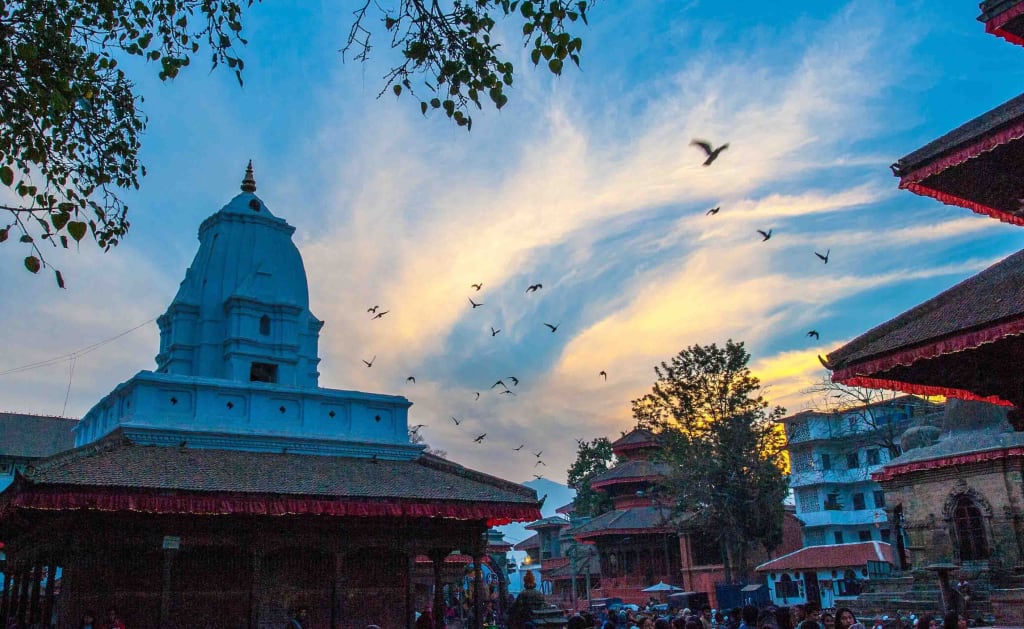
On 20 March 2015, the European Environment Agency (EEA) released the Global Major Trends Assessment report (Assessment of global megatrends-an update), which is based on the update of the version released in 2010.
Based on the 2010 report, 11 global trends in social, economic, scientific and technological, environmental and political areas are tentatively analyzed.
1 social field.
1.1 the development trends of global population size and structure are different.
Globally, various factors affecting the size and structure of the population, such as fertility, mortality and population migration, fundamentally affect social and economic development.
However, the development trend varies from region to region, with a downward trend of population ageing in developed economies and a rapid expansion of population ageing in developing countries.
A large labor force will bring a "demographic dividend" to promote economic development, but it will bring the risk of social unrest.
If aging continues, these "demographic dividends" will shift to health and education, as well as retirement and pension.
If the development mode of the world economy still operates at the consumption of "demographic dividend", it will have a great negative impact on natural assets, and developing countries need to change their mode of development to protect the environment. Developed economies need stronger economic capacity to maintain the problems caused by a higher population aging.
1.2 expansion of cities and urban population.
The development of agricultural economy to industrialization provides a large number of labor force for the city, employment and income pour into the city, which provides an endogenous driving force for the development of urbanization, but at the same time brings challenges to government management and great pressure on the environment.
At the beginning of the 20th century, only 10% to 15% of the world's population lived in cities, and by 2010 that number had risen to 50%. According to the United Nations, the urban population will account for 67% of the total population by 2050, and the urban population will rise from 2.6 billion in 2010 to 5.1 billion in 2050.
Urbanization can provide more employment opportunities and will better improve the living standards of the population.
At the macroeconomic level, cities will promote innovation and create productivity.
Although the strengthening of the middle class is conducive to social stability, rapid economic growth will also lead to overuse of resources and aggravation of pollution.
Dense urban residential areas can provide a relatively resource-saving way of life, but creating such efficient, healthy and safe residential areas requires scientific urban planning. in fact, the consequences of poorly managed urbanization are unimaginable.
1.3 difficulties in preventing and controlling the spread of epidemics and diseases.
The world is experiencing a health problem brought about by changes in the way of economic development and lifestyle.
Since 2000, the global disease burden is still in the area of communicable diseases (such as AIDS, tuberculosis, measles), while the mortality rate of traditional non-communicable diseases (such as cardiovascular disease, cancer, chronic respiratory diseases, diabetes) remains high in developing countries, which is closely related to the way of life in each country.
Although infectious diseases are decreasing globally, the mortality rate is still high in developing countries.
Differences in sanitary conditions continue to be a major factor in the spread of the epidemic.
Economic and social development will affect global health in the future.
Increasing infrastructure investment in health, improving education, forming good living habits and hygiene habits are the main factors for improving human health. The Millennium ecosystem Assessment emphasizes that human health depends on a healthy ecosystem. Therefore, protecting the ecological environment has become an indispensable and urgent task for us.
(2) Rapid development of science and technology.
The development of science and technology is changing with each passing day, especially the rapid development of nanotechnology, biotechnology and computer technology. The integrated development of these three technologies will greatly change our lives.
New products and innovation will improve resource efficiency and move towards a low-carbon economy.
In the process, the technological revolution will transform energy, manufacturing, health care and many other industries.
In the rapid change, it will also bring us unexpected risks, such as potential threats to health and the environment, which we do not know now.
Institutional and policy innovation needs to minimize risks, and we need sustainable development in the process of promoting technological change.
3. Economic field.
3.1 will the economy continue to grow.
The financial crisis in 2008 led to a slowdown in many developed countries in 2009, especially in Europe.
From the perspective of long-term economic forecasts, the economy of Europe in the next few years is not optimistic. Mainstream economists in Europe predict that the European economy will not improve greatly in the next few decades. Asia's huge population and various resources will promote the rapid economic development of Asia.
However, rapid economic growth may also have a great impact on the environment and ecology of Asia.
However, a scientific and efficient mode of economic development does not have an impact on the environment and ecology. For example, in recent years, while some developed countries protect the environment through measures such as reducing greenhouse gas emissions and controlling air pollution, the economy is still showing positive growth.
3.2 A multipolar inclusive world.
Globally, economic power is changing.
In the last century, the world's population and countries, which accounted for about 1. 5% of the world's population, dominated global production and consumption.
Today, this situation is changing, and power is gradually balanced, especially the rise of Asian countries.
Economic and demographic projections show that the economic, political and diplomatic influence of today's rich economies is shrinking.
With the interdependence and interaction of global trade, Europe will have the opportunity to benefit from improved resource efficiency and a knowledge-based economy.
3.3 Global competition for resources intensifies.
Changes in economy, industry and technology as well as consumption patterns have increased the demand for resources, whether renewable or non-renewable.
With the rising standard of living, in the face of limited resources, the increase in usage will develop geometrically and will be unevenly distributed around the world.
About the Creator
Greenland: New Shipping Routes, Hidden Minerals – and a Frontline Between the US and Russia?
Once seen as a remote and largely isolated Arctic territory, Greenland is rapidly emerging as a focal point of global geopolitics. Climate change, melting ice, and technological advances are transforming the island into a strategic hub defined by new shipping routes, vast mineral resources, and growing rivalry between major powers, particularly the United States and Russia. As the Arctic opens up, Greenland’s geographic position and untapped potential are pushing it to the center of international attention, raising questions about security, sovereignty, and sustainable development. Melting Ice and the Opening of New Shipping Routes One of the most visible impacts of climate change in the Arctic is the reduction of sea ice, which is making previously inaccessible waters navigable for longer periods each year. New Arctic shipping routes, including passages near Greenland, promise shorter travel times between Europe, Asia, and North America. Compared to traditional routes like the Suez Canal, Arctic pathways can reduce shipping distances by thousands of kilometers, cutting fuel costs and emissions. For global trade, this could be transformative. Greenland’s coastal waters are increasingly important as potential transit corridors and support hubs for these routes. However, the expansion of Arctic shipping also raises concerns about environmental risks, maritime safety, and the lack of robust emergency infrastructure in the region. Hidden Mineral Wealth Beneath the Ice Beyond shipping, Greenland holds significant reserves of critical minerals, many of which are essential for modern technologies and the global energy transition. These include rare earth elements, lithium, graphite, uranium, and other strategic resources used in electric vehicles, wind turbines, batteries, and defense systems. As demand for these materials grows, Greenland is being viewed as a potential alternative to existing supply chains dominated by a small number of countries. This has increased interest from Western governments seeking to diversify mineral sourcing and reduce strategic dependencies. However, mining in Greenland is controversial. Local communities and policymakers must balance economic opportunities with environmental protection and cultural preservation. Greenland’s harsh climate and fragile ecosystems make resource extraction both technically challenging and politically sensitive. The United States’ Strategic Interest in Greenland The United States has long considered Greenland strategically vital, largely due to its location between North America and Europe. The US already maintains a military presence at Pituffik Space Base (formerly Thule Air Base), which plays a key role in missile warning systems and space surveillance. In recent years, Washington has renewed its focus on Greenland, emphasizing Arctic security, infrastructure investment, and cooperation with Denmark, which oversees Greenland’s foreign and defense policy. US interest is driven by several factors: protecting transatlantic security routes, countering rival powers in the Arctic, and ensuring access to critical minerals. Greenland is increasingly viewed as a frontline in maintaining Western influence in the High North. Russia’s Arctic Ambitions Russia, meanwhile, sees the Arctic as central to its economic and military strategy. It has invested heavily in Arctic military bases, icebreaker fleets, and energy projects, particularly along its northern coastline. Although Greenland is geographically distant from Russia’s main Arctic territories, Moscow closely monitors developments there. The island’s proximity to key Arctic sea lanes and North Atlantic routes makes it strategically relevant in any broader confrontation between Russia and NATO. As tensions between Russia and the West remain high, Greenland’s location places it near the intersection of competing security interests, increasing its geopolitical significance. Greenland Between Global Powers The growing attention from major powers puts Greenland in a delicate position. While the island seeks greater economic independence and development, it must navigate complex relationships with Denmark, the United States, and other international actors. Greenland’s government has emphasized the importance of maintaining control over its resources and ensuring that development benefits local populations. At the same time, geopolitical competition risks turning Greenland into a strategic chessboard rather than a partner in decision-making. This balancing act is becoming more difficult as Arctic competition intensifies. Environmental and Social Challenges Greenland is on the front lines of climate change. Melting ice sheets contribute to global sea-level rise, while local communities face changes to traditional livelihoods such as fishing and hunting. The expansion of shipping and mining could bring jobs and infrastructure, but it also threatens fragile ecosystems and raises concerns about pollution, habitat disruption, and long-term sustainability. Any future development in Greenland will require careful regulation, international cooperation, and meaningful engagement
By Aarif Lashari3 days ago in Earth
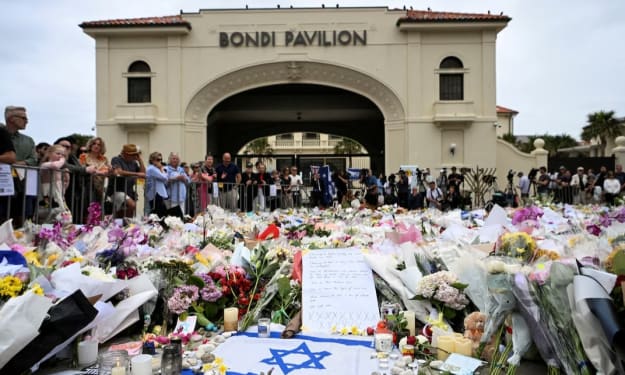
Top Australian Writers’ Festival Cancelled After Palestinian Author Barred
One of Australia’s most respected literary festivals has been cancelled following a fierce backlash over the decision to bar a Palestinian author from participating. What began as a programming dispute quickly escalated into a national debate about free speech, cultural inclusion, and political pressure in the arts. The cancellation has sent shockwaves through Australia’s literary community, raising urgent questions about whose voices are allowed on public platforms and at what cost.
By Aarif Lashari4 days ago in Earth



Comments
There are no comments for this story
Be the first to respond and start the conversation.