
Do Not Visit This Beach: 500 Shipwrecks and 11 Species of Shark
Never go to this beach: 500 shipwrecks and 11 different species of shark

At the beginning of the 20th century, somewhere off the coast of West Africa, a German steamship was leaving the port. Suddenly, the weather got worse, and the vessel entered a thick fog. The sailors ran aground on a sandbank close to the shore. Luckily, no one was hurt, and they were even able to save their precious cargo, but the ship was stuck in the sand for good, and it was not alone there.
Nearly the entire length of the western coast of Namibia is called the Skeleton Coast. If the name sounds scary, that's because this 976 long beach line is among the most dangerous places on Earth. The local Bushman tribes believe that their Supreme Deity made this land when it was angry.
The Portuguese were the first Europeans to set foot in Namibia in the 15th century, and they didn't like the Skeleton Coast either. Portuguese explorers throughout this land were presented with the gates to the underworld. This is the place where the Namib Desert meets the Atlantic Ocean. It might be dangerous, but it's actually beautiful, plus it's a UNESCO world heritage site.
If Skeleton Coast had a PR manager, they would quit on their first day on the job. The area is not exactly tourist friendly because of its geography and history. Beneath the sand and the waves, there is a secret ocean currently lurking for unsuspecting sailors. It's called the Benguela Current, and it flows towards the north along the coast of southern Africa.
This part of the Atlantic is rich in marine life, but the current's land neighbor isn't that happy with the deal. This arid climate created the Namib Desert, one of the driest regions on Earth, and that marine life I just mentioned is sharks—11 species of them to be exact—and yes, the great white decides to pop by once in a while.
So far, we've got a desert landscape with strong currents and sharks. Not a place for a beachside resort, definitely. But if someone ends up on the Skeleton Coast, will they know they're in danger? Don't worry, they will. The beach is littered with wrecks of all sizes and shapes. If you remember that German ship that was mentioned in the very beginning, its massive and rusted stern is now sticking out from the desert sand. There are some 500 wrecks in total scattered along the coast, and it's a mixed crowd, from Portuguese galleons centuries old to ships that ran ashore here in the 21st century, including a modern fishing ship called Zela.
India managed to slip from its tow rope in 2008 and ended up on the Skeleton Coast. Okay, it didn't escape on its own; it had some help from the elements, but it's better to be a tourist attraction on a beach than to be broken up for scrap. That's where the trawler was originally going.
The wreck of the Dunedin Star, a British cargo liner that ran aground here in 1942, is the Skeleton Coast's most well-known occupant. The extensive rescue effort that followed sheds light on why it's so risky for sailors to arrive here. The rescuers were able to save all of the crew and passengers, but at a significant cost—an airplane and a tugboat were lost in the rescue effort. You might be wondering why it took the final member of The Rescuers a full two months to return to Cape Town.
There are so few roads in this area that it is difficult to travel to the Skeleton Coast by land, and there are also legal challenges, as can be seen by looking at the region's map, which explains why it is an endless sea of yellow. The name of the location, the Skeleton Coast, refers to both ships and animal bones, most of which come from whales and seals, although you need a special license to drive there.
Since many animals have adapted to the area, lions and hyenas roam the coastline in search of a meal. If those sharks weren't enough, other animals with a temporary residence on the Skeleton Coast include elephants, cheetahs, leopards, and giraffes. However, aside from surfers seeking an adrenaline rush, they don't get many visitors, which helps explain why the Namib Desert is so remote. What a roller coaster of a climate, and that's not even the worst threat. Yes, there is more. Recall how the German ship got lost in dense fog? It wasn't an isolated incident. Due to the region's environment, fog occurs frequently.
As the only supply of water for species in the Namib Desert, reptiles and mammals have adapted to the harsh environment by using as little water as possible; thus, sailors should cover their ears now. Sands, dense fog, powerful currents, lions, and sharks aren't exactly the things you'd find in a travel guide, but Skeleton Coast isn't the only beach on the planet you wouldn't want to spend your vacation on.
I'll take you to Cape Tribulation in Australia, which is about 48 square miles in the northwest of the country. No, the area isn't as dry as the Skeleton Coast; instead, it's a part of the Daintree rainforest. You could say that this is from October to June; the wildlife seems to dislike visitors. The waters near Cape Tribulation are full of box jellyfish, whose venom affects the human cardiovascular system when touched at sea.
Because swimmers won't have enough time to get to land for assistance, you might want to keep a spare bottle of vinegar in your luggage. There is one more animal you need to take care of besides crocodiles and jellyfish; though it may seem humorous, you won't be laughing when a wild boar is chasing you across the beach.
Australia is home to 21 million wild boars. Because they are most active at night and are extremely dangerous if they charge at you, the best defense is to go around in circles. Unable to cut wild boars, they have good cornering ability, which is presumably why not many of them pursue careers as race drivers.
Cape Tribulation has one more threat set up for you, and it's not an animal out here; even the trees are conspiring against tourists. The stinging tree got its name for a reason; if you try to pick one of its lovely red berries, it'll fight back; its prickles are like tiny glass shards; the unfavorable effect on your skin will last for a month; and this wait a while bush keeps naming them like this long vine.
If you're about to mark this Australian beach off your list of places to visit, think again. Tourism is booming here, and the local government has restricted access to all of the danger zones. Visitors swim in idyllic water holes surrounded by lush vegetation, and there are even ropes to swing from. That's all for today, but hey, if you're interested, give it a try.
About the Creator
Althea March
I am a writer who searches for facts to create compelling nonfictional accounts about our everyday lives as human beings, and I am an avid writer involved in creating short fictional stories that help to stir the imagination for anyone.
Keep reading
More stories from Althea March and writers in Earth and other communities.
These Are Not Places Where You Should Swim, Ever.
Are you an expert swimmer and brave enough to swim in any ocean or sea? If not, there are some locations you should avoid regardless of how well you can swim or dive because they have hazardous underwater rocks, strong currents, and tides, while others are well-known for monster stories and enigmatic creatures. Let's take a look at this underwater horror show.
By Althea March3 years ago in Earth
Workers Recover 15,000 Crabs After Lorry Crashes Into Field
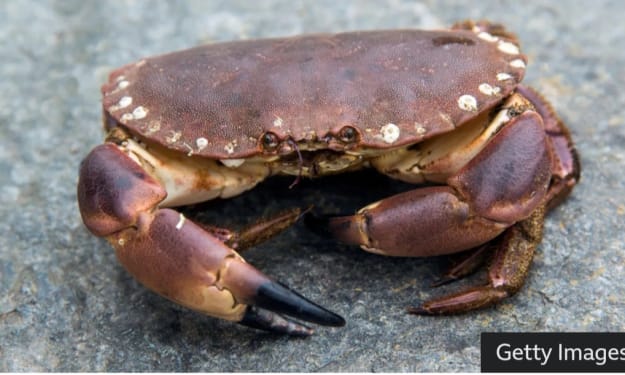
An extraordinary scene unfolded when a lorry carrying an estimated 15,000 live crabs crashed into a field, spilling its cargo across farmland and prompting a large-scale recovery effort. The unusual accident quickly drew attention from local residents, emergency services, and animal welfare groups, as workers scrambled to rescue as many crabs as possible before they succumbed to exposure.
By Aarif Lashari5 days ago in Earth


Comments