
Dinosaurs Roamed Earth for 165 Million Years: Why Humans Have Only Scratched the Surface
Dinosaurs roamed Earth for about 165 million years Humans have existed for just 0.2% of that time

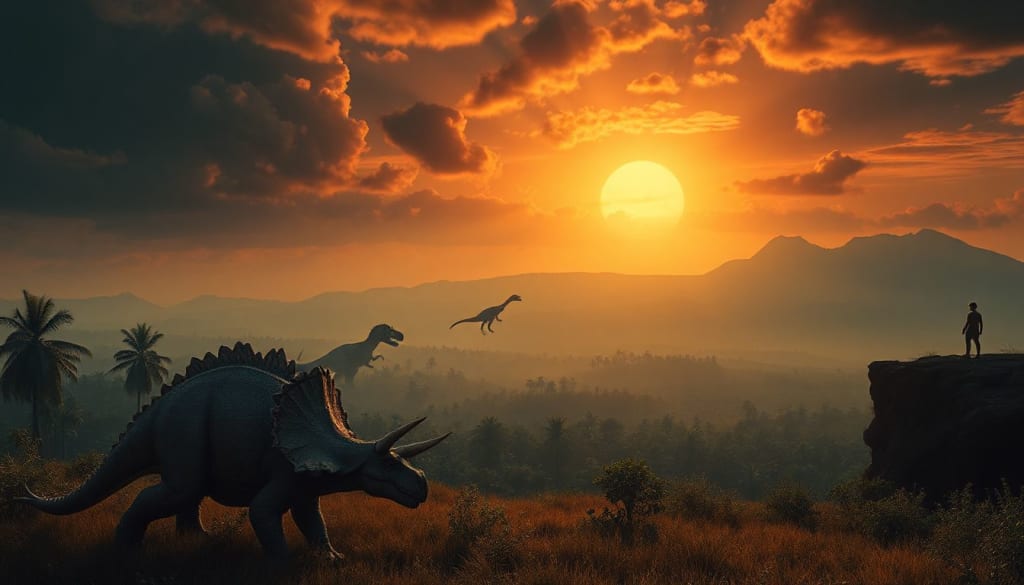
Dinosaurs Roamed Earth for 165 Million Years: Why Humans Have Only Scratched the Surface
Imagine a world where giant beasts with sharp teeth and long necks filled the land. These creatures, dinosaurs, walked Earth for 165 million years. That's a stretch of time so huge it dwarfs our own story. Humans? We've been around for just 300,000 years. That makes up only 0.2% of the dinosaur timeline.
Think about it. If dinosaur history was a full day, from dawn to midnight, all of human existence would fit into the last few seconds before bed. What does this gap tell us? It shows how short our stay is on this planet. It reminds us of big changes like extinctions that wipe out even the strongest rulers. In this piece, we'll look at the long rule of dinosaurs, our quick rise, and what this contrast means for us today. You'll see why terms like "dinosaurs roamed Earth" and "human timeline vs dinosaurs" capture such wonder in Earth's prehistoric history.
The Epic Reign of Dinosaurs: 165 Million Years of Dominance
Dinosaurs didn't just appear one day. They took over slowly, over millions of years. This era shaped the planet in ways we still feel. Let's break down how they rose and lasted so long.
Origins in the Triassic Period
Dinosaurs first showed up about 230 million years ago. They came from a group of reptiles called archosaurs. At that time, all land formed one big supercontinent named Pangaea. As it started to split, new spots opened for these early dinos to spread.
Fossils from places like Argentina's Ischigualasto Formation tell the tale. There, bones of small, two-legged creatures like Herrerasaurus show their start. These pioneers had strong legs and sharp claws. They dodged big events, like huge volcanoes that killed off many rivals. By the end of the Triassic, around 201 million years ago, dinosaurs began to outnumber other animals. Their flexible bodies helped them grab food and escape danger.
This early phase set the base. Dinosaurs adapted fast to dry lands and wet forests. You can picture them scurrying through ferns, hunting bugs or small prey. That grit let them build toward bigger things.
Peak in the Jurassic and Cretaceous Eras
The Jurassic Period kicked off around 201 million years ago. It ran until 145 million years back. Dinosaurs hit their stride here. Giant plant-eaters like Brachiosaurus towered over trees, with necks longer than school buses. Meat-eaters, or theropods, chased them down with speed and smarts.
Then came the Cretaceous, from 145 to 66 million years ago. This is when stars like Tyrannosaurus rex ruled. Over 1,000 species roamed forests, swamps, and plains. Some flew as early birds. Others swam in seas. The world was warm, with high seas and thick plants.
Fossil beds in Montana and Wyoming hold proof. You find eggs, tracks, and full skeletons there. These finds show a burst of life. Dinosaurs filled every niche, from tiny Compsognathus to massive Argentinosaurus. Their peak lasted tens of millions of years. No other group matched that spread.
Factors Enabling Their Longevity
Why did dinosaurs stick around so long? They ate almost anything. Some munched leaves; others tore meat. Sizes varied from chicken-small to whale-big. This mix helped them survive shifts in climate and food.
Global reach played a role too. As continents drifted, dinos moved with them. In Asia's Gobi Desert, digs uncover feathered raptors from 75 million years ago. Those feathers hint at links to birds we see today.
They bounced back from tough times. After the end-Triassic extinction, they filled empty spots quick. Strong bones and efficient lungs kept them going. Fossils from Brazil and China back this up. Dinosaurs proved tough in a changing world.
Humanity's Fleeting Footprint: Just 0.2% of the Dinosaur Timeline
Now shift to us. Our story feels epic, but it's tiny next to dinosaurs. We've changed the world fast, yet our time here is a blink. Let's trace our steps.
Dawn of Early Hominins
Our roots go back about 4 million years. Early hominins like Australopithecus walked upright in Africa. They climbed trees but also strolled on ground. The famous Lucy skeleton, found in Ethiopia in 1974, dates to 3.2 million years ago. She stood just three feet tall but walked like us.
By 2.5 million years ago, the Homo genus arrived. Homo habilis made simple stone tools. They cracked nuts and cut meat. Groups moved from forests to open plains. Fire came later, around 1 million years back, with Homo erectus. They spread to Europe and Asia.
Life was hard. Ice ages pushed them to adapt. But tools and teamwork set us apart. Fossils from Olduvai Gorge in Tanzania show their camps. Early humans learned to hunt big game and share food. That built our social bonds.
Rise of Modern Humans
Homo sapiens popped up around 300,000 years ago in Africa. We left clear marks with art and burials. About 70,000 years ago, some groups left Africa. They crossed seas to Australia and Europe.
Key steps shaped us. In France's Chauvet Cave, paintings from 35,000 years ago show lions and horses. We built boats, tamed fire, and grew crops by 10,000 years ago. Cities rose in places like Mesopotamia.
Our brains let us invent fast. Language helped plan hunts and tell stories. From spears to smartphones, we've leaped ahead. But all this happened in a flash compared to dinos.
The Mathematical Reality of 0.2%
Let's crunch the numbers. Dinosaurs ruled from 230 to 65 million years ago—that's 165 million years. Humans as Homo sapiens? Just 300,000 years. Divide: 300,000 divided by 165,000,000 equals 0.0018, or about 0.2%.
Picture it this way. If the dinosaur era was a 24-hour day, human history squeezes into 3 minutes at the end. All our wars, art, and tech? Just seconds. Tools like the Deep Time app can map this out. Try it to see how small we are.
This math hits home. It shows Earth's history dwarfs ours. We study human evolution timeline to grasp it. Searches for "how long have humans existed" spike because folks want to feel that scale.
What the Dinosaur-Human Timeline Disparity Reveals
This gap isn't just facts. It offers lessons. Dinosaurs teach us about lasting and falling. We can learn to avoid their end.
Insights into Evolution and Adaptation
Evolution favors those who fit in. Dinosaurs made it through big die-offs, like the one 201 million years ago. Volcanoes spewed ash, but they adjusted. Humans use smarts over size. We build shelters and farm food.
Charles Darwin noted natural selection picks winners. Dinosaurs had sharp senses; we have big brains. Both ways work. Feathered dinos led to birds—proof change pays off. Our tools echo that.
You see parallels in daily life. Just as dinos spread worldwide, we connect via planes and nets. But speed matters. We adapt quicker, yet face new risks.
The Fragility of Dominance
No rule lasts forever. An asteroid slammed Earth 66 million years ago. It hit at Chicxulub in Mexico, per NASA studies. Dust blocked sun, plants died, food chains broke. Dinosaurs vanished fast.
Today, we deal with climate shifts from our actions. Warming oceans and lost forests mirror that chaos. The lesson? Power can flip quick. Dinos dominated but couldn't dodge one big hit.
Think of it as a warning. Our human impact on Earth timeline grows. We must watch for threats, like rising seas or pandemics. Balance is key to stick around.
Broader Implications for Biodiversity
Dinos left gifts. Birds, with 10,000 species now, stem from them. Flowers and mammals rose after their fall. That extinction cleared space for us.
But we speed up losses. One million species face danger, says the IUCN. Dinos' story pushes us to protect life. Support groups like the World Wildlife Fund. Plant native trees or cut plastic use.
Their era built today's web of life. We inherit it—don't break it. Small steps count toward a stable planet.
Enduring Legacy: From Dinosaurs to Human Civilization
Dinosaurs aren't gone. They live in bones, stories, and science. We draw from them to understand our world.
Dinosaur Fossils and Scientific Discoveries
Fossils started our quest. In 1842, Richard Owen named "dinosaur" from old bones in England. That sparked hunts worldwide.
Now, tech like CT scans shows skin and guts. In Montana, digs pull up T. rex arms. Canada's Royal Tyrrell Museum displays thousands of specimens. You can walk halls lined with jaws and tails.
These finds rewrite books. A 2020 study found dino nerves in amber. Science builds on their bones, linking past to now.
Cultural Echoes in Human Society
Dinosaurs pop in movies and books. Jurassic Park drew from real digs, with experts like Jack Horner consulting. He says they spark kids' love for science.
Museums teach millions. Toys and games keep the fun alive. We name teams after them, like the Baltimore Ravens for a dino bird link.
This buzz drives careers. Paleontologists dig in badlands yearly. Dinos influence how we see time and change.
Actionable Ways to Connect with Deep Time
Want to feel it? Visit Dinosaur National Monument in Utah. See 1,500 bones in rock walls.
Apps like Timetree let you zoom Earth's history. Set alerts for fossil news.
Read books on prehistoric Earth. Talk with friends about our short spot. These steps build care for the planet. Act now—visit a site or join a clean-up.
Conclusion: Embracing Our Place in Earth's Vast Story
Dinosaurs roamed Earth for 165 million years, a testament to endurance and sudden ends. Humans, with our mere 0.2% slice, hold huge power in little time. This human timeline vs dinosaurs contrast urges us to learn from the past.
We see evolution's twists, dominance's risks, and biodiversity's worth. Dinos shaped the ground we walk; now we shape the future. Dive deeper at a museum or grab Stephen Jay Gould's "Time's Arrow, Time's Cycle." Share this mind-blowing scale with others. Let's honor Earth's long tale by guarding it well.
About the Creator
Story silver book
I'm a freelance writer. I'm a great communicator, with excellent writing skills and the ability to adapt to any situation.
Keep reading
More stories from Story silver book and writers in Earth and other communities.
There are 14 billion insects for every human on Earth.
There Are 14 Billion Insects for Every Human on Earth: Unraveling the Hidden World of Insect Populations Introduction Have you ever thought about how many insects share our planet? Surprisingly, for every person, there are about 14 billion insects. That number is almost hard to imagine! These tiny creatures may seem insignificant, but they play a huge role in keeping Earth healthy. Insects are essential for pollinating plants, breaking down waste, and supporting other animals. Yet, many people overlook their importance. This article will explore how scientists estimate insect numbers, why insects are so numerous, and what we can do to protect them. Understanding this hidden world can change how we view Earth's most abundant creatures.
By Story silver book 10 months ago in Earth
Man (22) Charged With Murder of English Tourist in Temple Bar
Arrest and Formal Charges A 22-year-old man has been charged with the murder of an English tourist following a fatal incident in Dublin’s Temple Bar area. The charge comes after an intensive Garda investigation into events that unfolded in one of Ireland’s busiest and most popular nightlife districts.
By Aarif Lashariabout 23 hours ago in Earth
No Word Comes Near Enough
The English language has its limits. I learned this when I became a student of the Bible and looked up the Greek and Hebrew definitions behind the Scriptures I loved. Some languages have so much more depth and power than the one I use to convey my thoughts. But, even so, I don't think any word could ever come close to describing this void and pain I am journeying through. I don't know how to swim through its murky waters.
By Shirley Belk4 days ago in Poets




Comments
There are no comments for this story
Be the first to respond and start the conversation.