
Deriving its name from combining June and nineteenth
Juneteenth is an annual celebration that commemorates the emancipation of enslaved Black people in the United States.

The full story of Juneteenth begins with the history of slavery in the United States. Enslaved Africans were brought to America beginning in the early 17th century, and slavery became deeply rooted in the country's economy and social structure.
On January 1, 1863, President Abraham Lincoln issued the Emancipation Proclamation, which declared that all slaves in Confederate territory were to be set free. However, due to the ongoing Civil War, it was challenging for the Union Army to enforce this proclamation in certain areas of the country.
It wasn't until two and a half years later, on June 19, 1865, that the news of emancipation reached the enslaved African Americans in Texas. This day became known as Juneteenth, a portmanteau of "June" and "nineteenth." On that day, Union Army General Gordon Granger arrived in Galveston, Texas, and read aloud General Order No. 3, which stated that all slaves in Texas were now free.
Juneteenth marked a significant milestone in the abolition of slavery in the United States. It signified the end of legal enslavement and the beginning of a new era of freedom for Black people. African Americans in Texas rejoiced in the streets, celebrating their newly gained freedom.
In the years following the announcement, Juneteenth celebrations spread throughout Texas and eventually to other parts of the country as African Americans migrated to different regions. The celebrations included various activities, such as parades, picnics, prayer services, singing, and storytelling, which aimed to commemorate the struggles and achievements of Black Americans.
Despite the jubilation of Juneteenth, the newly emancipated individuals faced significant challenges in their quest for true freedom and equality. They encountered resistance, violence, and systemic oppression as they sought to rebuild their lives and communities.
Over time, Juneteenth became an important cultural touchstone within the African American community. It served as a reminder of the strength, resilience, and determination of their ancestors who endured the hardships of slavery.
In recent years, there has been a renewed recognition and acknowledgment of Juneteenth's historical significance. Efforts to commemorate the day on a larger scale gained momentum, and various organizations, communities, and individuals began to promote Juneteenth as a national celebration.
On June 17, 2021, the U.S. Senate unanimously passed a bill to establish Juneteenth as a federal holiday, and it was subsequently signed into law by President Joe Biden. This marked a pivotal moment in American history, as Juneteenth became the first new federal holiday since Martin Luther King Jr. Day was established in 1983.
The recognition of Juneteenth as a federal holiday represents a step towards fostering a greater understanding of the nation's complex history and the ongoing fight for racial equality. It serves as a time for reflection, education, and celebration, promoting unity and solidarity among people of all backgrounds.
After the establishment of Juneteenth as a federal holiday, its observance has grown even more widespread. Juneteenth celebrations now take place in communities across the United States. The holiday provides an opportunity for individuals of all backgrounds to come together, learn, and engage in conversations about the history and experiences of African Americans.
Juneteenth events often feature educational programs, historical reenactments, guest speakers, art exhibitions, and cultural performances. Many communities organize parades or marches to commemorate the journey from enslavement to freedom. Food, music, and dance are also integral parts of the celebrations, with traditional African American dishes and music filling the air.
Moreover, Juneteenth has become a platform to address ongoing social and racial issues. Activists and community leaders utilize the holiday as a means to advocate for equality, justice, and the eradication of systemic racism. It serves as a reminder of the work that still needs to be done to ensure that all individuals are treated with dignity and respect.
Juneteenth's significance extends beyond the borders of the United States. Its message of freedom, resilience, and human rights has resonated with people worldwide. Observances and commemorations of Juneteenth have been organized in other countries to stand in solidarity with the African American community and promote awareness of the ongoing struggles against racism and oppression.
As the recognition of Juneteenth continues to grow, efforts are being made to expand education about its history in schools and incorporate it into the national narrative. This broader understanding of Juneteenth helps foster empathy, cultural understanding, and a commitment to creating a more equitable society.
In conclusion, Juneteenth stands as a vital celebration of the emancipation of enslaved Black people in the United States. It serves as a reminder of the resilience and determination of those who fought for freedom and equality. Juneteenth's recognition as a federal holiday represents a significant milestone in acknowledging the nation's history and promoting unity. Through education, reflection, and celebration, Juneteenth invites individuals to participate in the ongoing journey toward justice and equal rights for all
About the Creator
Keep reading
More stories from Sapan Pall and writers in Earth and other communities.
The Shifting Paradigm
Title: "The Shifting Paradigm: Exploring the Transformative Trends Shaping the USA Today" Introduction: In a nation that constantly evolves, trends emerge as the pulse of societal change. The United States of America is no stranger to the ebb and flow of trends that shape its culture, economy, and way of life. Join us as we embark on an illuminating journey, unraveling the current trending topics in the USA. From technological advancements to social movements, we delve into the transformative forces that are reshaping the American landscape.
By Sapan Pall3 years ago in Journal
Images Show Aftermath of Deadly Crash on Thai Railway Line
Some images stay with you long after you scroll past them. The photographs coming out of Thailand this week do exactly that. Twisted steel, overturned train carriages, scattered luggage, and exhausted rescue workers tell a devastating story — one that words alone cannot fully explain. A deadly crash on a Thai railway line has claimed multiple lives and left dozens injured, turning an ordinary journey into a nightmare. As images from the scene circulate globally, they reveal not just destruction, but grief, courage, and difficult questions about safety in one of Southeast Asia’s busiest rail networks. A Normal Journey That Ended in Disaster For the passengers on board, the day began like any other. People were heading to work, returning home, or traveling to see family. The train moved steadily along the tracks — until everything suddenly changed. According to officials, the crash occurred when heavy construction equipment collapsed onto an active railway line, striking a moving passenger train. The impact derailed multiple carriages, causing chaos inside the train as metal twisted and windows shattered. Within moments, smoke filled the air and cries for help echoed from inside the wreckage. For many passengers, there was no time to react. What the Images Reveal The aftermath photos are haunting. In some images, train carriages lie on their sides, crushed and burned. In others, rescue teams climb over debris, cutting through metal to reach trapped passengers. Personal belongings — backpacks, shoes, food containers — are scattered across the tracks, quiet reminders of lives abruptly interrupted. One particularly striking image shows emergency workers standing silently beside the wreckage, their faces reflecting exhaustion and sorrow. These visuals do more than document damage; they capture the emotional weight of the tragedy. Images like these remind us how fragile routine can be — how quickly normal life can turn into crisis. The Human Cost of the Crash Authorities confirmed that multiple people lost their lives, while dozens were injured, some critically. Hospitals in nearby areas were quickly overwhelmed as ambulances transported victims from the scene. Families rushed to medical centers, searching for loved ones. For many, the wait for information was agonizing. Phone calls went unanswered. Names were not immediately confirmed. In moments like these, uncertainty can be as painful as loss itself. Survivors have described scenes of panic, confusion, and shock. Some helped fellow passengers escape wrecked carriages. Others waited helplessly, trapped until rescuers could reach them. Rescue Efforts Under Pressure Emergency response teams acted quickly, working against time and unstable conditions. Firefighters, paramedics, and volunteers used cutting tools and heavy machinery to clear wreckage and pull survivors to safety. Despite the dangers, many rescuers worked for hours without rest. Some images show medics kneeling beside injured passengers on the ground, administering care before transport. Others show cranes lifting destroyed train cars away from the tracks. Their efforts likely saved lives — but the scale of the damage made the operation incredibly challenging. How Did This Happen? As the shock begins to settle, attention has turned to how such a catastrophic accident was allowed to occur. Early reports suggest the crash involved construction work taking place near or above an active railway line. This has raised serious concerns about oversight, safety planning, and coordination between construction teams and railway authorities. Questions being asked include: Why was heavy equipment operating so close to a moving passenger train? Were safety inspections properly conducted? Were warning systems or track closures considered? An official investigation is now underway, but for many families, answers will come too late. A Wake-Up Call for Railway Safety Thailand has invested heavily in rail infrastructure in recent years, aiming to modernize transport and improve connectivity. But this tragedy highlights the risks that come with rapid development when safety measures fail or are ignored. Experts warn that construction near live railway lines requires strict controls, constant monitoring, and zero tolerance for shortcuts. Even a single failure can lead to irreversible consequences — as this crash painfully demonstrates. Public trust in rail safety has been shaken, and restoring it will require transparency, accountability, and meaningful reform. Grief, Solidarity, and Remembrance In the days following the crash, communities across Thailand have expressed sorrow and support. Vigils have been held. Messages of condolence continue to pour in. Volunteers have donated blood and supplies to help victims and hospitals. The images from the scene have united people in grief — not just in Thailand, but around the world. They serve as a reminder that behind every headline are real people, real families, and real loss.
By Muhammad Hassan6 days ago in Earth
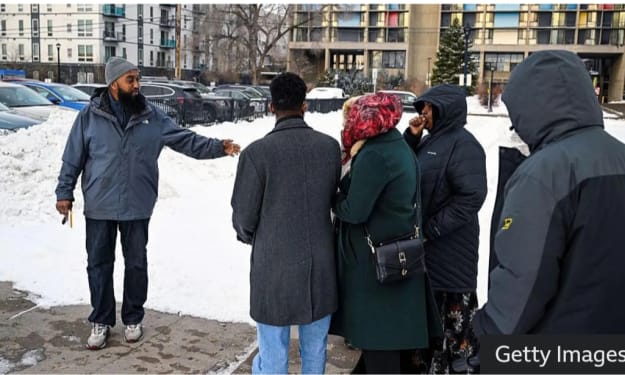
Trump Administration Moves to End Deportation Protection for Somalis
The Trump administration has moved to end long-standing deportation protections for Somali nationals living in the United States, a decision that could place tens of thousands of people at risk of removal. The move has sparked alarm among immigrant communities, human rights organizations, and legal experts, who warn that returning Somalis to a country still grappling with instability could have severe humanitarian consequences. As the policy change unfolds, it has reignited debate over immigration enforcement, executive authority, and America’s obligations to people fleeing conflict.
By Aarif Lashari6 days ago in Earth



Comments
There are no comments for this story
Be the first to respond and start the conversation.