
In a world that often defies comprehension, scientists grapple with the inexplicable, presenting us with mysteries that boggle the mind. Yet, amid the allure of the unknown, there's an undeniable fascination in unraveling these perplexities. Dr. Sammy, in an engaging exploration titled "Unveiling the Enigma: Stories Behind Solved Mysteries," encourages us to appreciate the captivating tales of scientific discovery that demystify seemingly inexplicable phenomena.
One intriguing story is the Kentucky Meat Shower, an event that unfolded in March 1876, defying all logic. The inexplicable phenomenon involved chunks of meat raining down in Bath County, Kentucky. Through meticulous investigation and the analysis of preserved samples, scientists discovered that vultures, engaging in synchronized projectile vomiting, were the unexpected culprits behind this bizarre occurrence.
The Kentucky Meat Shower, a phenomenon in March 1876 where chunks of meat rained down in Bath County, Kentucky, defied all logic. The inexplicable event puzzled residents until scientists unraveled the mystery. Through meticulous investigation and the analysis of preserved samples, researchers discovered that vultures were the unexpected culprits. Engaging in synchronized projectile vomiting, these birds were responsible for the meaty deluge, turning a seemingly supernatural event into a scientifically explainable occurrence.
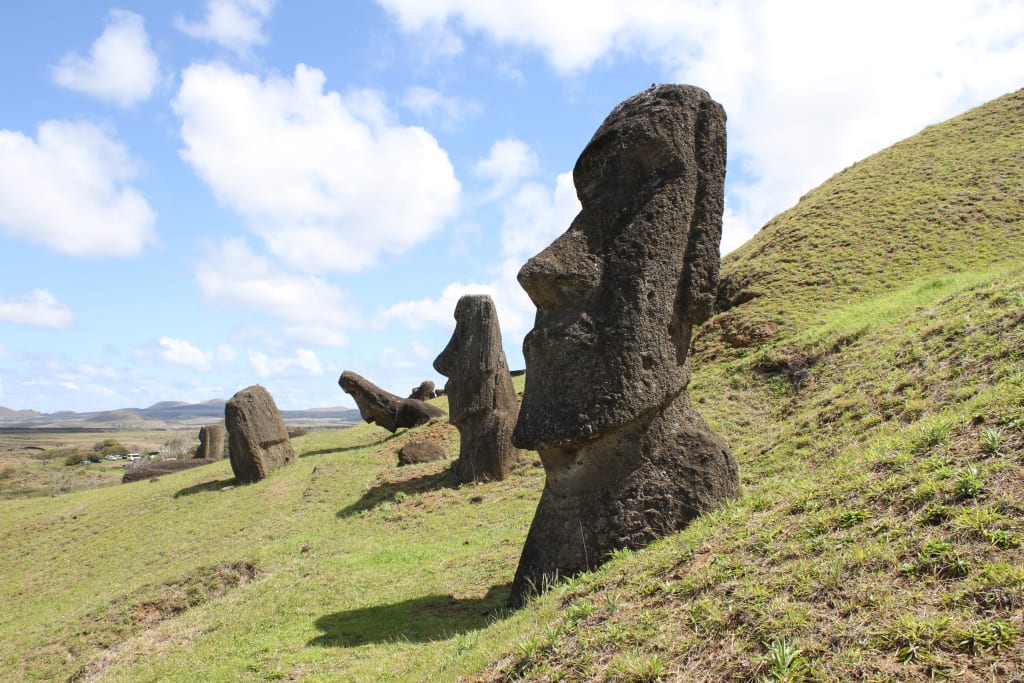
Transitioning to Easter Island, the narrative unravels the mystery of the giant moai statues and their enigmatic red hats. Previously obscured by the passage of time, the process of placing these colossal hats on the statues was deciphered through modeling, showcasing the ingenious technique of parbuckling employed by the Rapa Nui people. This revelation not only demystifies the historical construction of the moai but also highlights the resourcefulness of ancient civilizations.
The mysterious red hats atop Easter Island's giant moai statues have long perplexed historians and archaeologists. Carved at least 400 years ago by the Rapa Nui people of Polynesia, these hats, weighing up to 12 metric tons, seemed impossible to place on the statues due to their massive size. However, a 2018 study published in the Journal of Archeological Science shed light on this enigma. Through modeling and analysis, researchers proposed that the Rapa Nui likely used a technique called parbuckling. Carving the stones into cylinders and utilizing a team of individuals, they rolled these massive hats to the statues, debunking centuries-old mysteries and revealing the innovative methods employed by ancient civilizations.
The episode further explores earthquake lights, a phenomenon reported by individuals before and during seismic events. Through scientific investigation, researchers determined that electrical activity in specific types of rocks, particularly volcanic ones, explained the occurrence of these mysterious lights, dispelling previous notions of UFO involvement or disruptions in Earth's magnetic field. This revelation not only unveils the scientific basis for earthquake lights but also showcases the interconnectedness of geological processes.
The mesmerizing occurrence of earthquake lights, reported by individuals before and during seismic events, puzzled scientists for centuries. Previously attributed to UFOs or disruptions in Earth's magnetic field, these lights found a rational explanation through scientific inquiry. Researchers discovered that electrical activity in certain types of rocks, especially volcanic ones, caused the phenomenon. This revelation not only demystifies a long-standing mystery but also highlights the intricate relationship between geological processes and atmospheric phenomena.
Moving on to the Sailing Stones of Death Valley, the episode recounts the puzzling movement of rocks across the Racetrack dry lake bed. A team of researchers, employing GPS sensors and patient observation, uncovered that these stones only moved under specific conditions involving ice formation, wind, and the unique dynamics of the lake bed. This discovery not only explains the mysterious trails left by these stones but also showcases the importance of interdisciplinary approaches in scientific exploration.
The enigmatic Sailing Stones of Death Valley, known for their mysterious movement across the Racetrack dry lake bed, puzzled scientists for years. Employing GPS sensors and a patient observational approach, a team of researchers uncovered the specific conditions under which these stones move. The intricate interplay of ice formation, wind, and the unique dynamics of the lake bed elucidated the once-baffling phenomenon, exemplifying the significance of interdisciplinary approaches in scientific exploration.
The Bloop, a mysterious sound recorded in the ocean in 1997, sparked speculations of sea monsters. However, subsequent research revealed that the Bloop was likely an icequake, dispelling fantastical notions and attributing the sound to the cracking of large chunks of ice. This scientific explanation not only clarifies the origin of the Bloop but also emphasizes the importance of considering natural phenomena before entertaining supernatural possibilities.
The eerie sound known as the Bloop, recorded in the ocean in 1997 and initially fueling speculations of sea monsters, found a rational explanation through subsequent research. Scientists identified the Bloop as likely resulting from an icequake, the cracking of large chunks of ice beneath the ocean's surface. This scientific revelation not only demystifies the once-enigmatic sound but also underscores the importance of prioritizing natural explanations over fantastical conjectures.
Finally, the episode concludes with an exploration of will-o'-the-wisps, ethereal lights often associated with folklore and marshy landscapes. Contrary to supernatural beliefs, scientists propose that these lights result from spontaneous combustion, where specific gas mixtures react with atmospheric oxygen, producing fleeting, glowing phenomena. This revelation not only dispels mythical notions surrounding will-o'-the-wisps but also unveils the peculiar chemistry behind these ghostly lights.
The mystical will-o'-the-wisps, ethereal lights haunting marshy landscapes in folklore, find a scientific explanation in spontaneous combustion. Contrary to supernatural beliefs, scientists propose that specific gas mixtures reacting with atmospheric oxygen produce these fleeting, glowing phenomena. This revelation not only demystifies the origin of will-o'-the-wisps but also unveils the peculiar chemistry behind these ghostly lights, showcasing the intersection of scientific inquiry and ancient myths.
"Unveiling the Enigma" masterfully combines the allure of unsolved mysteries with the captivating narratives of scientific inquiry, reminding us that the pursuit of knowledge can be as enchanting as the mysteries themselves. Through meticulous research and interdisciplinary approaches, scientists continue to unravel the enigmas that captivate our imaginations, turning once-baffling occurrences into stories of discovery and understanding.
About the Creator
Līva
World is interesting place. Scary, but worth living.
Nature is full of surprises and people are... well, people are something else.
Art is the best doctor.
Nuclear Transmutation: The Accidental Dream of Making Gold
Picture a laboratory humming with quiet intensity, banks of instruments blinking in the low light, and somewhere inside a shielded reactor chamber, something almost magical is happening. An element is changing. One thing is becoming another. What was mercury is now, atom by atom, becoming gold.
By CurlsAndCommas4 days ago in Earth



Comments
There are no comments for this story
Be the first to respond and start the conversation.