
Deadly Nightshade
Unraveling the Enigmatic Plant That Charmed Kings, Terrified Witches, and Holds Lethal Secrets

In the vast tapestry of the botanical world, few plants boast a reputation as sinister and enigmatic as the deadly nightshade, scientifically known as Atropa belladonna. This Eurasian cherry-producing plant, draped in a cloak of dark mystique, has garnered a host of ominous aliases, including the death cherry, the devil's berry, and the beautiful death. Join me, Tasha the Amazon, on Floralogic, as we embark on a journey to unravel the tale of this intriguing and perilous flora.
Deadly nightshade, with its petite, bell-shaped flowers and alluring cherry-like berries, is a charming yet deceptive presence in nature. Despite its seemingly innocent appearance, this plant houses a potent arsenal of tropane alkaloids, deployed as a defense mechanism against insect predators. However, when ingested by vertebrates, these alkaloids unleash havoc on the body's smooth muscles, affecting the urinary and gastrointestinal tracts, as well as sweat glands. The consequences of consuming this toxic plant range from extreme dry mouth and hallucinations to delirium and, in severe cases, death.
Throughout history, deadly nightshade has found nefarious applications, becoming a tool of intrigue and treachery. In 1030, during the tumultuous reign of Macbeth and Duncan in Scotland, deadly nightshade tea played a cunning role in poisoning English troops, resulting in casualties and a strategic retreat. Emperor Augustus of Rome faced a rumored assassination attempt by his wife, Livia, who ingeniously employed deadly nightshade to ensure her son inherited the throne.
Native to Eurasia, deadly nightshade has spread its toxic influence to Africa and North America, making it crucial for individuals to identify and avoid this perilous plant. Recognizable by its small bell-shaped flowers, long leaves, and small circular berries, the deadly nightshade undergoes a color transformation as it matures, shifting from green to a ominous purple hue. The roots emerge as the most toxic part, while shockingly, a single leaf contains enough poisonous alkaloids to prove fatal to an adult.
Caution surrounding deadly nightshade extends beyond humans, as dogs are susceptible to the plant's toxicity. On the contrary, some animals, including rabbits, sheep, and cows, appear resistant, while bees unknowingly produce slightly toxic honey after consuming the nectar from deadly nightshade flowers.
Despite its inherently deadly nature, humans have, over time, harnessed deadly nightshade in small doses for various purposes. In the Mediterranean, the plant has a historical association with cosmetics, as its scientific name, belladonna, translates to "beautiful woman." Cleopatra herself reportedly used a diluted tea of deadly nightshade as eye drops, causing pupil dilation for a unique and captivating appearance. During the Middle Ages, women sought dilated pupils, despite the practice causing long-term vision damage.
Intriguingly, deadly nightshade and its toxic relatives have been proposed as remedies for various health issues, ranging from chronic pain to asthma. However, scientific evidence supporting their efficacy remains scarce, with most positive effects potentially attributed to the placebo effect. In controlled dosages, deadly nightshade has been known to elevate mood, enhance libido, and induce hallucinations.
Beyond its medicinal applications, deadly nightshade played a significant role in religious persecution and witch hunts during the Middle Ages. The plant, a common ingredient in witches' brews, caused hallucinations and erratic behavior, leading to accusations of sorcery. Even medieval surgeons utilized it as an anesthetic, although its discontinuation was prompted by the escalating fear of being associated with sorcery.
From its humble origins as an insect repellent to its role in royal intrigue and ongoing debates about its medicinal properties, the deadly nightshade has woven a complex narrative throughout history. Approach with extreme caution, for this seemingly innocuous plant holds lethal secrets that have both intrigued and terrified humanity across the ages. Whether charming kings, terrifying witches, or sparking medicinal debates, the deadly nightshade remains an enigmatic force in the botanical world
About the Creator
Līva
World is interesting place. Scary, but worth living.
Nature is full of surprises and people are... well, people are something else.
Art is the best doctor.
Inside Trump's $11 Billion Health Plan to Replace “Neo-Colonial” USAID
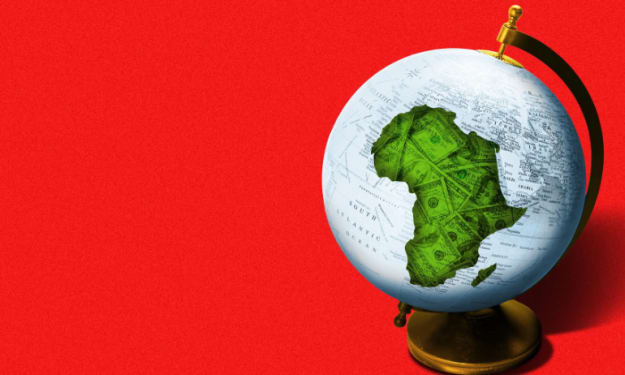
In the landscape of global health aid, few proposals have stirred as much debate as former President Donald Trump’s ambitious plan to restructure American assistance abroad. Dubbed an $11 billion health initiative aimed at replacing USAID’s current framework, the plan seeks to pivot away from what Trump and his allies have criticized as the “neo-colonial” approach of U.S. foreign aid. While the plan promises greater efficiency and impact, experts are split on whether it is a practical solution or a politically driven gamble. Trump’s Critique of USAID The United States Agency for International Development (USAID) has long been a central pillar of American foreign assistance, distributing billions in aid annually to address health crises, food insecurity, and development challenges worldwide. However, Trump’s administration and its supporters have often described USAID’s approach as bureaucratic, inefficient, and reflective of a “neo-colonial” mindset. In public statements, Trump argued that the U.S. was spending taxpayer dollars on programs that benefited foreign governments or contractors more than the intended local communities. Critics of the plan say that while USAID has flaws—as any large bureaucracy does—its extensive networks and decades of experience provide an unmatched capacity to deliver aid efficiently and safely. The Core of the $11 Billion Proposal At the heart of Trump’s proposal is an $11 billion fund designed to consolidate, modernize, and streamline U.S. health aid. Unlike the traditional USAID model, which relies heavily on long-term partnerships with governments and NGOs, the new plan emphasizes: Direct Impact Funding: Allocating resources to frontline health workers and local initiatives rather than intermediaries. Data-Driven Investments: Using real-time health data to target outbreaks and crises more efficiently. Private Sector Partnerships: Leveraging U.S. pharmaceutical companies, tech firms, and healthcare startups to deliver vaccines, treatments, and medical infrastructure. Shorter Program Cycles: Moving away from multi-year funding commitments in favor of more flexible, results-oriented programs. Proponents argue that this approach could reduce bureaucratic overhead and ensure U.S. aid reaches communities faster. By “cutting out the middlemen,” Trump supporters claim, America can avoid the pitfalls of slow-moving aid programs that sometimes fail to adapt to crises. Reactions from the Global Health Community Global health experts, however, have expressed concern about both the logistics and philosophy of the plan. Dr. Melissa Ortega, a senior researcher at the Global Health Policy Institute, explained, “The idea of bypassing established structures like USAID may sound appealing on paper, but in practice, it risks undermining decades of institutional knowledge. Health systems are complex, and short-term projects cannot replace long-term capacity building.” Some critics have also questioned the characterization of USAID as “neo-colonial.” While U.S. foreign aid has historically been tied to geopolitical interests, many programs today are designed collaboratively with recipient countries and local organizations. Reducing oversight could unintentionally increase the risk of misuse, corruption, or health inequities. On the other hand, supporters of Trump’s plan point to examples of inefficiency in USAID programs, citing cases where aid was delayed or mismanaged. By introducing more direct funding models, they argue, U.S. taxpayer dollars could achieve a higher “return on health outcomes.” Political Implications Trump’s health aid overhaul proposal is not just about international development—it is also deeply political. Framing USAID as a “neo-colonial” institution resonates with a populist narrative that America should prioritize its own citizens and assert greater control over how taxpayer money is spent abroad. Domestically, the $11 billion plan faces scrutiny from Congress. Lawmakers from both parties have questioned whether dismantling USAID’s systems could destabilize ongoing health programs in countries where the U.S. has long-term commitments. The potential impact on global health security—including the fight against pandemics like COVID-19—adds another layer of concern. Internationally, U.S. allies and partner nations are watching closely. Sudden shifts in aid delivery could disrupt health programs in low- and middle-income countries, many of which rely on predictable funding cycles to maintain vaccination campaigns, maternal health services, and disease surveillance. Possible Benefits and Risks If executed carefully, the Trump-backed model could bring several benefits: Faster Response Times: Direct funding could accelerate delivery of vaccines, treatments, and emergency support. Innovation Boost: By partnering with private sector companies, the plan could accelerate development of new health technologies. Accountability: With performance-based metrics, the plan may better measure the impact of U.S. aid. However, the risks are equally significant: Disruption of Existing Programs: Abrupt changes could destabilize ongoing health projects. Loss of Expertise: USAID’s decades of experience in navigating local governance, supply chains, and community engagement may be hard to replace. Geopolitical Fallout: Allies accustomed to collaborating with USAID might see the move as destabilizing, reducing cooperation on global health initiatives. Looking Ahead As Trump and his allies continue to advocate for this $11 billion overhaul, the debate over the future of U.S. health aid is intensifying. Proponents view it as a necessary modernization of an outdated system, while critics fear it could undercut decades of carefully built infrastructure and global partnerships. Ultimately, the success of this plan will hinge on its ability to balance efficiency with stability, innovation with oversight, and political objectives with humanitarian needs. For now, the proposal remains controversial, representing a dramatic departure from traditional approaches to U.S. foreign aid. Whether it will reshape global health for the better—or simply create more uncertainty—remains to be seen. In the end, the Trump health plan is as much about ideology as it is about dollars. It challenges the conventional wisdom of international development and asks whether a more streamlined, results-focused approach can truly replace a system built over decades. As the world watches, the stakes could not be higher: the future of U.S. global health aid—and the lives it touches—hangs in the balance.
By Muhammad Hassan3 days ago in Earth
Nitrogen is necessary for young tropical rain forests to combat climate change.
By absorbing carbon dioxide from the atmosphere and storing it in wood, tropical rainforests contribute to the slowing of climate change. Forests that develop quickly are even more important because they absorb carbon more quickly.
By Francis Dami2 days ago in Earth



Comments
There are no comments for this story
Be the first to respond and start the conversation.