
Curiosity Rover Finds Largest Carbon Chains on Mars from 3.7-Billion-year-old Rock
Curiosity rover finds largest carbon chains on Mars from 3.7-billion-year-old rock

### Introduction: A Game-Changing Discovery on the Red Planet
In a monumental scientific breakthrough, NASA’s **Curiosity rover** has uncovered the most **complex carbon chains on Mars** to date. Found in sedimentary rocks estimated to be **3.7 billion years old**, these organic molecules could provide vital clues about the **potential for ancient life on Mars**.
This find marks a significant step forward in astrobiology and planetary science, raising big questions: Could Mars have once supported life? And what exactly do these **large Martian carbon chains** reveal about the planet’s history?
---
### Where Was the Discovery Made?
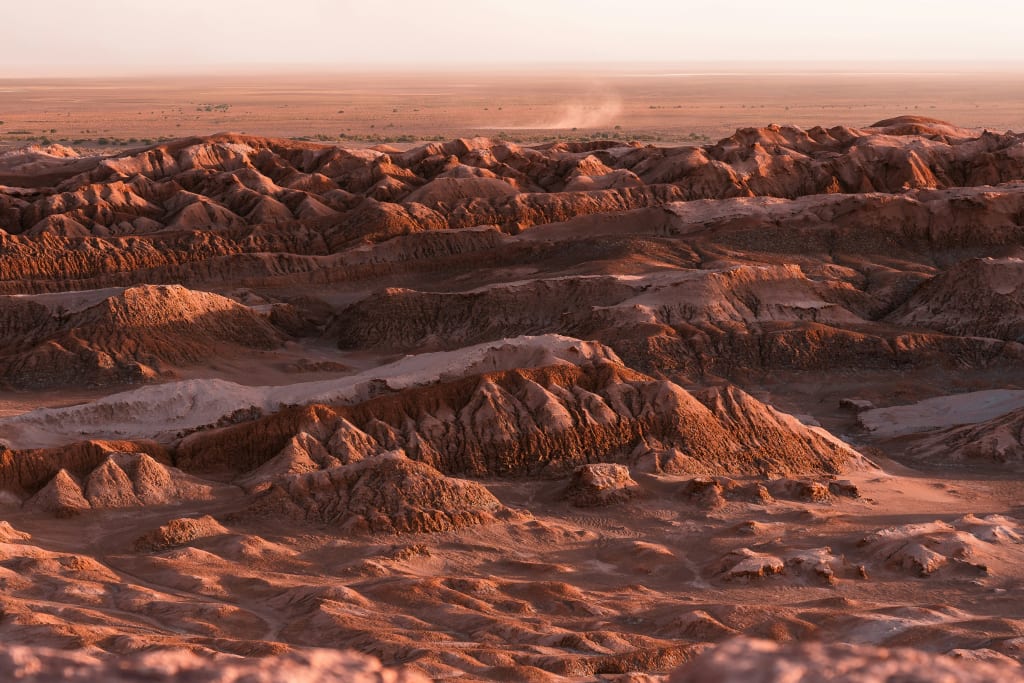
The **Curiosity rover** has been exploring **Gale Crater** since 2012, and this recent discovery comes from a region known as the **Sulphate-Bearing Unit**. Scientists have long suspected this area once held ancient lakes or streams during Mars' wetter past.
Using its advanced **Sample Analysis at Mars (SAM)** instrument, Curiosity drilled into Martian rocks and detected **macromolecular organic compounds**—complex chains of carbon atoms—that surpass any previous organic detections on the planet.
---
### What Are Carbon Chains and Why Are They Important?
Carbon chains, especially **long-chain organic molecules**, are considered building blocks of life. On Earth, such molecules are fundamental to all biological systems.
However, the presence of carbon-based molecules doesn’t automatically indicate life. They can form through various processes, including:
- **Biological activity**
- **Geochemical reactions**
- **Delivery by meteorites or interstellar dust**
What makes this discovery so remarkable is the **size and stability** of these carbon chains, hinting at a more chemically dynamic Mars than previously believed.
---
### Three Theories Behind the Carbon Chains on Mars
NASA scientists are currently exploring three possible origins for the **carbon molecules on Mars**:
#### 1. **Ancient Martian Life**
The most exciting hypothesis is that these carbon chains were produced by **microbial life forms** that once lived in Gale Crater. If true, this would represent the first direct evidence of **extraterrestrial life** in our solar system.
#### 2. **Non-Biological Geochemical Reactions**
The carbon chains might have formed through purely chemical processes deep within the Martian crust. Heat, pressure, and mineral interactions can sometimes produce complex organics without any biological influence.
#### 3. **Extraterrestrial Delivery**
Some scientists propose that **organic-rich meteorites** or cosmic dust could have deposited these molecules on Mars billions of years ago. This theory aligns with the idea that the building blocks of life might be widespread throughout the universe.
---
### Why the 3.7-Billion-Year Age Matters
The rock containing these carbon molecules dates back to the **Noachian era**, a time when Mars was likely much warmer and wetter. This era overlaps with the early emergence of life on Earth, suggesting that **Mars may have had similar life-supporting conditions**.
This connection makes the discovery even more compelling. If life started on Earth and Mars around the same time, could they share a common biological origin? Or did life arise independently on both planets?
---
### Expert Insight: What Scientists Are Saying
Dr. Jennifer Eigenbrode, a lead scientist at NASA’s Goddard Space Flight Center, remarked:
> “These carbon chains are far more complex than anything we’ve seen on Mars before. Whether they came from ancient life or geochemical processes, they provide a critical piece of the puzzle.”
This isn’t Curiosity’s first encounter with organics—smaller organic molecules were discovered in 2018—but this latest find significantly deepens the intrigue surrounding **Mars' organic chemistry**.
---
### Implications for Future Mars Missions
This discovery directly supports upcoming missions like the **Mars Sample Return Mission**, where rock and soil samples will be brought back to Earth for detailed lab analysis. If similar **organic molecules on Mars** are found and analyzed here, it could confirm their **biological or abiotic** origin.
Additionally, Curiosity’s sibling rover, **Perseverance**, is also exploring areas likely to contain organic-rich rocks. Scientists are hopeful that continued exploration will yield even more insights into **Mars' potential habitability**.
---
### Conclusion: Are We Closer to Finding Life on Mars?
While the presence of **complex carbon chains on Mars** doesn't confirm the existence of ancient life, it certainly strengthens the case for Mars once being a habitable world. The fact that these molecules are still intact after billions of years is a testament to Mars’ geological stability in certain regions.
Whether the result of **microbial life**, **chemical evolution**, or **extraterrestrial delivery**, these findings underscore how much we still have to learn about Mars—and how close we might be to answering the age-old question: **Are we alone in the universe?**
---
### Key Takeaways
- **Curiosity rover** discovered the **largest carbon chains ever found on Mars**.
- The molecules were found in **3.7-billion-year-old sedimentary rocks** in Gale Crater.
- Possible origins include ancient life, geochemical processes, or meteorite delivery.
- Discovery supports future missions like the **Mars Sample Return Mission**.
- The find deepens the mystery—and promise—of **life on Mars**.
---
**Suggested SEO Keywords for Additional Reach:**
- “Curiosity rover 2025 discovery”
- “Mars organic molecule detection”
- “Search for life on Mars”
- “NASA Martian exploration”
- “Ancient Martian lakebed organics”
---
About the Creator
Kankon Mondal
Keep Smiling........
Keep reading
More stories from Kankon Mondal and writers in Earth and other communities.
Are We Finally Not Alone?
# **Are We Finally Not Alone? Webb Detects Life’s Signature on Distant Ocean Planet** For centuries, humanity has gazed at the stars, wondering if we are alone in the universe. Now, thanks to the **James Webb Space Telescope (JWST)**, we may have taken a monumental step toward answering that question. Recent observations suggest that **Webb has detected potential biosignatures on K2-18 b, a distant exoplanet covered in oceans**, sparking excitement among scientists and space enthusiasts alike.
By Kankon Mondal10 months ago in Humans
Earth’s Hidden Fires
The Black Scar of the Sahara and Other Fires That Shouldn’t Exist From high above, the Sahara Desert looks like a golden ocean—endless waves of sand broken only by scattered blue and green oases. But hidden among the dunes is something startling: a massive black region covering nearly 17,000 square miles. It’s so large it’s visible from space, yet it rarely appears in movies or documentaries. At first glance, it almost looks unnatural, as if something catastrophic happened there.
By Lexi Wilburn3 days ago in Earth
One Hard Thing
Stop me if you’ve heard this one before: You have the number, you know your schedule- you’ve even picked out the perfect day and time to make this appointment. Shoot, you’ve even picked out alternative days and times just in case their schedules can’t accommodate you!
By Taylor Rigsby7 days ago in Motivation


Comments
There are no comments for this story
Be the first to respond and start the conversation.