
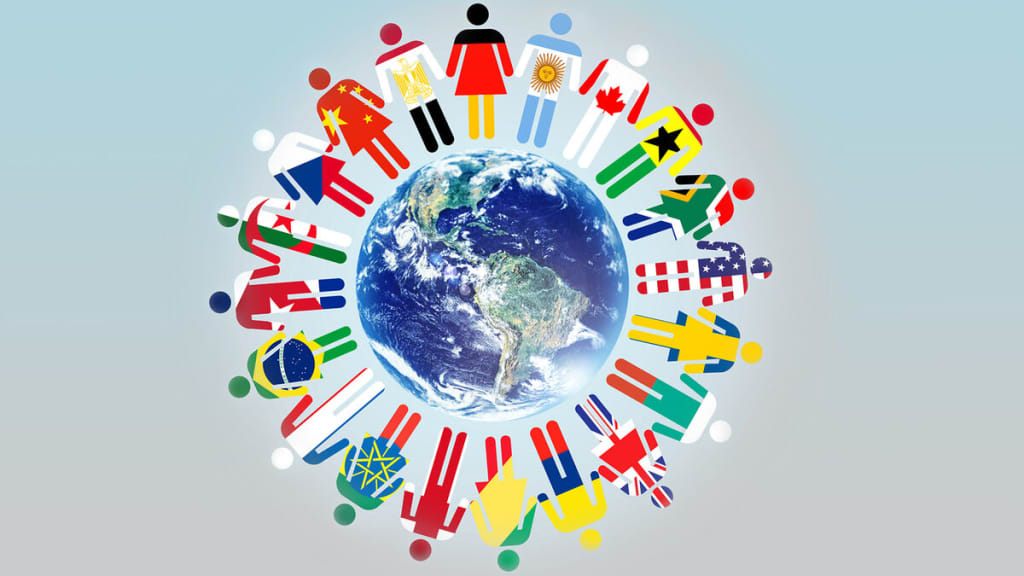
A group or society's shared values, beliefs, practices, and artifacts are referred to as its culture. History, geography, language, religion, and social structures are a few of the variables that shape and develop civilizations. Exploring the complexities of many cultures can help us understand and appreciate mankind as a whole better. The diversity of cultures around the world is a fascinating and complex topic. Learning about the nuances of various cultures can help one develop a greater appreciation for and understanding of humanity as a whole.
A cultural norm codifies acceptable behavior in society; it acts as a guideline for behavior, attire, language, and manner in a scenario, and it serves as a template for social group expectations. Accepting only a monoculture in a social group has risks, much as a single species might wither in the face of environmental change due to a lack of functional responses. Thus, in military culture, heroism is regarded as typical individual conduct, but duty, honor, and devotion to the social group are regarded as virtues or functional responses in the conflict continuum. Analogous characteristics in a social group can be observed in religious activity.
In anthropology, culture is regarded as a central concept, encompassing a wide range of phenomena transmitted through social learning in human societies. All human societies have cultural universals. Art, music, dance, ritual, and religion are examples of expressive forms, as are technologies such as tool use, cooking, shelter, and clothing. Material culture refers to physical manifestations of culture such as technology, architecture, and art, whereas intangible cultural heritage refers to principles of social organization (including practices of political organization and social institutions), mythology, philosophy, literature (both written and oral), and science.
The diversity of cultures is one of their most fascinating features. Cultures can differ significantly from one region of the world to another in terms of everything from what we eat to how we dress, from what we believe about the afterlife to our daily rituals and habits. For instance, greeting someone in some cultures involves kissing them on the cheek, while in others a simple handshake is sufficient. People use utensils in some cultures while using their hands in others. Our perspectives can be expanded, and this can increase our sensitivity to and empathy for other cultures.
Cultural invention has come to refer to any new innovation that is discovered to be useful to a group of people and expressed in their behavior but does not exist as a physical object. Humanity is in a "accelerating culture change period" driven, among other things, by the expansion of international commerce, the mass media, and, most importantly, the human population explosion. Culture repositioning refers to the reconstruction of a society's cultural concept.
The historical foundations of cultures are another significant factor. A culture's traditions, practices, and beliefs are frequently influenced by historical occurrences within that society. For instance, the legacies of colonialism and slavery have had a significant influence on the cultures of many African and American nations. American culture has been influenced by the struggles of the Civil Rights Movement, which has resulted in a greater appreciation and celebration of diversity.
Another important component of culture is language. Our choice of language affects not only how we communicate with others but also how we think and perceive the world. For instance, the language that is spoken affects how time is perceived and understood across a wide range of cultural contexts. The past, present, and future can all be expressed in the same tense in some languages, but they can also be clearly distinguished in other languages. The way we use language to express ourselves can also reveal a lot about the cultural values and beliefs we hold.
Religion is another important aspect of culture. Religious beliefs and practices can have an impact on everything from daily routines to social norms. For example, the religious doctrine of Islam shapes many aspects of life in countries where it is the dominant religion, from the way women dress to the practice of daily prayer. Christianity has also had a profound impact on the cultures of many countries around the world, influencing everything from music to literature.
Lastly, art and literature are essential cultural manifestations. A culture's stories, music, and visual art may convey a lot about its values, beliefs, and traditions. Art and literature, from prehistoric cave drawings to current films, provide insights into the human experience that transcend time and location.
In conclusion, cultures are multifaceted and complex expressions of the human experience. The rich tapestry of traditions, beliefs, and practices found throughout the world can enrich our lives and broaden our perspectives. Understanding and appreciating the complexities of various cultures can lead to increased empathy, respect, and understanding for our fellow humans.
About the Creator
Keep reading
More stories from Melis Doğu Bayazıt and writers in Earth and other communities.
Interstellar
Interstellar is a cinematic masterpiece that is both visually stunning and thought-provoking. Directed by Christopher Nolan and starring Matthew McConaughey, Anne Hathaway, and Michael Caine, the movie tells the story of a team of astronauts who embark on a mission to find a new home for humanity.
By Melis Doğu Bayazıt3 years ago in Fiction
Hotel Giant Collapses into Administration — 8,300 Employees Affected
In a shocking turn for the European hospitality sector, Revo Hospitality Group, one of the continent’s largest hotel operators, has filed for insolvency, putting about 8,300 jobs at risk. The move comes amid mounting financial pressures, rising costs, and an unstable post-pandemic market for travel and tourism.
By Aarif Lashari5 days ago in Earth



Comments
There are no comments for this story
Be the first to respond and start the conversation.