
Conversation Across Generations
Changing with the climate

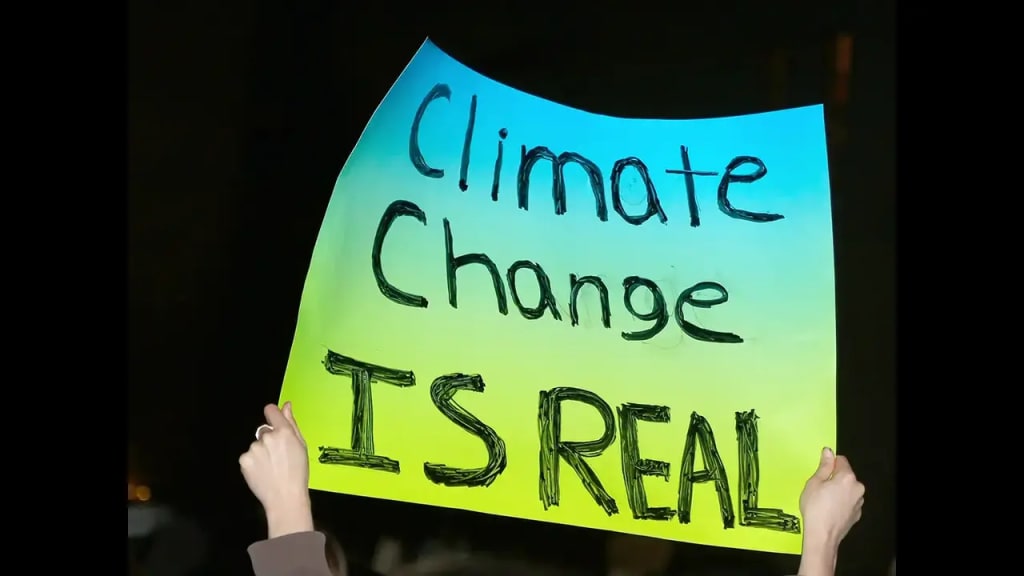
Grandfather and Granddaughter sit together in their common space, touching matters that the public would rather leave untouched. Or even worse, not consider.
Author: It is captivating that they – two people who never seem to be on the same page – settled down to discuss this topic that has slowly devoured the earth, from its crust to its core.
Granddaughter: Grandpa and I performed our ritual of mutual acknowledgement; his taking his meds, my noticing his ashen face. And denial that his days are galloping to a halt. I pushed the dreadful thought aside and engaged him in talks about feminism and the LGBTQ community– the former crippled quickly.
Grandfather: I didn’t know why she tried to trap me with her controversial topics. I said, “You already know where I stand on this. Why still bring it up?” I tried to reason with her on the LGBTQ community, but I’m clueless as to why she retorted.
Granddaughter: He used slurs and insulted Gen-Z because of that one topic! There was nothing reasonable about the manner in which he spoke. I swallowed my anger at the Frenchman who fathered my mother and showed him the tangible essence of our conversation – a picture. His reaction was as I predicted.
Grandfather: A picture. An unnerving picture. It had the whole ‘Save-the-earth’ look. I couldn’t resist spewing out, “Global warming is a scheme the generations after mine use to gain wealth and recognition. I’m not saying it isn’t real, but … we spend so much time on an issue we can’t control.”
Granddaughter: He implied that it wasn’t real. I said, “The change in climate is so subtle that you disregard it. We are neatly woven with the earth in being its victims. Water scarcity scars some places while floods torment others. Desertification has nearly crippled some habitats, while plant blooming is choking others.” I wished he could see the world from my youthful eyes.
Grandfather: The earth’s climate was never meant to be homogenous. I told her just that. I added, “We live in a world that has evolved six times! Who says we’re not evolving again?”
Granddaughter: It was at the tip of my tongue to say that his daughter, a renowned cardiologist, had said that global warming contributes to many heart-related diseases – that this evolution is harmful. Instead, I said, “It affects our social lives and many other aspects of our lives adversely.”
Grandfather: She went on about how transportation is at stake because of climate change, how the exorbitant price of fuel is an excuse for global warming (I agree). She said that train derailments are due to climate change. She was even inconsiderate enough to bring up my traumatic experience --- and experience she wasn’t alive to witness. I explained to her that it was exclusive to only consider transport as an aspect of our social lives (or life at large), and that our social lives are barely affected by climate change.
Granddaughter: He said, “The condition of the twenty-first century’s social life can be attributed to social media, not global warming.” I knew that, and I still do. But we were talking about global warming, not social media. I said, “Habitats are also part of our social lives. When natural disasters occur, people are forced out of their abodes. That affects social lives terribly, but you won’t know that because you've never been forced out of your home.” I regretted the words as they escaped from my lips.
Grandfather: I could tell that she regretted those words, but I wasn’t going to let her go without reminding her that the soles of my feet testified to the quakes of Nicaragua in ’72 and that I witnessed the crumbling of the survivors’ social lives as they were rendered homeless.
Granddaughter: Grandpa prompted for me to carry on with our discussion – after profuse apologies – so I said, “Your papa was an economist. What were his thoughts on how global warming affects the economy?”
Grandfather: I told her verbatim – that it doesn’t affect the economy.
Granddaughter: I didn’t believe that.
Grandfather: It was true. He always told me, “It’s a thing of the mind.” I told her, “That many countries cannot harness their resources doesn’t put the dynamic weather to blame.” Honestly, I was getting tired of the repetitive mundane discussion I’d had with many Geography and Economics lecturers.
Granddaughter: He said that boldly (I was shocked). He even said that many countries would become third-world countries if they kept basking under global warming (he put global warming in air quotes). I explained how global warming, in fact, affects the economy.
Grandfather: How could she tell me that extreme insolation is unfavorable to critical facilities that aided economic growth? I told her, “You’re not going to blame God for maintenance issues that we have.” After all, she told me that God made and controls the heavenly bodies.
Granddaughter: I said, “Since it is expedient that we bring God into this conversation, I must say that global warming affects religion too.”
Grandfather: I marveled at her ignorant relentlessness. “How?” I asked her, feeling furious at this teenager – though I tried to conceal it.
Granddaughter: He could barely suppress his fury, and it fueled me on. “Many religions view nature as sacred. Global warming is desecrating that. Some religions also have geographic ties, and if a natural mishap occurs, it will affect their religion.”
Grandfather: I explained to her, in a mature tone, that these religions were still coping despite the natural downfall.
Granddaughter: He said, “The landscape deteriorating with the changing climate doesn’t affect the presence of nature.” He downplayed this hot topic with a shrug. So I unleashed.
Grandfather: She talked my ear out. Apparently, I was indoctrinating indifference when I had so many religious friends; I was inconsiderate. I told her what my friend, an Anglican priest, told me.
Granddaughter: He said, “Religion is a way of life, not a ritual tied to some place.” I had to step down, he had scored a point. I knew that no matter how I argued on this, he had a comeback. I suggested watching the news and he turned it down, saying he’d watched enough of those campaigns.
Author: It is inappropriate of me to interject, but you (reader) must know that it was worrisome that Grandpa has withheld from weaponizing his PhD in Climatology against his granddaughter.
Grandfather: She said that we still needed to save the earth. I said, “You’re only looking at the negative side of this. It has helped families, fed mouths. Solar panels would be vestigial if not for this extreme insolation. It has given people qualifications! Or have you forgotten that my degree in Climatology is responsible for your family’s seeming affluence?”
Granddaughter: I didn’t forget.
Grandfather: I could see that she was discomfited, so I apologized.
Granddaughter: I said, “I know it has its advantages and disadvantages. I agree with you that it has given rise to technological innovations.” But I felt unsettled. Grandpa needed to understand that his degree didn’t give him the right to jettison global threats.
Grandfather: I could tell that she wanted to say more, so I prompted, “Do we benefit from these baneful politicians that use this for clout?” There was no way she could possibly say yes.
Granddaughter: I said, “Yes, but when you word it better with an unbiased mindset, you’ll see that they enforce laws that aim at erasing carbon footprints.”
Grandfather: I asked if they worked and she couldn’t give me an answer. That’s when I knew I’d won – or so I thought. The girl was relentless.
Granddaughter: I wouldn’t let him leave this unsettled. So I said, “It may not be obvious now, but you’ll see in the long run. I suggest you listen to Obama and not treat climate change like some far-off problem. This picture,” I gesture to the picture in his hand, “has a million interpretations. Yours and mine are different, but you should consider mine.”
Grandfather: I retorted, “I’d rather listen to Koppen and know that everything is based on what a man postulates.” Her blank stare revealed that she didn’t even know the quote. I added, “That quote has many interpretations too, and I will stick to mine.”
Granddaughter: His response made it clear that we had treated the topic, but held on to our opinions. I said,” Grandpa, I picked this topic for us to talk about because it’s too hard a topic to discuss – too vague a topic to consider. It’s not like the other topics with clear demarcations of the two sides. It’s like an ombre.”
Grandfather: I understood her.
Granddaughter: He understood me.
Author: By the way, the ending of Grandfather’s quote is, “The rest is plain sailing.”
Grandfather and Granddaughter leave their common space – accomplishing a task that has been so hard to accomplish, too vague to be tackled head-on.
About the Creator
Elsie Nwoji
My pen is powerful. I write respectfully and unapologetically. Dare I say, I speak my mind without using my lips.
Keep reading
More stories from Elsie Nwoji and writers in Earth and other communities.
I Survived
The earth split open, and from its chasms, I emerged. My mother, through the excruciating pain and relentless struggle of labor, brought me into this world. Her strength and sacrifice gave me life, yet in that same moment of creation, the earth’s fury took her away. The ground, which had once been the bearer of her suffering, now claimed her life. But amidst the chaos and devastation, it spared me. My life remains a testament to the enduring bond between mother and child, even in the face of overwhelming tragedy.
By Elsie Nwojiabout a year ago in Families
Exclusive: Amazon Plans Thousands More Corporate Job Cuts Next Week, Sources Say
Amazon, one of the world’s largest e-commerce and technology companies, is reportedly planning to announce thousands of additional corporate job cuts next week, according to sources familiar with the matter. This latest round of layoffs is part of a broader trend of corporate restructuring at the company, which has seen waves of job reductions in recent months.
By Muhammad Hassana day ago in Earth
Trump Slams UK Deal to Hand Over Chagos Islands After Previously Backing It
If you thought politics couldn’t surprise you anymore, Donald Trump just proved otherwise. In a dramatic U-turn, the former U.S. president criticized the United Kingdom’s decision to transfer sovereignty of the Chagos Islands to Mauritius—a deal he had previously backed. What was once considered a solution to a decades-long dispute has now become a hot topic, sparking debates about strategy, diplomacy, and international trust.
By Muhammad Hassan4 days ago in Earth



Comments (2)
Climate change is a severe problem today. We have to protect our nature.
I like the conversation between the grandfather and the granddaughter, even though they had different views, I like the topic too. This beautiful earth must be protected, nicely done.