
Continuing 61 days of exploration, scientists have drawn the map under the ice for the first time
Secrets under the Antarctic Ice Sheet

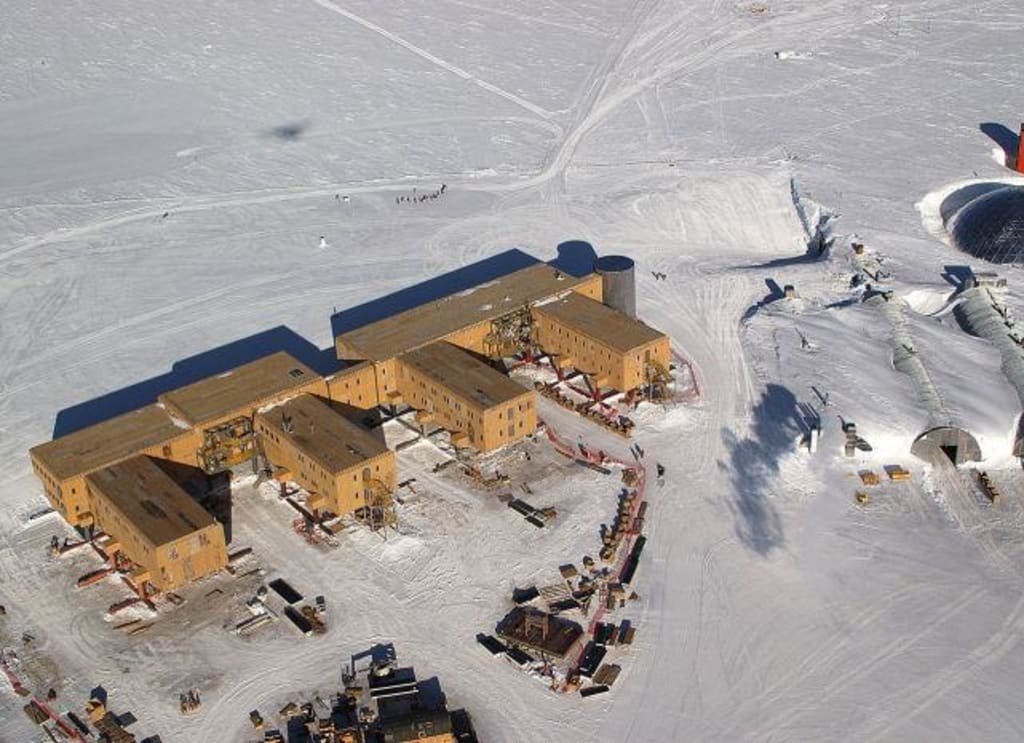
Antarctica is undoubtedly the most mysterious continent in the world. Due to the limited solar radiation it receives, it is covered with ice and snow all year round and is the only continent without human settlement.
The average thickness of the Antarctic ice sheet reaches 2160 meters, and the thickest part even reaches 4776 meters, which makes Antarctica the highest continent and contains 90% of the world's ice, which contains 70% of the world's freshwater resources.
Due to such abundant freshwater resources, any change in the Antarctic ice sheet is enough to affect the world, so Antarctica has long received extensive attention from scientists, and many scientific expedition teams are stationed here.
Perhaps because of this, Antarctica has become more and more mysterious. Some of them say that there is an underground world under the Antarctic ice sheet, or that Antarctica has an entrance to the underground world.
One of the supporting points for these claims is the discovery of lakes under the Antarctic ice sheet and the discovery of many living microorganisms.
Of course, lakes and microbes do exist under the Antarctic ice sheet. The existence of lakes under the ice sheet is easy to explain, but microbes have always puzzled scientists.
Why do microorganisms exist in such places, and what do they eat?
In a study published May 5 in the journal Science, geophysicist Chloe Gustafson and his team gave Antarctica a 61-day expedition. Did a "giant MRI" and mapped for the first time part of the area under the Antarctic ice sheet.
Their aim, of course, is not to explain why microbes exist, but to try to understand how ice sheets flow into the ocean by mapping the subsurface system—as this loss of ice sheets is critical to sea level rise.
Why is there liquid water underground in Antarctica?
Due to the movement of the Antarctic ice sheet, it has long been suspected that the Antarctic has a huge subsurface of aquifers, because any model of driving the ice sheet will need liquid water, which needs water to lubricate and form a flat surface.
For example, this study focused on Lake Whelans and its water system (this water system is the size of the entire United States, and because it is only about 800 meters under the ice sheet, it is relatively shallow and easy to study), the researchers were very early. It is clear that it is a lake of liquid water with a depth of 2.1 meters.
In fact, the reason why liquid water can exist under the Antarctic ice sheet is very simple, because the water here absorbs part of the heat of geothermal heat, as well as the heat generated by the strong friction between glaciers and rocks, enough to make its temperature close to about 0 degrees Celsius.
In addition, these areas are surrounded by thick ice sheets, which are not affected by the polar air, and heat is not easily lost, and considering that it is affected by the huge pressure, the appearance of liquid water lakes is understandable.
However, people don't know what kind of water these are - fresh or salt water, and this study addresses that question, as well as the reason for its abundance of microbes.
Because these groundwater systems are deep and limited by technology, it was previously difficult for scientists to gather direct evidence of such deep hydrological systems, but this time the research team used a technique called "magnetotelluric imaging" and finally succeeded in mapping. Antarctic underwater world.
What's Under the Antarctic Ice Sheet?
Magnetotelluric imaging relies on the electromagnetic field produced by the interaction of the solar wind with Earth's ionosphere, a layer of dense molecules and charged particles in Earth's upper atmosphere.
When the solar wind strikes the ionosphere, they excite particles within the ionosphere and create a moving electromagnetic field that can penetrate the Earth's surface.
These moving magnetic fields then induce secondary magnetic fields in ice, snow and sediments, the strength of which is related to how conductive the material there is.
So just by measuring the strength of the secondary magnetic field, it is possible to map the entire subsurface and the material it fills.
In fact, the exploration of oil and natural gas is similar to this technology. The prospector finds the target site according to some conditions, and then starts to detect the material in the ground.
Of course, there is no doubt that there is liquid water under the ice sheet, and that an intricate array of lakes and rivers, as well as water-bearing sediments, are formed.
Because of the difference in electrical conductivity between fresh water and salt water, the researchers are the first to prove that the Antarctic ice sheet is salt water rather than fresh water, because salt water is less likely to freeze (because salt ions move faster in solvents than water molecules) , which may also be a reason for the existence of liquid water under the ice sheet.
And the researchers also found that the deeper the ice sheet, the closer it is to the conductivity of seawater, while the shallowest parts near the ice sheet are closer to fresh water, suggesting that groundwater interactions may exist.
In addition, from the bottoms of liquid water rivers and lakes, they found a thick "sedimentary sponge" extending to about 5 kilometers below the sediments that contained liquid water in shallower lake and river systems at the bottom of the ice sheet 10 times or more.
Why are there so many microorganisms under the Antarctic ice sheet?
These facts help scientists understand how the Antarctic ice sheet flows, but what does this have to do with the microbes at the base of the Antarctic ice sheet?
In fact, the relationship lies in where the seawater comes from. If these are seawater, then the microorganisms can completely eat the nutrients brought by the seawater.
Based on the amount of radiocarbon found in the upper sediments in a previous study, scientists estimated that much of this brine had reached under the ice sheet over the past 10,000 years.
The only reason why sea water poured inland was because the climate was warm enough that the ice caps melted and the sea level rose and poured back into the land.
at last
It is an indisputable fact that life exists under the Arctic ice sheet, but this is a normal phenomenon and does not require the participation of any underground civilization, and their nutrients come from "seawater fossils" 10,000 years ago.
However, wherever there is life, there is a carbon cycle, and these life under the Antarctic ice sheet are consuming nutrients from "fossil seawater" and producing considerable amounts of greenhouse gases such as methane and carbon dioxide.
Global warming is also a fact now, but its incentives are really very complicated. When human activities or carbon emissions are not large, the earth has been circulating in glacial and interglacial periods.
About the Creator
suzanne darlene
Take you to understand scientific knowledge
Keep reading
More stories from suzanne darlene and writers in Earth and other communities.
Tidal Barrier to Be 10m Shorter to Save Money
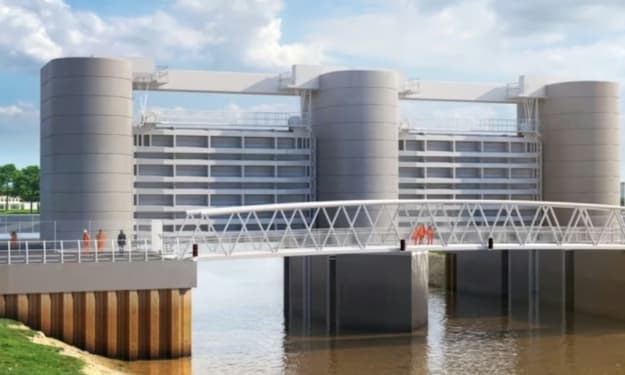
Rethinking Flood Protection in Somerset If you live near the coast, the threat of flooding isn’t just news — it’s a reality you can feel. That’s the situation in Bridgwater, Somerset, a historic market town near the Bristol Channel. For years, plans have been underway to build a tidal barrier to protect homes, businesses, and livelihoods from storm surges. Now, new updates reveal the barrier will be about 10 metres shorter than originally planned, a decision aimed at reducing costs while still keeping the town safe. This announcement has sparked conversations about engineering, budgets, and how communities adapt to climate challenges. Why the Barrier Is Being Shortened The Bridgwater Tidal Barrier was initially designed to be a high-profile flood defence, protecting thousands of properties from tidal surges that travel up the River Parrett. But after a recent design efficiency review, engineers concluded the barrier could be slightly shorter without compromising safety. Reducing the barrier by 10 metres lowers construction complexity, saves money, and reduces long-term maintenance costs. The Environment Agency and local authorities say this approach allows the project to move forward on time and on budget, ensuring the community gets protection sooner rather than later. The Cost Factor Public infrastructure projects like this don’t happen in a vacuum. Rising inflation, global supply chain disruptions, and labor shortages have increased costs for large-scale projects. Officials argue that the revised design is a responsible compromise: it balances cost savings with safety. Somerset Council leaders have welcomed the decision, noting that managing costs wisely helps the project reach completion without compromising protection for residents. Community Voices and Concerns Local engagement has been a key part of the project. Residents have attended consultations and drop-in sessions to see the updated plans and ask questions. Some community members appreciate the cost savings and faster timeline. Others worry whether a shorter barrier will be as effective against future extreme weather events. Questions include: Will the barrier remain strong against increasingly unpredictable storms? Does reducing the height limit future adaptability as climate impacts grow? What effect might it have on local ecosystems and fish habitats? These are valid concerns, reflecting how communities are increasingly involved in climate adaptation decisions. Engineering Flood Defence Today Tidal barriers are not new — Britain has relied on them for decades. London’s Thames Barrier, for instance, has protected the capital since the 1980s. But today, rising sea levels and more frequent storms mean engineers must balance safety, cost, and environmental impact carefully. In Bridgwater, officials say the revised barrier will still protect against 1-in-200-year tidal events. It’s designed to provide robust safety now while remaining adaptable for the future. The Human Side of Flood Protection It’s easy to get lost in numbers and metres, but behind the design decisions are real people. Residents depend on reliable flood protection to feel secure in their homes and communities. For families, businesses, and local services, knowing a barrier is being built — even a slightly shorter one — provides peace of mind. It’s not just a structure; it’s a symbol of resilience and preparedness. Next Steps for the Barrier The Bridgwater project is still under construction, with the revised design undergoing final refinements. Once completed, the tidal barrier will provide long-term protection for thousands of properties and critical infrastructure in Somerset. Officials emphasize that the shortened design does not compromise safety. If anything, staying on budget ensures the project is completed faster, meaning protection arrives sooner for the community. A Lesson in Climate Adaptation The story of the Bridgwater Tidal Barrier is more than engineering or economics. It’s about how communities respond to climate risks and how governments make tough choices balancing safety, cost, and sustainability. The barrier being 10 metres shorter may seem small on paper, but it reflects a larger truth: infrastructure planning today is as much about community engagement, adaptability, and long-term resilience as it is about concrete and steel. By keeping people involved and making informed, cost-effective decisions, Somerset shows how towns can adapt to climate change without sacrificing safety. Conclusion The Bridgwater Tidal Barrier demonstrates that infrastructure projects in the 21st century must adapt to multiple pressures: climate change, financial constraints, and community expectations. While the barrier is slightly shorter than originally planned, it remains a critical line of defence against flooding. More importantly, it highlights the importance of public involvement, transparency, and strategic planning in building a resilient community. For Bridgwater residents, the message is clear: the tide may rise, storms may come, but with smart planning and community engagement, the town will be ready
By Muhammad Hassana day ago in Earth
Astonishing Snow Leopard Hunt Filmed in Pakistan’s Remote Mountains
High in the jagged peaks of northern Pakistan, where icy winds carve through barren rock and human presence is scarce, a rare and astonishing moment has been captured on camera: a snow leopard executing a powerful hunt in the wild. The footage, filmed in Pakistan’s remote mountainous regions, has stunned wildlife experts, conservationists, and nature lovers around the world. More than just a dramatic spectacle, the video offers a rare window into the secretive life of one of Earth’s most elusive big cats.
By Fiaz Ahmed Brohiabout 4 hours ago in Earth



Comments
There are no comments for this story
Be the first to respond and start the conversation.