
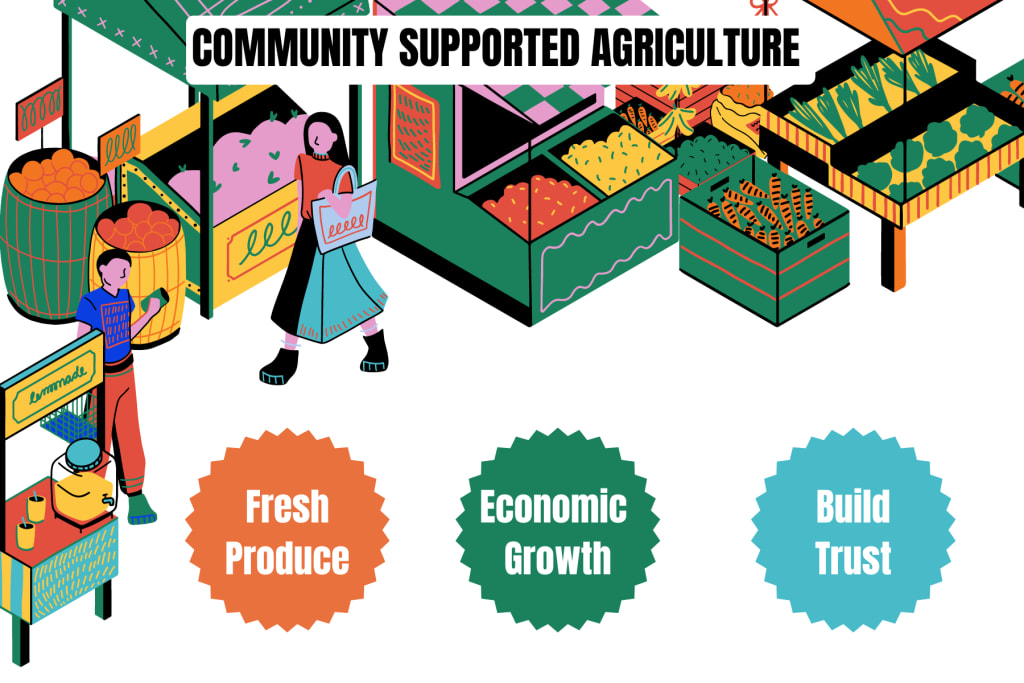
In recent years, the concept of community agriculture has gained momentum as people recognize its numerous benefits. The concept of community agriculture refers to the practice of cultivating and distributing food locally, often through the collaboration of farmers, consumers, and other community members. By actively embracing and supporting community agriculture initiatives, individuals can contribute to a more sustainable, resilient, and connected food system. Locally sourced, fresh produce, environmental sustainability, strengthened local economies, enhanced community connections, and educational empowerment are just a few of the key benefits that come with supporting community agriculture. Let's explore the numerous advantages that arise from embracing this transformative approach to food production and consumption.
1. Locally Sourced, Fresh Produce
One of the primary advantages of community agriculture is access to locally sourced, fresh produce. When consumers support community farmers, they can enjoy fruits, vegetables, and other farm products that are harvested at peak ripeness and delivered quickly. This means the produce is more nutritious, flavorful, and has a longer shelf life compared to items that have traveled long distances. Additionally, consuming locally sourced food supports biodiversity by encouraging the cultivation of unique regional crops that may not be grown on a large scale.
2. Environmental Sustainability
Community agriculture plays a crucial role in promoting environmental sustainability. By reducing the distance food needs to travel, community agriculture reduces carbon emissions associated with transportation. Moreover, local farmers often adopt sustainable farming practices such as organic methods, crop rotation, and water conservation, minimizing the use of harmful chemicals and preserving soil health. Community agriculture also fosters biodiversity, as small-scale farmers often cultivate a wider variety of crops and preserve native seeds.
3. Strengthening Local Economy
Supporting community agriculture bolsters the local economy. When consumers purchase directly from local farmers or participate in community-supported agriculture (CSA) programs, a significant portion of their spending remains within the community. This helps to create jobs, support small businesses, and generate income that circulates locally. Additionally, community agriculture contributes to food security by reducing dependence on large-scale industrial farming and global supply chains, which are prone to disruptions.
4. Fosters Community Connections
Community agriculture encourages social interactions and fosters a sense of belonging. Farmers' markets, community gardens, and CSA programs bring people together, creating spaces for exchange, learning, and relationship-building. Through community agriculture, community members get to know the individuals responsible for growing their food, thus developing a sense of trust and appreciation for their efforts. Moreover, community gardens provide opportunities for intergenerational learning and skill-sharing, strengthening community bonds.
5. Education and Empowerment
Engaging with community agriculture initiatives offers valuable educational opportunities for people of all ages. By connecting with local farmers and participating in community activities, individuals gain insights into sustainable farming practices, seasonal variations, and the importance of biodiversity conservation. This knowledge empowers individuals to make informed choices about their food consumption, leading to healthier and more sustainable lifestyles. Community agriculture also promotes food literacy by reconnecting individuals with the origins of their food and teaching essential cooking and gardening skills.
It can therefore be concluded, that supporting community agriculture offers a multitude of benefits that extend far beyond access to fresh produce. By actively participating in local food systems, individuals contribute to environmental sustainability, strengthen the local economy, build community connections, and foster education and empowerment. Embracing community agriculture is a powerful way to reshape our food system, promote healthier living, and create resilient communities. Whether through purchasing from local farmers, joining a CSA, or volunteering in community gardens, each person has the ability to make a positive impact and enjoy the many advantages of community agriculture.
Let's play our part by supporting our local farmers!
About the Creator
Kady K
Greetings, fellow knowledge seekers!
Thank you for joining me on this captivating journey, where the notion that knowledge is indeed a potent force, is embraced.
Together, let us embark on an enlightening adventure!
Trump Slams UK Deal to Hand Over Chagos Islands After Previously Backing It
If you thought politics couldn’t surprise you anymore, Donald Trump just proved otherwise. In a dramatic U-turn, the former U.S. president criticized the United Kingdom’s decision to transfer sovereignty of the Chagos Islands to Mauritius—a deal he had previously backed. What was once considered a solution to a decades-long dispute has now become a hot topic, sparking debates about strategy, diplomacy, and international trust.
By Muhammad Hassan5 days ago in Earth
🅼🅸🅳🅽🅸🅶🅷🆃 🆂🅽🅰🅲🅺🆂
"It's 10 in Tuscon! We all know what that means... It's Time for Midnight Snacks with your man, Gerald Gee! Ready to spend the night together? Me too! I'm full of snacks and can't wait to regurgitate them all back into your hungry ears. Crack a brew! Pop some corn! Anything to get ready for one hell of a show where the talk maybe cheap but the words cut deep...
By Lamar Wiggins2 days ago in Fiction



Comments
There are no comments for this story
Be the first to respond and start the conversation.