
Cloudburst: Nature's Unexpected Fury from the Sky
Understanding the Reasons, Results, and Preparedness for This Extreme Weather Phenomenon
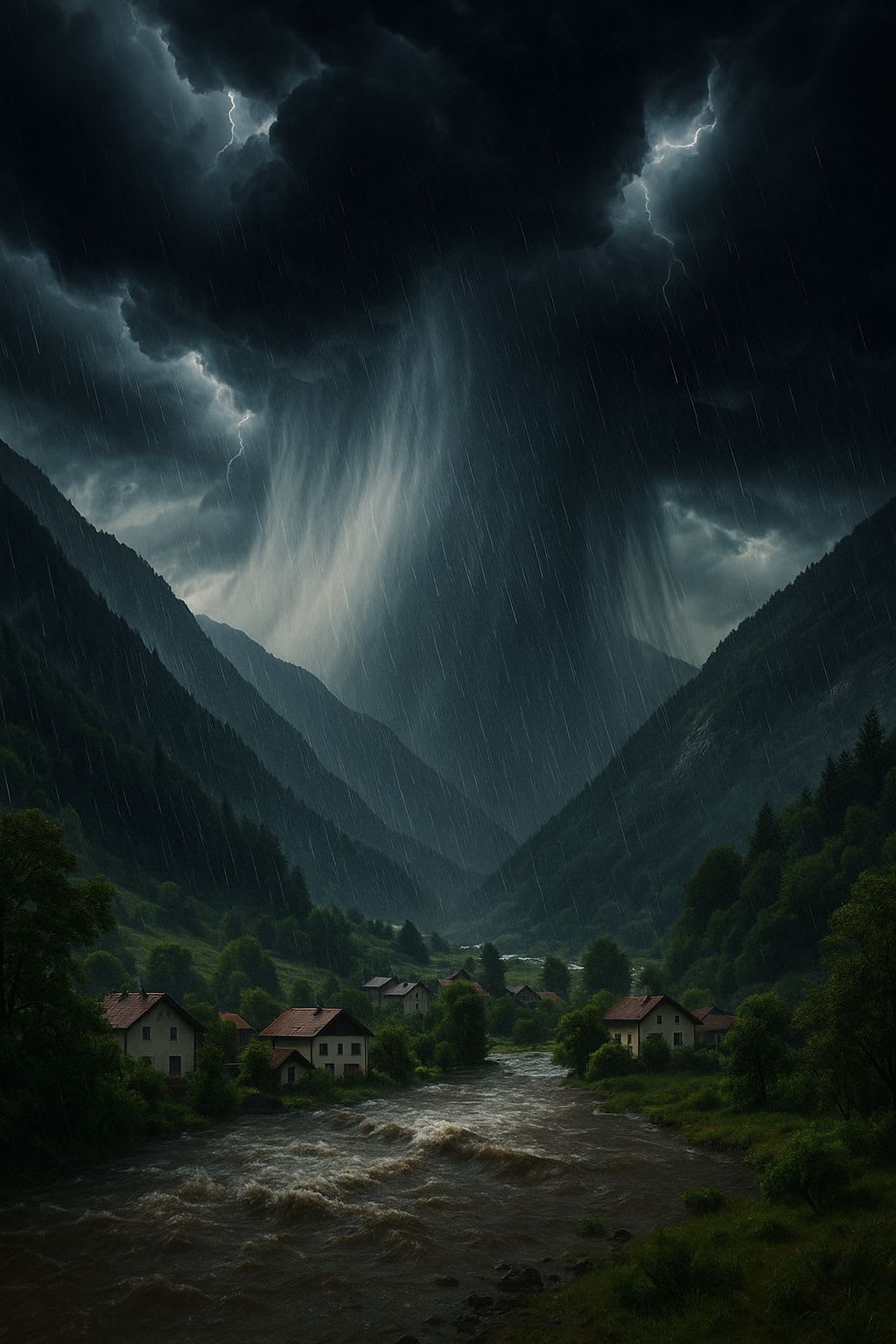
A cloudburst is one of nature’s most extreme and sudden weather events. It is characterized by extremely heavy rainfall in a short period, often in localized areas, leading to flash floods and devastating consequences for life, property, and the environment. Unlike regular rain, cloudbursts are abrupt and powerful, dumping large volumes of water — sometimes more than 100mm within an hour — overwhelming drainage systems and natural waterways.
What is a Cloudburst?
A cloudburst occurs when moist air rapidly ascends due to geographical or meteorological reasons (like mountains or strong convection currents), leading to rapid condensation and precipitation. In such events, the rainfall rate becomes extremely high, and the rain does not disperse over a wider area but falls over a small, focused region.According to the Indian Meteorological Department (IMD), rainfall of more than 100mm in less than an hour over a region of 20-30 sq.km is classified as a cloudburst.
Causes of Cloudbursts
Orographic Lifting:
In hilly areas, moist air is forced upward by mountains. This cooling leads to condensation, and if the clouds become too heavy without a proper outlet, they release their load all at once.
Strong Convection:
In summer or monsoon seasons, excessive heating of the earth’s surface creates powerful upward air currents. This can push moist air to higher altitudes, where it cools quickly and causes cloud formation and eventual bursting.
Low-Level Convergence:
When winds from different directions converge at a low level, they push air upwards, causing cloud formation and sudden rainfall.
Blocked Wind Patterns:
Sometimes clouds get stuck due to wind pressure or topography. Unable to move, they grow heavier and eventually burst over the same area.
Regions Prone to Cloudbursts
Cloudbursts commonly occur in hilly or mountainous regions such as:The Himalayas (especially in Jammu & Kashmir, Himachal Pradesh, Uttarakhand, and Nepal)
North-Eastern India
Parts of Western Ghats
Occasionally in deserts or coastal areas with unusual weather systems
These areas provide the ideal setting for orographic rainfall and are more prone to flash floods due to their steep terrain and narrow valleys.
Impact of Cloudbursts
Flash Floods:
The most immediate and dangerous outcome is sudden flooding. In hilly areas, water rushes down slopes, sweeping away everything in its path — roads, homes, and even entire villages.
Landslides:
Saturated soil and steep slopes make landslides more likely. These can block roads, isolate communities, and cause additional destruction.
Loss of Life & Property:
Cloudbursts can be deadly, especially in areas without early warning systems. Infrastructure damage often runs into millions.
Agricultural Losses:
Crops can be destroyed in minutes, affecting local economies and food supplies.
Transportation Disruption:
Roads, bridges, and railways often get washed away, cutting off affected regions and delaying rescue efforts.
Notable Cloudburst Events
Leh (Ladakh), 2010:
A massive cloudburst triggered flash floods and landslides, killing over 200 people and severely damaging infrastructure.
Kedarnath, 2013:
Although primarily a glacial lake outburst, heavy rainfall and cloudburst conditions worsened the disaster, leading to thousands of deaths.
Uttarakhand, 2021 & 2023:
Several cloudbursts have occurred in recent years, causing major floods, with roads and homes destroyed across remote villages.
Can Cloudbursts Be Predicted?
Predicting cloudbursts is challenging due to their sudden onset and localized nature. However, advancements in radar technology, satellite imaging, and weather models have improved forecasting.Meteorological departments now issue warnings based on high cloud density, wind patterns, and humidity levels, especially in high-risk zones. Still, exact location and timing remain difficult to pinpoint.
Preparedness and Safety Measures
Early Warning Systems:
Governments are setting up Doppler radars and improving remote sensing to alert people before disaster strikes.
Public Awareness:
Locals should be educated about signs of an impending cloudburst and emergency protocols.
Infrastructure Planning:
Avoid construction in flood-prone zones. Build proper drainage systems in hilly towns.
Disaster Response Training:
Rescue teams should be trained for quick action. Emergency supplies must be stored in high-risk areas.
Climate Monitoring:
Long-term tracking of rainfall patterns and climate changes can help in planning and prevention.
Climate Change and Cloudbursts
Scientists believe climate change is increasing the intensity and frequency of extreme weather events, including cloudbursts. Warmer air holds more moisture, making sudden heavy rainfall more likely. Rapid urbanization, deforestation, and poor land use further worsen the impact.ConclusionCloudbursts are a reminder of nature’s unpredictability and the power it holds. While we may not stop them from occurring, understanding their causes, recognizing the warning signs, and being prepared can minimize damage and save lives. With growing climate concerns, it is essential to invest in technology, planning, and public awareness to face such natural challenges effectively.
About the Creator
Keep reading
More stories from Muhib Ullah and writers in Earth and other communities.
Unlocking the Earth’s Hidden Power: The Promise of Natural Underground Hydrogen
In a groundbreaking discovery that could reshape the future of global energy, scientists have identified vast reserves of naturally occurring underground hydrogen—buried deep beneath the Earth's surface. This "gold hydrogen," as it's being called, could represent a nearly infinite, clean source of energy that has remained hidden beneath our feet for millennia.
By Muhib Ullah 8 months ago in Earth
Death Valley sees its most spectacular superbloom in a decade
One of the most extreme landscapes on the planet—Death Valley National Park—is currently experiencing an extraordinary natural event: its most spectacular wildflower superbloom in a decade. What is usually a stark expanse of sun‑baked desert has transformed into sweeping carpets of vibrant color, drawing visitors, scientists, and photographers to witness a rare and fleeting burst of life. This year’s bloom, described by the U.S. National Park Service as the most dramatic since 2016, is the result of unusually wet weather during the fall and winter months. Typically known as the hottest and driest place in North America, Death Valley averages only about two inches of rain annually. But from late autumn through early January, the region received more than its yearly average in a short span, creating ideal conditions for dormant wildflower seeds to sprout and burst into bloom. A Desert Transformed Normally a landscape of sand and jagged rock, this spring the valley floor has come alive with a riot of pinks, purples, yellows, and whites. Species such as Desert Gold, Phacelia, Sand Verbena, and Mojave Desertstar blanket the ground, creating scenes that defy Death Valley’s harsh reputation. Park officials and wildlife enthusiasts alike have expressed amazement at the scale of the bloom and the speed with which it has taken over the valley. “This area that’s known basically for hot weather, sand and dirt has just become this amazing landscape of colors,” said David Blacker, executive director of the Death Valley Natural History Association. “The smell is just amazing.” At lower elevations, the wildflower display is already widespread and expected to last through mid to late March, weather permitting. As temperatures gradually shift, blooms at higher elevations may continue into April and even through June, though the full extent of later displays will depend on ambient heat and moisture levels. Rain: The Key to the Bloom Superblooms in desert environments are extremely rare and hinge upon a delicate balance of weather conditions. In Death Valley, a confluence of well‑timed rainfall events and moderate winter temperatures created just the right environment for seeds that often lie dormant for years to germinate, grow, and flower. Abby Wines, acting deputy superintendent at the park, noted that the exceptionally wet period provided more moisture than the valley would typically receive in an entire year. This unusual rainfall allowed plants to take root and flourish, even in areas that ordinarily remain barren. Although the term “superbloom” doesn’t have a strict scientific definition, it is widely used by park officials and visitors to describe years when wildflower blooms exceed normal patterns in scale and intensity. These events usually happen only once every decade or so in Death Valley, adding to their scarcity and appeal. A Magnet for Visitors and Scientists The rare spectacle has drawn crowds of visitors who typically think of Death Valley as nothing more than a harsh landscape of sand dunes and heat. In recent days, photographers and nature lovers have flocked to well‑known viewing areas such as Badwater Basin, Jubilee Pass Road, and surrounding alluvial fans where blooms are especially dense. Park officials are encouraging visitors to follow “Leave No Trace” principles: staying on designated paths, avoiding picking flowers, and being mindful of fragile ecosystems. Because these blooms are so dependent on specific conditions, conservation‑minded behavior plays a key role in protecting future displays. For scientists and ecologists, the superbloom offers a unique opportunity to observe how desert ecosystems respond to atypical weather events. Flowering cycles in these environments are closely tied to climatic patterns, and scientists can gather valuable data that may inform understanding of ecological resilience in the face of climate variability A Fleeting Celebration of Life Despite the stunning display, the superbloom is temporary. Once the rains stop and the desert heats up, the flowers will quickly fade and set seed, leaving behind a memory of colors before the valley reverts to its usual starkness. Still, for those who have made the journey this spring, the sight of Death Valley awash in hues of gold, purple, and pink is a reminder of nature’s capacity to surprise—and a testament to the fragile beauty that can spring from even the harshest environments.
By Fiaz Ahmed 3 days ago in Earth


Comments
There are no comments for this story
Be the first to respond and start the conversation.