

Cloud Seeding Impacts
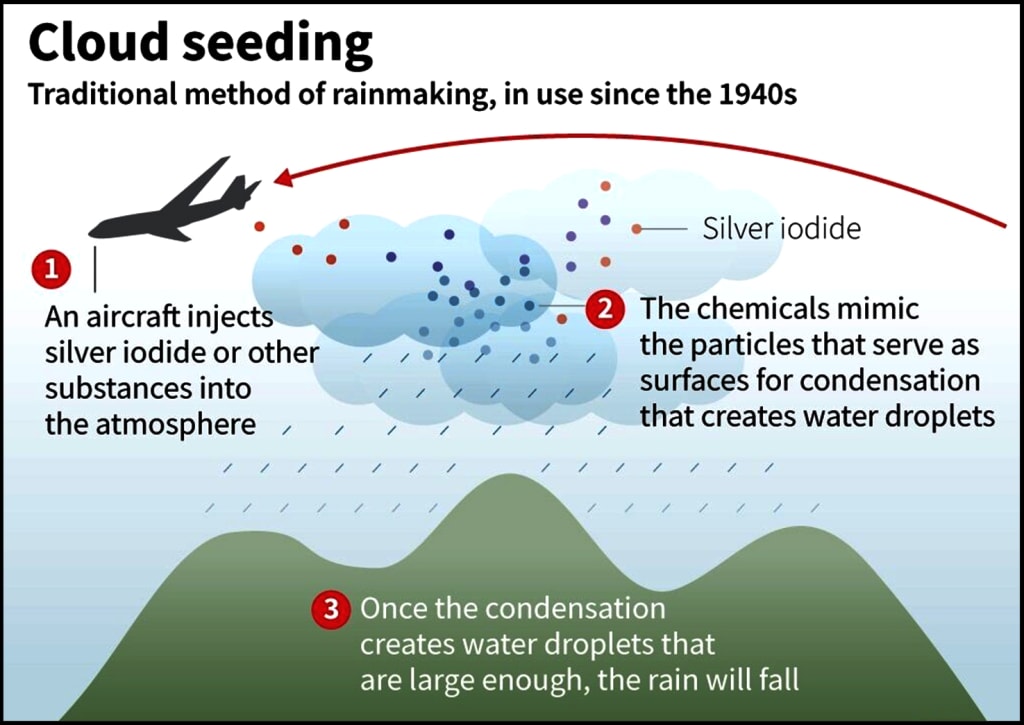
Cloud seeding is a weather modification technique that involves dispersing substances into the atmosphere with the aim of enhancing precipitation. Commonly used substances for cloud seeding include silver iodide, potassium iodide, and liquid propane. These substances are typically dispersed by aircraft or ground-based generators.
While cloud seeding has been practiced for several decades, its effectiveness and impact remain the subject of scientific study and debate. Some potential impacts of cloud seeding include:
Precipitation enhancement: Cloud seeding aims to increase precipitation by promoting the formation of ice crystals or raindrops within clouds. This can be beneficial in areas experiencing water scarcity or drought conditions.
Agriculture and water resources: Increased precipitation resulting from cloud seeding can benefit agriculture, replenish water reservoirs, and support hydroelectric power generation.
Weather modification: Cloud seeding can potentially influence weather patterns and alter the distribution of precipitation. However, the extent to which cloud seeding can significantly modify weather on a large scale is still a topic of ongoing research.
Environmental concerns: Some concerns have been raised about the potential environmental impacts of cloud seeding. These include the introduction of additional chemicals into the atmosphere, the potential for unintended consequences on ecosystems, and the displacement of precipitation from one area to another.
Scientific uncertainty: The effectiveness of cloud seeding and its impacts can vary depending on various factors, including atmospheric conditions, type of clouds, and the seeding method employed. Further scientific research is needed to better understand the effectiveness, limitations, and potential risks associated with cloud seeding.
Consequence of cloud seeding
Precipitation enhancement: One of the primary objectives of cloud seeding is to increase precipitation in areas experiencing water scarcity or drought. By introducing seeding agents, such as silver iodide, into clouds, the formation of ice crystals or raindrops can be encouraged, leading to enhanced precipitation.
Water resource management: Cloud seeding can contribute to water resource management by increasing the availability of water for various purposes such as irrigation, drinking water, and hydroelectric power generation. It can help replenish reservoirs, rivers, and aquifers, benefiting agricultural and industrial sectors as well as local communities.
Potential economic benefits: Increased precipitation resulting from cloud seeding can have positive economic impacts. It can support agricultural activities, leading to improved crop yields and reduced reliance on imports. Additionally, enhanced water resources can facilitate industrial growth and stimulate tourism in certain regions.
Weather modification: Cloud seeding has the potential to modify weather patterns, although the extent of its influence is still a subject of scientific investigation and debate. By altering the distribution of precipitation, cloud seeding may impact local weather conditions and contribute to localized weather modification efforts.
Environmental considerations: The environmental consequences of cloud seeding are a topic of concern and ongoing research. Introducing additional substances into the atmosphere may have ecological implications, and the long-term effects of these chemicals on ecosystems are not yet fully understood. There is also the possibility of unintentionally displacing precipitation from one area to another, which could have both positive and negative consequences for different regions.
It is important to note that the effectiveness and consequences of cloud seeding can vary depending on numerous factors such as atmospheric conditions, cloud types, and the specific techniques employed. Scientific research and careful monitoring are crucial to understanding and mitigating any potential risks associated with cloud seeding.
About the Creator
Asif Hayat
Freelance Journalist, Blogger, Writer
Keep reading
More stories from writers in Earth and other communities.
Trump Signs Order to Limit Wall Street Investors in Single-Family Housing
Former U.S. President Donald Trump has signed an executive order aimed at restricting Wall Street investors from buying large numbers of single-family homes. The move comes amid growing concerns over the affordability of housing for middle-class Americans and the increasing role of institutional investors in the residential real estate market.
By Aarif Lashari5 days ago in Earth
France’s Navy Intercepts an Oil Tanker in the Mediterranean Sailing From Russia
France’s navy has intercepted an oil tanker sailing from Russia in the Mediterranean Sea, a move that underscores the growing complexity of enforcing international sanctions amid ongoing geopolitical tensions. The interception, while not unprecedented, highlights how European nations are increasingly using naval assets to monitor, inspect, and sometimes detain vessels suspected of violating sanctions or maritime regulations linked to Russian energy exports.
By Muhammad Hassan3 days ago in Earth



Comments
There are no comments for this story
Be the first to respond and start the conversation.