
Climate Change - What Does The Future Hold
Navigating the Future: Confronting Climate Change

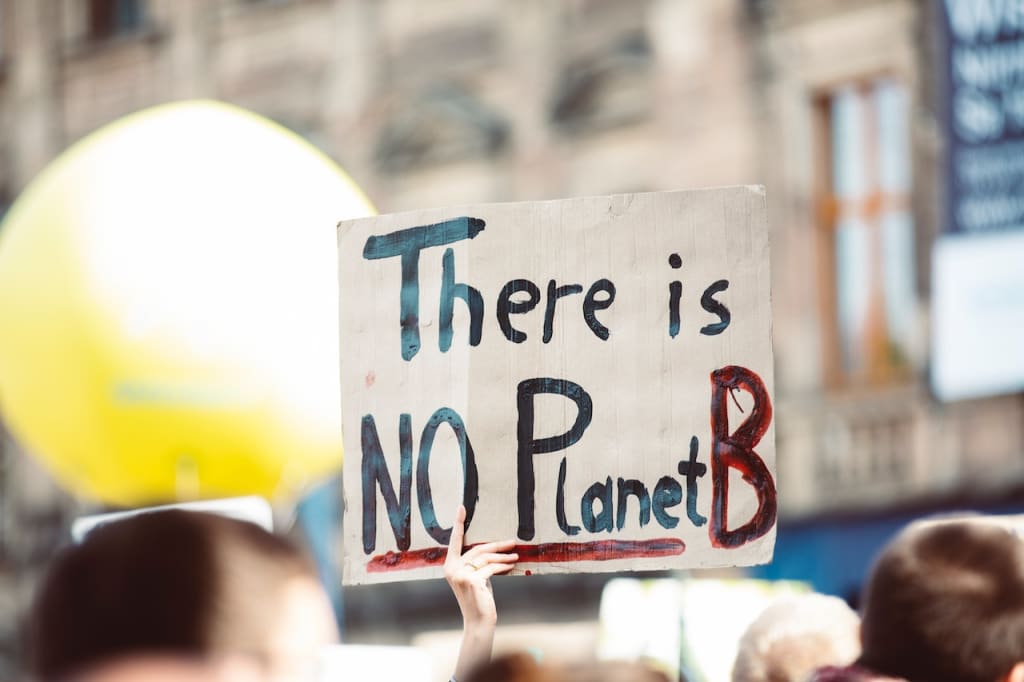
For decades, the voices of scientists have echoed like alarm bells, urgently warning us about the perilous impact of our actions on the planet we call home. In this article, we delve into a critical and ominous issue—one that not only threatens us but all living beings and our precious Earth itself. Yes, we are talking about climate change.
Climate change can be succinctly defined as the fluctuation in Earth's temperature due to the presence of greenhouse gases. These gases create a thick shield that absorbs harmful solar radiation. Since the advent of the Industrial Revolution, global temperatures have exhibited unprecedented volatility.
Scientists, haunted by visions of a future marred by catastrophe, fear that within the next century, the temperature could soar by as much as 10 degrees Fahrenheit. At the heart of this crisis lies the burning of fossil fuels, a major source of heat-trapping pollutants like carbon dioxide.
While humans are responsible for a substantial portion of global emissions, it's essential to acknowledge that natural factors also play a role. These include volcanic eruptions and variations in solar conditions such as solar radiation and solar winds, as well as Earth's position. However, scientists estimate that these natural factors contribute only around 2% of total emissions, with human activities accounting for the overwhelming 98%.
The concept of the greenhouse effect and its connection to climate change was first discovered in 1824. Scientists concluded that Earth would be considerably colder without its atmosphere. These gases in the atmosphere help maintain the optimal conditions necessary for life. Without them, Earth's temperature would plummet by approximately 33 degrees Celsius.
Building on this revelation, in 1895, a Swedish chemist found that humans could exacerbate the Earth's temperature through the emission of greenhouse gases. Additional human activities that intensify global emissions include intensive farming, agriculture, and deforestation. The rapid increase in temperature poses a grave threat, and it's imperative that we explore its repercussions on our planet.
Firstly, consider the dramatic melting of glacial ice—a visually striking consequence of climate change. Over the last century, the warming of the planet has accelerated the pace of glacial melting. Approximately 12,000 years ago, Earth boasted more glaciers and ice sheets than it does today. A study from 2016 estimated that, had the climate not escalated as it has, we would have had 11 to 15 times more glaciers today.
Take, for instance, Glacier National Park in Montana. In the late 1800s, this park was home to 150 glaciers; today, only 26 remain. Now imagine the broader implications of such glacial loss. Scientists fear that the current rate of ice melt could result in a rapid rise in sea levels, potentially leading to the failure of dams and the inundation of coastal cities.
Another menacing impact of climate change is the surge in extreme weather events. Experts predict that typhoons and hurricanes will become increasingly intense due to rising temperatures. This uptick in temperature leads to greater evaporation and moisture in the atmosphere—key ingredients for the formation of storms.
The Intergovernmental Panel on Climate Change (IPCC) predicts that even if the world shifts towards cleaner, less fossil fuel-dependent energy sources, we will still face a heightened risk of intense storms. Tropical cyclones, for instance, could be up to 11 times more potent on average, translating to far more powerful winds and heightened coastal dangers.
Nevertheless, there is a glimmer of hope on the horizon. Society is beginning to hold corporations accountable for their actions, demanding changes in their environmental practices. On an individual level, people are taking it upon themselves to make the change, recognizing their roles as stewards of the Earth's future.
In conclusion, the future is at a crossroads as we confront the specter of climate change. While the challenges are immense, our ability to enact change and safeguard our planet is equally substantial. The path forward requires collective action, from governments to industries to individuals, as we strive to mitigate the consequences of climate change and forge a more sustainable future for generations to come.
About the Creator
Fouzi Bach
Business owner offline and online. With all experiences I have in this life, I am in the position to share my knowledge and skills. I am writing articles about different subjects starting with automotive, news, facts and motivation.
Keep reading
More stories from Fouzi Bach and writers in Earth and other communities.
Do You Get Enough Vitamin D?
Do you get enough vitamin D? According to experts, the response is a no to a million Americans. This is exacerbated by the fact that so many people work indoors every day, according to Dr. Kevin Cooke, an Aviv Clinics physician with a background in both internal and family medicine who specializes in patients' food and nutrition needs.
By Fouzi Bach2 years ago in Earth



Comments
There are no comments for this story
Be the first to respond and start the conversation.