
Climate Change: The Urgent Need for Action
The Science of Climate Change

Climate Change: The Urgent Need for Action
Climate change is one of the most pressing issues facing humanity today. It is a global phenomenon that is caused by human activity, and it poses a significant threat to the planet's natural systems and the well-being of people and other living creatures. Despite the overwhelming scientific evidence of the dangers of climate change, there is still a significant amount of skepticism and denial about its existence and impact. However, as the effects of climate change become increasingly visible and destructive, it is clear that urgent action is needed to mitigate its effects and prevent further damage to the planet.
The Science of Climate Change
Climate change refers to the long-term changes in the Earth's climate patterns, which are caused by human activity, such as the burning of fossil fuels, deforestation, and industrial processes. These activities release large amounts of greenhouse gases into the atmosphere, such as carbon dioxide (CO2), methane, and nitrous oxide. These gases trap heat from the sun in the Earth's atmosphere, causing the planet's temperature to rise. This process is known as the greenhouse effect.
The scientific consensus is that human activity is the primary cause of the recent increase in global temperatures. The Intergovernmental Panel on Climate Change (IPCC) states that there is a 95% probability that human activity is responsible for at least some of the observed warming since the mid-20th century.
The Effects of Climate Change
The effects of climate change are widespread and far-reaching. They include rising sea levels, more frequent and severe heatwaves, droughts, floods, and storms, as well as changes in the distribution and behavior of wildlife and plant species. These changes have significant impacts on ecosystems, agriculture, water resources, and human health and well-being.
One of the most significant impacts of climate change is the melting of the polar ice caps, which is causing sea levels to rise. This could have catastrophic consequences for low-lying coastal areas, where millions of people live. Rising sea levels can also cause increased coastal erosion and saltwater intrusion into freshwater systems, making them unsuitable for human use.
Climate change is also affecting weather patterns, leading to more frequent and severe heatwaves, droughts, and storms. These events can cause damage to infrastructure and property, as well as loss of life. In addition, changes in weather patterns can impact agriculture and food security, as well as the availability of water resources.
Taking Action on Climate Change
The urgency of the climate crisis requires immediate action to reduce greenhouse gas emissions and mitigate the effects of climate change. Governments, businesses, and individuals all have a role to play in addressing this global challenge.
Governments can take action to reduce emissions through policies such as carbon pricing, renewable energy subsidies, and regulations that promote energy efficiency and cleaner technologies. International cooperation is also crucial to address the global nature of the climate crisis.
Businesses can reduce emissions by adopting sustainable practices and investing in renewable energy and clean technologies. Many companies are already taking action on climate change, recognizing that it is not only an environmental issue but also a business imperative.
Individuals can also take action by reducing their carbon footprint through lifestyle changes such as using public transport, cycling, or walking instead of driving, reducing meat consumption, and reducing energy use in the home. Collectively, these actions can have a significant impact on reducing emissions.
The Future of Climate Change
The future of climate change is uncertain, and it will depend on the actions we take now to reduce emissions and mitigate its effects. However, it is clear that the effects of climate change will continue to be felt in the years ahead.
One of the most significant challenges in addressing climate change is the need to balance economic development and environmental protection. However, the two are not mutually exclusive. A transition to a low-carbon economy can create
About the Creator
The Eiffel Tower: Paris’s Iron Soul and the Story Behind Its Global Magic
The Eiffel Tower is more than a landmark rising above the Paris skyline. It is a symbol of human imagination, engineering courage, and the timeless romance of France. Millions visit it every year, yet few know the deeper story—how a controversial iron structure built for a temporary event became one of the most beloved monuments on Earth. Standing tall since 1889, the Eiffel Tower has witnessed revolutions, world wars, artistic movements, and generations of travelers who came to Paris searching for beauty, inspiration, or simply a moment they would never forget. 🌍 A Monument Born From a Global Celebration The Eiffel Tower was created for the 1889 Exposition Universelle, a world fair celebrating the 100th anniversary of the French Revolution. The French government held a competition for a monument that would represent modern engineering and national pride. Over 100 designs were submitted, but the winning proposal came from Gustave Eiffel, a renowned engineer whose company specialized in metal frameworks. Construction began on January 28, 1887, and was completed on March 31, 1889—an astonishing achievement in just over two years. When it opened, the tower served as the grand entrance to the exposition, welcoming millions of visitors from around the world. 🛠️ Engineering Genius: How the Tower Was Built The Eiffel Tower was a radical idea for its time. Paris was a city of stone, sculptures, and classical architecture. A 300‑meter iron tower seemed outrageous to many. Yet Gustave Eiffel and his team believed in the power of innovation. Key engineering facts - Height at completion: 300 meters (984 ft), making it the tallest structure in the world until 1930. - Current height: 330 meters (1,083 ft) including antennas. - Weight: About 10,100 tons. - Iron pieces: 18,038 individual components. - Stairs: 1,665 steps to the top. - Construction time: 2 years, 2 months, 5 days. The tower’s lattice design wasn’t just artistic—it was functional. The open iron framework allowed wind to pass through, giving the structure remarkable stability. Gustave Eiffel famously said the tower was “not only the art of the engineer, but also the art of the architect.” 🎨 From Controversy to Cultural Icon When the Eiffel Tower was unveiled, not everyone loved it. In fact, many Parisians hated it. Writers, artists, and intellectuals signed petitions calling it an eyesore. They said it looked like a “giant smokestack” and would ruin the beauty of Paris. But as time passed, the tower won hearts. - It became a symbol of modernity. - It became a symbol of Parisian pride. - It became a symbol of France itself. By the early 20th century, the Eiffel Tower had transformed from a temporary exhibition piece into a permanent global icon. 📡 A Tower That Saved Itself The Eiffel Tower was originally meant to stand for only 20 years. After the exposition, it was supposed to be dismantled. What saved it? Science. Gustave Eiffel allowed the tower to be used for radio experiments. Its height made it ideal for broadcasting signals. During World War I, the tower intercepted enemy communications, helping France in critical moments. Its usefulness ensured its survival. 💑 The Human Side: Why the Eiffel Tower Feels Magical People don’t fall in love with the Eiffel Tower because of its measurements or engineering. They fall in love with how it makes them feel. Standing beneath it, you feel small—but in a good way. Climbing it, you feel connected to history. Seeing Paris from the top, you feel like the world is bigger and more beautiful than you realized. The tower has become: - A symbol of love - A backdrop for proposals - A dream destination for travelers - A muse for artists and filmmakers It is the beating heart of Paris. 🌆 Visiting the Eiffel Tower: What to Expect A visit to the Eiffel Tower is a journey through levels of history, architecture, and breathtaking views. The Esplanade The ground level offers a close-up look at the tower’s massive iron legs and the engineering that holds it together. The First Floor - Transparent floors - Exhibits on the tower’s history - Restaurants and shops The Second Floor This level offers one of the best panoramic views of Paris—close enough to see details, high enough to feel the city’s scale. The Summit At 276 meters, the top floor gives a sweeping view of the entire Paris region. Gustave Eiffel’s private office has been recreated here. 🌙 The Eiffel Tower at Night Every evening, the Eiffel Tower lights up with a warm golden glow. And for five minutes at the start of each hour, it sparkles with 20,000 twinkling lights. This nightly ritual has become one of the most magical sights in the world. 📚 Fun and Surprising Facts - The Eiffel Tower was the tallest structure in the world until the Chrysler Building surpassed it in 1930. - It was originally painted red‑brown, then yellow, and now “Eiffel Tower Brown.” - Gustave Eiffel’s company also built the metal framework for the Statue of Liberty. - The tower sways slightly in strong winds—up to 9 cm. - It is the most visited paid monument in the world. 💬 Why the Eiffel Tower Still Matters The Eiffel Tower endures because it represents something universal: the human desire to create, to innovate, and to leave something beautiful behind. It is a reminder that even the most controversial ideas can become beloved. It is proof that art and engineering can coexist. It is a symbol of Paris, of France, and of the world’s shared cultural heritage. If this story brought the Eiffel Tower to life for you, share it with someone who dreams of visiting Paris. Leave a comment with your favorite Eiffel Tower moment—or the moment you hope to experience someday. And if you’d like to support more human‑centered, deeply researched stories like this, feel free to leave a tip. It helps bring more inspiring content to life.
By Haroon Pasha3 days ago in Earth
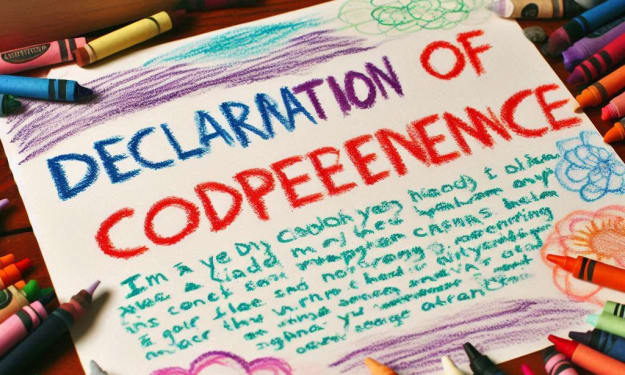
A Historic Declaration
We the People of the Husbands of the United States of America, in Order to form a more perfect Union, and I mean you...with me...establish Justice, insure domestic Tranquility, provide for the common defence, promote the general Welfare, and secure the Blessings of Liberty to ourselves, after Puberty, do ordain and establish this Declaration of Co-Dependence.
By Gerard DiLeo6 days ago in Humans



Comments
There are no comments for this story
Be the first to respond and start the conversation.