
climate change
heat wave( human health affected by climate change)

Mary was a nurse working at a hospital in Nairobi, Kenya. She loved her job and cared deeply for her patients, especially the children. She had seen many cases of malaria, diarrhea, malnutrition, and respiratory infections, but she always tried to do her best to help them recover.
One day, in July 2023, she noticed that the weather was unusually hot and humid. She checked the news and learned that a heat wave was sweeping across East Africa, breaking temperature records and causing droughts and wildfires. She felt sorry for the people who had to work outside in the scorching sun, and hoped that they would stay hydrated and avoid heatstroke.
She arrived at the hospital and started her shift. She was assigned to the pediatric ward, where she usually worked. She greeted her colleagues and checked on the patients. She noticed that some of them looked more restless and uncomfortable than usual. She took their temperatures and found that they were all running high fevers. She wondered if they had contracted some new infection, or if the heat was making their conditions worse.
She reported her findings to the doctor in charge, who told her to give them more fluids and antipyretics, and to monitor them closely. He said that he had seen similar cases in other wards, and that he suspected that the heat wave was affecting their immune systems and making them more vulnerable to infections. He also said that the hospital was running low on water and electricity, due to the increased demand and the reduced supply caused by the drought and the power outages.
Mary nodded and followed his instructions. She tried to comfort the children and their parents, who were also suffering from the heat. She gave them cold compresses, ice packs, and fans, but they did little to ease their discomfort. She wished that there was air conditioning in the hospital, but she knew that it was a luxury that they could not afford.
She worked tirelessly for hours, moving from one patient to another, administering medication, checking vital signs, changing dressings, and providing emotional support. She felt exhausted and thirsty, but she ignored her own needs and focused on her duty.
She was about to take a break when she heard a loud scream from one of the rooms. She ran towards it and saw a young boy convulsing on his bed. His mother was holding his hand and crying hysterically. Mary recognized him as one of her patients who had malaria. She quickly grabbed a syringe and injected him with an anticonvulsant drug. She called for help and tried to stabilize him.
She learned later that he had suffered a heat stroke, which had triggered a seizure. He was transferred to the intensive care unit, where he remained in critical condition. Mary felt devastated and blamed herself for not noticing his symptoms earlier. She wondered how many more lives would be lost or damaged by the heat wave.
She also wondered how long the heat wave would last, and what would happen if it continued or worsened. She had heard that climate change was making extreme weather events more frequent and intense, and that it was affecting human health in many ways. She had seen some of its effects firsthand: droughts, floods, crop failures, food insecurity, water scarcity, vector-borne diseases, respiratory problems, mental stress. She feared that these would only increase in the future, unless something was done to reduce greenhouse gas emissions and adapt to the changing climate.
She hoped that people would realize the urgency of the situation and take action before it was too late. She hoped that governments would cooperate and implement policies that would protect the environment and human health. She hoped that scientists would find solutions that would mitigate or reverse the impacts of climate change. She hoped that everyone would do their part to save the planet and its inhabitants.
She hoped that her patients would survive and recover from the heat wave.
She hoped that she would survive too.
About the Creator
Hilda Mwangi
Writing is my passion and way of life. As a self-published writer, I create stories that inspire, inform, and connect. Through any art—writing, photography, or music—we all have a voice to share, leaving a lasting impact on the world.
Keep reading
More stories from Hilda Mwangi and writers in Earth and other communities.
Carbon in the Atmosphere
Carbon is one of the most abundant elements in the universe, and it plays a vital role in the chemistry of life. Carbon atoms can form bonds with other carbon atoms, creating chains and rings of different lengths and shapes. These molecules, called organic compounds, are the building blocks of living organisms, from bacteria to plants to animals.
By Hilda Mwangi2 years ago in Earth
Trump Calls UK’s Chagos Islands Sovereignty Decision an Act of ‘Great Stupidity’
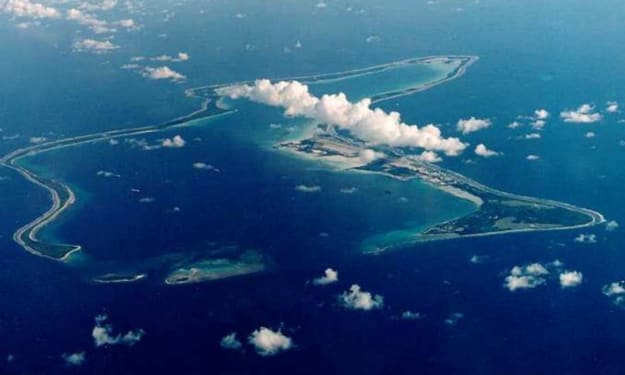
Former U.S. President Donald Trump has criticized the United Kingdom’s decision to hand over sovereignty of the Chagos Islands to Mauritius, calling it an act of “great stupidity.” This high-profile statement has reignited debates over colonial legacies, geopolitical alliances, and the rights of local communities. While the issue may seem distant to many, it carries significant implications for global politics, regional stability, and the affected communities. The Chagos Islands, a strategically located archipelago in the Indian Ocean, have long been a point of contention between the UK, Mauritius, and the United States, which maintains a military base on Diego Garcia, one of the largest islands. The latest political statements have highlighted not only international disagreements but also how decisions by governments can affect local populations and global perceptions. Why the UK Is Handing Over the Chagos Islands The UK’s decision to transfer sovereignty to Mauritius comes after years of legal challenges and international pressure. The United Nations has repeatedly called for the return of the islands to Mauritius, stating that the previous detachment in 1965 was illegal. The move aims to: Resolve a longstanding international dispute Acknowledge the rights of the Chagossian people, many of whom were forcibly removed from the islands decades ago Comply with international law and UN recommendations For many in Mauritius and the Chagossian diaspora, the transfer represents justice and recognition of their historical grievances. Trump’s Criticism and Its Context Trump described the UK’s decision as “an act of great stupidity,” emphasizing strategic and military concerns. The United States relies on Diego Garcia for one of its key military bases, crucial for operations in the Indian Ocean region and beyond. From Trump’s perspective, the sovereignty transfer could: Complicate U.S. military logistics Create uncertainty over strategic agreements Signal weakness in alliances with close partners like the UK However, critics argue that such statements overlook the rights of the displaced Chagossian communities and the importance of resolving colonial-era injustices. Impact on Local Communities The Chagos Islands have a unique human story. In the 1960s and 1970s, the indigenous Chagossian population was forcibly removed to make way for a U.S. military base. Families were relocated to Mauritius, the Seychelles, and other areas, often under harsh conditions. The sovereignty transfer could: Support efforts for Chagossians to return home Enable compensation and recognition of historical wrongs Promote cultural and community restoration Community advocates argue that international legal decisions should prioritize the welfare and rights of displaced populations, not just geopolitical or strategic interests. Geopolitical Implications The dispute is more than a bilateral issue between the UK and Mauritius. It has global political ramifications, including: U.S.-UK relations: While the UK maintains a strategic alliance with the U.S., the sovereignty decision may raise tensions over military operations. Indian Ocean stability: The islands are located in a key maritime region, affecting naval operations, trade routes, and regional security. International law precedent: Recognizing Mauritius’ claim reinforces UN rulings on decolonization and territorial sovereignty. For communities that follow global politics, these dynamics highlight how high-level political decisions impact both strategy and society. Media and Public Reaction Trump’s comments have dominated media coverage, sparking debate in international communities and online forums. Public opinion is divided: Supporters of Trump’s viewpoint cite national security concerns and strategic importance. Critics highlight colonial injustices and the need to respect the rights of indigenous populations. Social media discussions reveal growing interest in the balance between military strategy and human rights, showing that global decisions resonate with everyday communities. Legal and Ethical Considerations The transfer of the Chagos Islands raises several legal and ethical issues: Sovereignty and Self-Determination: The Chagossian people’s right to return and their cultural identity must be respected. Colonial History: Addressing past injustices is an ethical obligation for governments involved in colonial-era displacement. Military Agreements: Ensuring strategic stability while honoring international law is a complex balancing act. Legal scholars note that this case could set a precedent for other disputed territories, influencing how communities worldwide perceive justice, sovereignty, and rights. Why This Matters to Communities Even though the Chagos Islands are remote, the controversy touches on community awareness and engagement: Diaspora Communities: Chagossians and Mauritians see this as a historic moment affecting their families and heritage. Global Citizens: People interested in human rights and international law follow such cases to understand justice and accountability. Policy Advocates: NGOs and advocacy groups use this dispute to promote awareness of displacement, sovereignty, and ethical governance. In short, political decisions at the top level ripple down to real people, influencing lives, cultural identity, and community cohesion. Looking Ahead The future of the Chagos Islands will depend on: Implementation of sovereignty transfer: Ensuring legal and diplomatic arrangements are respected. U.S.-UK negotiations: Maintaining strategic interests while addressing human rights. Chagossian return programs: Supporting the restoration of communities affected by displacement. The controversy is a reminder that politics and community welfare are intertwined, and decisions made in boardrooms or government offices can have lasting effects on populations far from the center of power. The Takeaway Trump’s statement about the Chagos Islands sovereignty highlights the tension between geopolitical strategy and community justice. While international relations and military interests are important, the voices of the displaced Chagossian community cannot be ignored. For communities following global politics, the case demonstrates how: International decisions affect local populations Human rights and sovereignty are key considerations Awareness and advocacy by communities can influence global policy As debates continue, the story of the Chagos Islands serves as a reminder that political and strategic choices have human consequences, and that protecting community rights is as vital as maintaining alliances.
By Muhammad Hassan2 days ago in Earth
Japan Furniture Market Size and Forecast 2025–2033
Introduction Japan’s furniture industry stands at a unique intersection of tradition and innovation. Renowned worldwide for its craftsmanship, minimalist design, and functional aesthetics, Japanese furniture reflects the nation’s cultural emphasis on harmony, efficiency, and simplicity. Today, as Japan’s population becomes increasingly urban, digitally connected, and environmentally conscious, the furniture market is undergoing a quiet but significant transformation.
By Janine Root 7 days ago in Earth
Affection and Healing for Yourself
During the night of the last quarter moon, I gathered my ritual supplies. I carefully handled the chunk of black tourmaline that would protect me from your overall negative and narcissistic energy. I carefully walked the house with my stick of selenite in hand, asking the universe to cleanse our working space.
By Alisha Wilkins ✒️🦋🖋️2 days ago in Fiction



Comments
There are no comments for this story
Be the first to respond and start the conversation.