
CLIMATE CHANGE
What’s Happening and Why Should We Care?


Climate change is one of those topics that’s everywhere these days. You hear about it on the news, in school, and even in casual conversations. But what does it really mean? Is it just about hotter summers, or is there more to it? Spoiler alert: it’s way bigger than that. Let’s dive into the details, break it down in simple terms, and explore why it matters to all of us.
____________________________________________________
What Exactly Is Climate Change?
Climate change refers to long-term shifts in temperatures and weather patterns. While these shifts can happen naturally (think ice ages), scientists have confirmed that human activities are the primary drivers of the rapid changes we’re seeing today.
Imagine Earth’s climate as a delicate balancing act. For thousands of years, everything was in harmony. But over the past century or so, humans have been tipping the scales by burning fossil fuels, cutting down forests, and polluting the air. The result? Our planet is heating up faster than it should, and that’s causing a whole bunch of problems.
Why Is the Earth Getting Hotter?
Here’s the deal: the Earth’s atmosphere acts like a blanket, trapping heat to keep us warm. This is a good thing—without it, we’d freeze! But humans have been adding extra “layers” to that blanket by releasing greenhouse gases like carbon dioxide (CO2) and methane.
Where do these gases come from? Mostly from burning coal, oil, and gas for energy. They also come from agriculture, waste, and even cow burps (yes, really!). The more greenhouse gases we pump into the atmosphere, the thicker the blanket gets, and the hotter the Earth becomes. This is called the greenhouse effect, and it’s the main reason our planet is warming at an alarming rate.
How Is Climate Change Affecting Us?
You might be thinking, “Okay, it’s getting hotter. Big deal, right?” Wrong. Climate change isn’t just about sweating through summer. It’s causing a domino effect of consequences that are already impacting our lives:
1. Extreme Weather Events
Hurricanes, wildfires, floods, and droughts are becoming more frequent and intense. Remember Hurricane Katrina or the Australian wildfires? Those are just a taste of what’s to come if we don’t act.
2. Rising Sea Levels
Melting ice caps and glaciers are causing oceans to rise. This might sound like a slow process, but it’s already threatening coastal cities and small island nations. Imagine entire communities having to relocate because their homes are underwater.
3. Ecosystem Collapse
Animals and plants are struggling to adapt to the changing climate. Coral reefs are dying, polar bears are losing their habitats, and bees—our tiny but mighty pollinators—are declining. This disruption affects entire food chains, including ours.
4. Health Risks
Heatwaves, poor air quality, and the spread of diseases like malaria and dengue fever are becoming more common. Vulnerable populations, like the elderly and children, are especially at risk.
In short, climate change isn’t just an environmental issue—it’s a human issue.
Who’s Responsible for Climate Change?
Let’s be real: we all play a part. From driving cars to using electricity, our daily activities contribute to greenhouse gas emissions. But some industries and countries bear more responsibility than others.
For example, the energy sector (think coal, oil, and gas) is the biggest culprit, followed by agriculture and transportation. Developed countries like the U.S., China, and those in Europe have historically emitted the most greenhouse gases. But developing nations are also feeling the pressure to industrialize, which often means more emissions.
It’s a tricky balance, but the bottom line is this: we all need to take responsibility.
What Can We Do to Fight Climate Change?
The good news? We’re not powerless. There are plenty of ways to tackle climate change, both big and small. Here are some ideas:
1. Switch to Renewable Energy
Solar, wind, and hydropower are cleaner alternatives to fossil fuels. Many countries are already making the switch, and you can too by supporting green energy initiatives.
2. Reduce, Reuse, Recycle
Cutting down on waste helps reduce emissions from production and disposal. Start small—bring a reusable bag to the grocery store or recycle your soda cans.
3. Support Sustainable Practices
Buy local, eat less meat, and choose eco-friendly products. Did you know that cutting back on beef can significantly reduce your carbon footprint?
4. Advocate for Change
Push for policies that prioritize the environment, like carbon taxes and green infrastructure. Write to your local representatives, join climate marches, or support organizations fighting for climate action.
Every little bit helps. Even small changes, like using energy-efficient light bulbs or biking instead of driving, can add up.
Why Should We Care About Climate Change?
Some people think climate change is a problem for future generations, but the truth is, it’s already affecting us. Farmers are struggling with unpredictable weather, families are losing homes to wildfires and floods, and communities are facing water shortages.
But beyond the immediate impacts, climate change is about fairness. The people who contribute the least to the problem—like those in developing countries—are often the ones who suffer the most. By addressing climate change, we’re not just protecting the planet; we’re standing up for justice and equality.
The Role of Technology and Innovation
One of the most exciting aspects of the fight against climate change is the role of technology. From electric cars to lab-grown meat, innovation is helping us reduce our carbon footprint.
For example, carbon capture technology is being developed to suck CO2 out of the air and store it underground. Meanwhile, renewable energy sources like solar and wind are becoming more efficient and affordable.
But technology alone won’t save us. We also need to change our habits and prioritize sustainability in our daily lives.
The Bottom Line: It’s Not Too Late
Yes, climate change is a huge challenge, but it’s not hopeless. Scientists, activists, and everyday people are working together to find solutions. From innovative technologies to grassroots movements, there’s a lot of momentum building.
The key is to act now. The longer we wait, the harder it will be to reverse the damage. So let’s roll up our sleeves, make smarter choices, and fight for a healthier, more sustainable future. After all, this is the only planet we’ve got.
Final Thoughts
Climate change isn’t just a scientific issue—it’s a story about us. It’s about how we live, what we value, and the legacy we want to leave behind. By understanding the problem and taking action, we can write a better ending to this story.
So, what role will you play? Will you switch to renewable energy, reduce your waste, or advocate for policy changes? Every action counts, no matter how small. Together, we can make a difference.
Let’s make it count. 🌍
About the Creator
Fiaz ali
"As a passionate writer, web designer, and freelancer, I combine creativity with technical expertise to deliver impactful solutions.
Wars Across the Globe: A Search for Peace
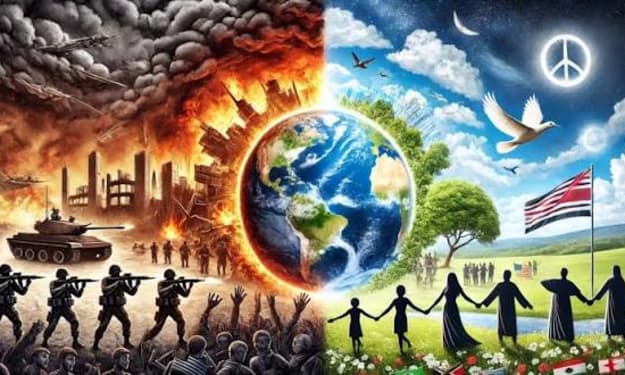
Today, the world is facing several conflicts at the same time. In different regions, wars are affecting millions of lives. While each conflict has its own history and causes, the human impact is very similar everywhere—loss of life, displacement, fear, and a strong desire for peace.
By shaoor afridia day ago in Earth



Comments
There are no comments for this story
Be the first to respond and start the conversation.