
Climate change is a matter of justice – here’s why
The concept has been widely used to refer to the unequal historical responsibility that countries and communities bear in relation to the climate crisis.

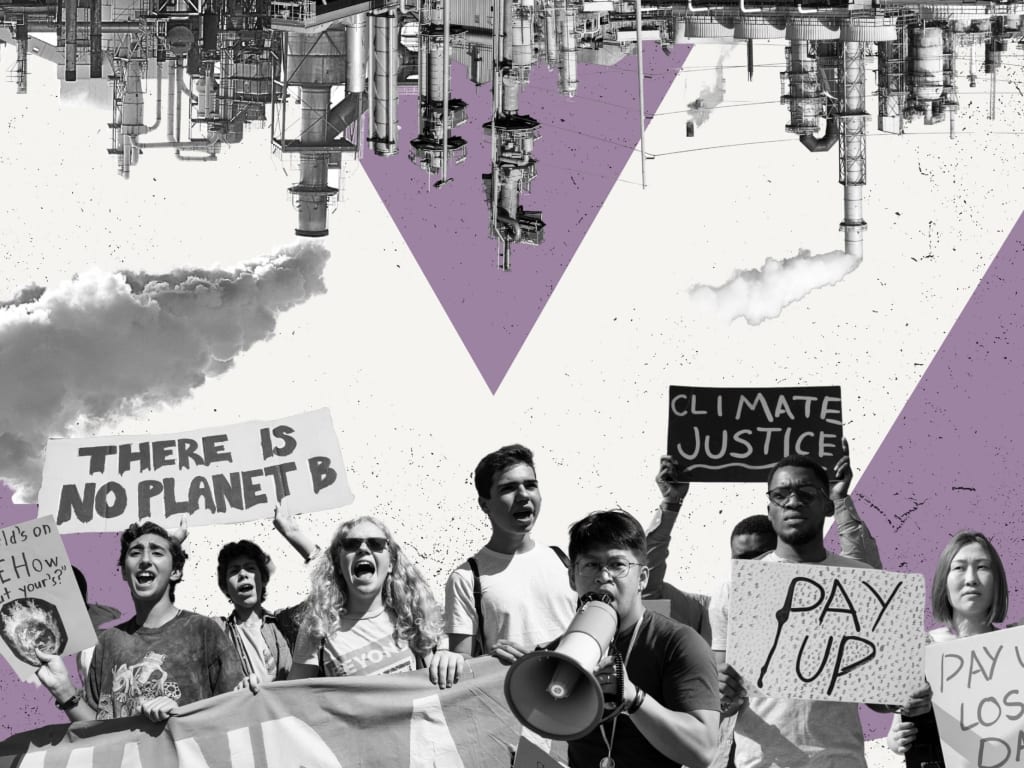
What is climate justice and why does it matter?
Climate justice means putting equity and human rights at the core of decision-making and action on climate change.
The concept has been widely used to refer to the unequal historical responsibility that countries and communities bear in relation to the climate crisis. It suggests that the countries, industries, businesses, and people that have become wealthy from emitting large amounts of greenhouse gases have a responsibility to help those affected by climate change, particularly the most vulnerable countries and communities, who often are the ones that have contributed the least to the crisis.
There are many facets to climate justice. Below, we provide an overview of a few of them.
Structural inequalities: Even within the same country, the impacts of climate change may be felt unevenly due to structural inequalities based on race, ethnicity, gender, and socioeconomic status. Women are more severely affected by climate change impacts, because they have access to fewer resources to adapt and cope with abrupt changes. People with disabilities are at increased risk of the adverse impacts of climate change, including threats to their health, food security, access to water energy, and sanitation, and livelihoods, particularly in developing countries. Indigenous Peoples, who protect 80 percent of the world’s biodiversity, are facing increasing threats and risks to their lives, livelihoods, and traditional knowledge.
Socioeconomic inequalities: The impacts of climate change and the resources needed to address climate change impacts are distributed unequally around the world. Low-income countries, and vulnerable populations within those countries, are more susceptible to climate-induced loss and damage. Globally, the 10 percent of households with the highest per capita emissions contribute 34–45 percent of global household greenhouse gas emissions, while the bottom 50 percent contribute 13–15 percent.
Intergenerational inequity: Children and young people today have not contributed to the climate crisis in a significant way but will bear the full force of climate change impacts as they advance through life. Because their human rights are threatened by the decisions of previous generations, their rights must be centred in all climate decision-making and action.
Why is climate justice important?
Climate change is a human rights issue. All people should have the agency to live life with dignity. However, the climate crisis is causing loss of lives, livelihoods, language, and culture, putting many at risk of food and water shortages, and triggering displacement and conflict.
The climate crisis impedes the right to good health as well. Rising temperatures, increased frequency of extreme weather events, polluted air and water contribute to significant health impacts, including heat stress, disease outbreaks, malnutrition, and trauma from having lived through disasters.
The impacts are more severe for vulnerable populations who have limited means to adapt to climate change impacts. Between 2010 and 2020, human mortality from floods, droughts, and storms was 15 times higher in highly vulnerable regions, compared to regions with very low vulnerability.
The climate crisis also has impacts on a country’s education system. When temperatures are too high or extreme weather events hit, for example, it can damage infrastructure and damage educational institutions, threaten the ability of parents to send their children to school, impacting the futures of young generations.
Climate justice is also an important aspect of just transition toward a sustainable future. Local communities, especially informal workers and other vulnerable and marginalized populations can be harmed in this transition if not protected and consulted. For example, there are increasing concerns around human rights violations related to mining for minerals needed to produce batteries for electric vehicles.
Currently, those who have least contributed to the climate crisis are being disproportionately affected by it. Climate justice suggests that the responsibilities in addressing climate change should be divided according to who is contributing most to the problem, while addressing systemic, socioeconomic, and intergenerational inequalities.
About the Creator
kathy rich
Welcome to a realm of boundless insights and creative inspiration. Whether you're looking for engaging storytelling, or information, I'm here to be your ultimate source of information. With a vast array of topics at my virtual fingertips.
Keep reading
More stories from kathy rich and writers in Earth and other communities.
The Climate Dictionary: An everyday guide to climate change
Weather vs. Climate Weather refers to atmospheric conditions at a particular time in a particular location, including temperature, humidity, precipitation, cloudiness, wind, and visibility. Weather conditions do not happen in isolation, they have a ripple effect. The weather in one region will eventually affect the weather hundreds or thousands of kilometers away.
By kathy rich3 years ago in Earth
Relativistic Colour and the Physics Behind Gold's Golden Glow
Pick up a piece of gold jewellery and hold it near a window. That warm, unmistakable yellow glow catches the light in a way that feels almost alive. It is not simply pretty. It is, as it turns out, physically extraordinary.
By CurlsAndCommas3 days ago in Earth
Hottest in the Office
Dear Rafi, You’re very distracting to work around. For the first second I saw you the other day, I thought you were some type of executive. It took a moment to realize no, you were just the new guy, dressed up for the job he wants. Be still, my heart.
By Gabriel Shames3 days ago in Pride




Comments
There are no comments for this story
Be the first to respond and start the conversation.