
Climate Change Crisis or Opportunity? How Humanity’s Progress Could Save the Planet
In a time when the state of our planet often feels bleak and the challenges of climate change seem insurmountable, a new perspective offers a glimmer of hope.

In a time when the state of our planet often feels bleak and the challenges of climate change seem insurmountable, a new perspective offers a glimmer of hope. According to Hannah Ritchie, a researcher at the University of Oxford and deputy editor of Our World in Data, humanity has faced—and overcome—significant environmental issues in the past. By stepping back and examining historical data, Ritchie reveals that not only are we capable of solving the current climate crisis, but we are also making tangible progress. Here's an in-depth look at how we can tackle climate change through innovative solutions in key sectors.
The Urgent Need for Climate Solutions
Climate change remains a pressing issue, primarily driven by human emissions of greenhouse gases. These emissions come from four main sectors: energy, transport, food, and construction. Addressing these areas effectively is crucial to mitigating the effects of climate change.

1. Transforming Our Energy Systems
The transition from fossil fuels to low-carbon energy sources is critical. The primary alternatives—solar, wind, hydropower, geothermal, and nuclear power—offer viable solutions. Contrary to popular belief, the land use required for renewable energy is relatively minimal. For instance, producing all the world's electricity from solar power would require less than 1% of the world’s land. Wind power needs about 5%, but the direct land impact is even smaller. Additionally, land between wind turbines can still be used for farming.
Nuclear power is another promising option, needing less than 0.1% of the world's land. Concerns about resource scarcity, such as lithium and copper needed for these technologies, are being addressed through increased reserves and advancements in technology. Moreover, the cost of solar and wind energy has plummeted over the past decade, making these sources more competitive than coal and gas.
2. Decarbonizing Transport
Transport accounts for approximately 20% of global CO2 emissions. The shift to electric vehicles (EVs) is a key strategy here. Although manufacturing EVs initially results in higher emissions due to battery production, these are quickly offset once the vehicle is in use. Over its lifetime, an EV can reduce emissions by 50% to 66% compared to traditional petrol or diesel cars. Importantly, global sales of petrol and diesel cars have peaked, and growth is now driven by electric vehicles.

3. Rethinking Food Production
Food production contributes to around 25% of global emissions, with significant impacts from land use changes, methane, and nitrous oxide. To reduce emissions in this sector, there are three main strategies:
- Enhancing Agricultural Productivity: Increasing yields per hectare of land can help reduce the land needed for farming.
- Dietary Changes: Shifting towards plant-based diets can significantly lower carbon footprints compared to meat and dairy consumption.
- Reducing Food Waste: Cutting down on food waste minimizes the emissions associated with producing food that isn’t consumed.

4. Innovating in Construction
Construction and manufacturing also contribute to emissions, particularly through the production of materials like cement. Solutions include:
- Reducing Cement Use: Employing lower grades or different types of cement can decrease emissions.
- Carbon Capture: Capturing and storing CO2 produced during cement manufacturing can help mitigate its impact.
- Alternative Materials: Research into materials such as calcium silicate, which doesn’t produce CO2, is underway.

The Role of Technology and Policy
Ritchie describes herself as an "urgent optimist," a perspective that emphasizes both the urgency of the climate crisis and the potential for positive change. Historical patterns show that human progress and environmental impact have often been at odds, but today’s technological advancements offer a unique opportunity to decouple well-being from environmental degradation.
Technologies are advancing rapidly, and we have the institutional frameworks to support these changes. The key now is to drive costs down and implement effective policies that promote sustainable practices across all sectors.
Historical Successes and Future Outlook
Historically, humanity has addressed significant environmental problems, such as the reduction of air pollution and the recovery of endangered species. These successes provide a model for how current challenges can be met with innovative solutions and determined action.

The future of climate action depends on harnessing our collective abilities and continuing to push forward with new technologies and strategies. By focusing on energy transformation, transport decarbonization, food system improvements, and sustainable construction, we can make substantial progress in addressing climate change.
Conclusion
While the climate crisis presents formidable challenges, there is reason for optimism. By leveraging historical examples of overcoming environmental issues and embracing new technologies, humanity is poised to tackle the climate crisis effectively. The transition to sustainable energy, decarbonized transport, improved food systems, and innovative construction practices all contribute to a more hopeful outlook.
For those interested in exploring more about how we can address climate change and the potential solutions available, stay tuned for updates and deeper dives into these critical issues. Together, we have the tools and knowledge to create a sustainable future for our planet.
About the Creator
BRICS Wargames: Why They Matter — And Why India Chose to Sit Out
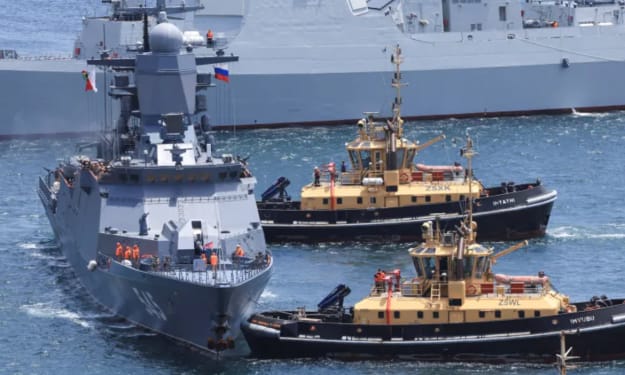
BRICS — the economic and political bloc comprising Brazil, Russia, India, China, and South Africa — has long been seen as a counterweight to Western-dominated global institutions. Over the years, it has expanded its influence in finance, trade, and diplomacy. Yet, in recent times, BRICS has begun exploring another domain that grabs headlines and sparks speculation: military cooperation, including large-scale wargames. These exercises are designed to simulate joint operations, test interoperability, and send a signal of strength. For members like Russia and China, wargames serve as both a show of force and a tool to deepen military collaboration within the bloc. However, India’s decision to opt out of recent BRICS wargames has raised questions: why does this matter, and why is India taking a different path from its BRICS partners? The Rise of BRICS Military Exercises Historically, BRICS has been portrayed as primarily economic, focused on initiatives like the New Development Bank (NDB) and trade agreements aimed at reducing Western dominance. But recent years have seen an evolution. Military drills among BRICS members are increasingly prominent, especially in the context of global tension and regional conflicts. These wargames are about more than just tactical drills. They serve multiple purposes: Strategic signaling: By conducting joint exercises, BRICS countries demonstrate unity and military capability to the rest of the world. Operational readiness: Countries test their ability to coordinate in complex scenarios, from humanitarian missions to potential combat operations. Diplomatic leverage: The exercises send subtle messages to other global powers, indicating that BRICS members can collaborate beyond economic forums. For nations like Russia, recently facing sanctions and international scrutiny, these exercises are particularly important. They showcase the ability to maintain partnerships and project power despite global isolation. For China, it is a way to cement strategic influence in Asia and beyond. Why BRICS Wargames Matter Globally The significance of these exercises extends beyond the bloc itself. Analysts note several key implications: Challenge to NATO and U.S. influence: BRICS wargames signal that alternative power centers exist outside Western-led military alliances. Regional security dynamics: Countries bordering BRICS members, particularly in South Asia, Africa, and Latin America, must monitor these developments carefully. Economic-military linkages: Military coordination among major emerging economies could shape security considerations in trade corridors, energy supply routes, and resource-rich regions. In essence, BRICS wargames are not just about soldiers and tanks, but about the broader geopolitical landscape: signaling, strategy, and shaping perceptions of influence. India’s Calculated Decision to Opt Out While Russia, China, Brazil, and South Africa have shown interest in participating actively, India has strategically chosen to abstain from the most recent wargames. This decision may appear surprising, given India’s economic and political stake in BRICS, but several factors explain it. Geopolitical balancing: India maintains complex relations with both China and Russia. While it has defense and historical ties with Russia, its relationship with China has grown tense due to border disputes and regional competition. Joining a wargame with China could be politically and militarily sensitive. Alignment with Western partnerships: India has strengthened ties with Western-led coalitions, including the Quad (U.S., Japan, Australia, India). Participating in BRICS military drills could conflict with these alliances, potentially sending mixed signals. Strategic autonomy: India has long emphasized a policy of strategic autonomy — making decisions based on national interest rather than bloc pressure. Opting out allows India to maintain flexibility in foreign policy and avoid entanglement in exercises that may not align with its regional objectives. Domestic perception: Indian public opinion and political narratives favor cautious engagement with China and Russia on military matters. Skipping the wargames minimizes domestic criticism of appearing too closely aligned with either of the more assertive BRICS powers. What India Gains by Sitting Out Choosing not to participate does not mean India is disengaged from BRICS. Economically and diplomatically, it remains a key player in the bloc. By skipping the wargames, India can: Maintain regional credibility in South Asia while avoiding the perception of aligning militarily with China. Signal strategic independence, reinforcing its image as a nation that prioritizes national security over bloc politics. Focus on bilateral and multilateral exercises elsewhere, such as those with the U.S., Japan, and Australia, which are more aligned with India’s current security priorities. In short, opting out allows India to navigate the delicate balance between its BRICS commitments and broader global strategic interests. Implications for BRICS and Global Security India’s abstention also reflects broader trends within BRICS: the bloc is not monolithic. While economic cooperation is often strong, military integration faces political and strategic limits. Differing national interests, historical rivalries, and regional tensions prevent uniform alignment. For global observers, this is crucial. It shows that while BRICS wargames are important, they are not necessarily indicative of a fully unified military bloc. The exercises are as much about optics as operations, and India’s absence underscores the challenges of aligning countries with divergent security priorities. Conclusion BRICS wargames matter because they are a window into the bloc’s evolving strategic ambitions. They signal power, test cooperation, and demonstrate emerging global influence. Yet India’s decision to opt out highlights that even within this growing coalition, national interests remain paramount. For India, the choice reflects a calculated approach: engage where it benefits national interest, avoid where risks outweigh gains, and maintain strategic flexibility. For the rest of the world, it is a reminder that BRICS, while increasingly important, is not a military monolith. Ultimately, BRICS wargames are as much about geopolitics and signaling as they are about military maneuvers — and India’s careful stance illustrates how emerging powers navigate this complex global chessboard.Start writing...
By Muhammad Hassan4 days ago in Earth
United States Plastic Market Size and Forecast 2025–2033
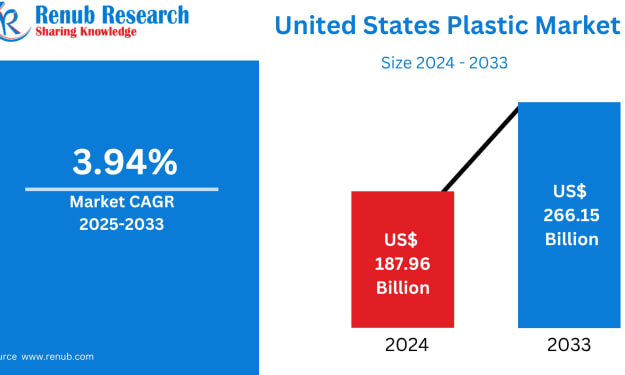
United States Plastic Market: Size and Forecast 2025–2033 The United States plastic market is projected to expand significantly, growing from US$ 187.96 billion in 2024 to US$ 266.15 billion by 2033, reflecting a steady Compound Annual Growth Rate (CAGR) of 3.94% during 2025–2033. This sustained growth is being fueled by rising demand across packaging, automotive, construction, healthcare, and consumer goods industries, alongside rapid innovations in recycling technologies and sustainable polymer development.
By Aaina Oberoi5 days ago in Earth
The Dryads are Calling
They say the forest by Phoenix River sings. Perhaps it is just the wind howling through the leaves, or a particular birdsong. But Percy Fisher knows better; he knows what lies in those woods, and he knows that the forest sings of his demise.
By Leigh Hooperabout 18 hours ago in Fiction


Comments
There are no comments for this story
Be the first to respond and start the conversation.