
Climate Change
What is climate change and how can we help to reduce climate change?
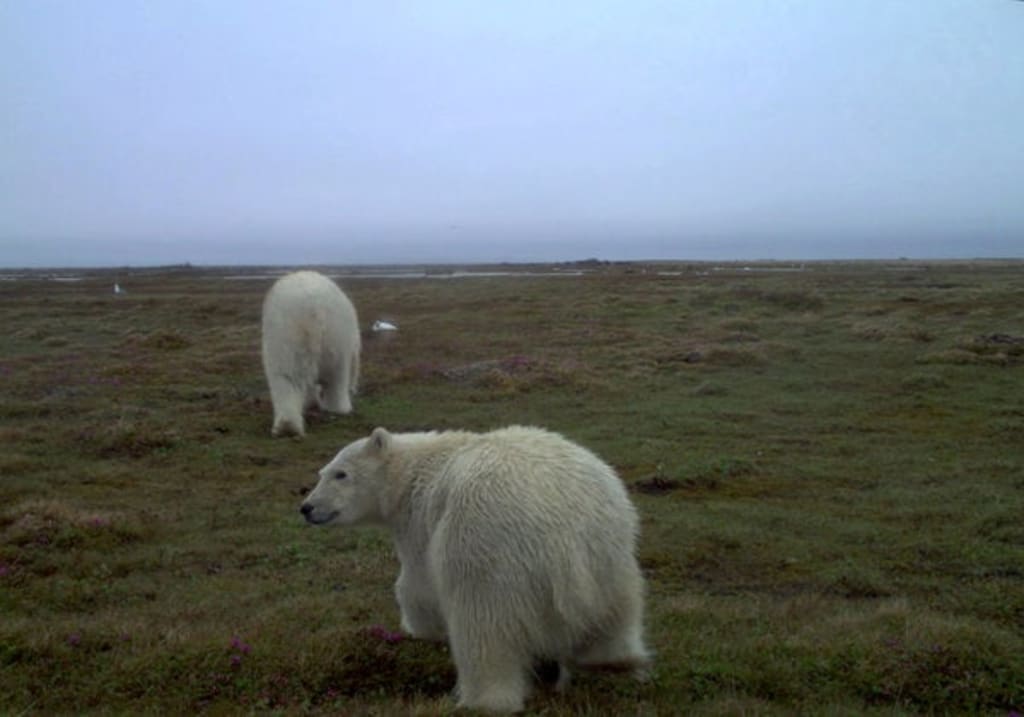
What is Climate Change You Might Ask?
Global warming caused by human-caused greenhouse gas emissions and the accompanying large-scale variations in weather patterns are two aspects of climate change.
While some may be sceptical, scientists have long supplied compelling evidence, such as rising global temperatures, melting oceans, disappearing ice caps, extreme weather occurrences, and so on.
Human activities and technological advancements are the primary causes of climate change.
How Can we reduce or stop climate change?
Activists have been battling for change for years in the hopes of stopping it before it's too late.
The 2015 Paris climate agreement was signed in the hopes of reducing climate change and limiting global warming to 34.7 degrees Fahrenheit by 2050, implying that there will be no emissions at all.
Stopping climate change can be accomplished in a variety of ways, including:
1. Saying no to plastic
Plastics are unquestionably damaging, not only to human health but also to wildlife. Reducing the quantity of plastic you use (especially that which you discard) will go a long way toward assisting.
Given the vast amount of plastic in our life, the effort is daunting. However, a few easy changes can significantly reduce the quantity of plastic we use on a daily basis.
2. Renewable Resources
In this day and age, replacing fossil fuels with sustainable and renewable energy is always a smart idea. Solar panels, for example, could save tens of thousands of megawatts of electricity if everyone used them.
Installing solar panels on your roof might be costly. However, as technology advances, solar energy becomes more efficient while installation costs decrease. Check to see if you can sell your extra electricity to the grid and make some money in the process.
Other small-scale renewables, such as a tiny wind turbine or a heat pump, could be installed.
If none of these solutions are feasible, think about ways to reduce your energy consumption at home. Using timers to put lights on, and turning the heat or air conditioning down by just 1 or 2 degrees could make a big difference.
3. Switching to an electric car
Switching to electric vehicles has proven to be a cost-effective method of energy conservation. Vehicle prices and the cost of establishing a home-based charging station are falling, while the number of charging stations on the road, particularly fast-charging stations, is increasing. In addition, today's e-vehicles have a far longer range than prior models. A large number of high-spec SUVs and light trucks will be released in the next years.
Aside from the reduced pollutants, there are numerous advantages to switching to an electric vehicle. They are quieter, and "filling up the tank" will only cost you a few pence. Because there is less wear and tear on electric vehicles, they will last far longer than gasoline-powered vehicles.
4. Deforestation Problem
The loss of trees and other vegetation can result in climate change, desertification, soil erosion, reduced crop output, flooding, increased greenhouse gas emissions in the atmosphere, and harm to the lives and livelihoods of local and indigenous people.
Deforestation does nothing to aid local people because forests are frequently cut down to make room for cattle and food crops for export markets. When rainforests are cut down, the soil usually only has adequate nutrients for one or two harvests, after which farmers and ranchers move on to the next location. When old growth forests are taken down, the ecology might take hundreds, if not thousands, of years to recover.
Many species of flora and animals are on the verge of extinction as a result of climate change.
Hopefully this article will help you see what climate change is and what the real problem is, since the mid 1800's it has never gotten better, and that was when the industrial revolution started, we can still make a change and once we do the planet earth will give back to us. Thank you for taking your time to read this.
About the Creator
Keep reading
More stories from writers in Earth and other communities.
Magnetic Magma earth
Super-Earths are rocky exoplanets more than three times the size of our planet, with far greater internal pressures and temperatures. For years, scientists assumed that if these worlds had magnetic fields, they would form the same way Earth’s does — through movement in a molten iron core. However, new laboratory experiments suggest something very different may be happening deep inside these massive planets. Under extreme pressure, certain molten rocks become electrically conductive. When these materials churn and circulate between the core and the mantle, they can generate magnetic fields on their own. This means a super-Earth might not rely solely on its core for protection. Instead, a thick, dynamic layer of magma could act as a natural magnetic shield, powered by internal heat and motion.
By USA daily update 2 days ago in Earth
“Do Not Copy This Site’s Content”: Why Originality Matters More Than Ever in the Digital Age
“Do not copy this site’s content.” It’s a warning most internet users have seen countless times, often at the bottom of webpages or buried in terms and conditions. Many scroll past it without a second thought. But in today’s digital world, that simple sentence carries far more weight than people realize.
By Muhammad Hassan6 days ago in Earth

Comments
There are no comments for this story
Be the first to respond and start the conversation.