
Climate change and its impacts on ecosystems
Understanding the science behind climate change and its impact on weather patterns
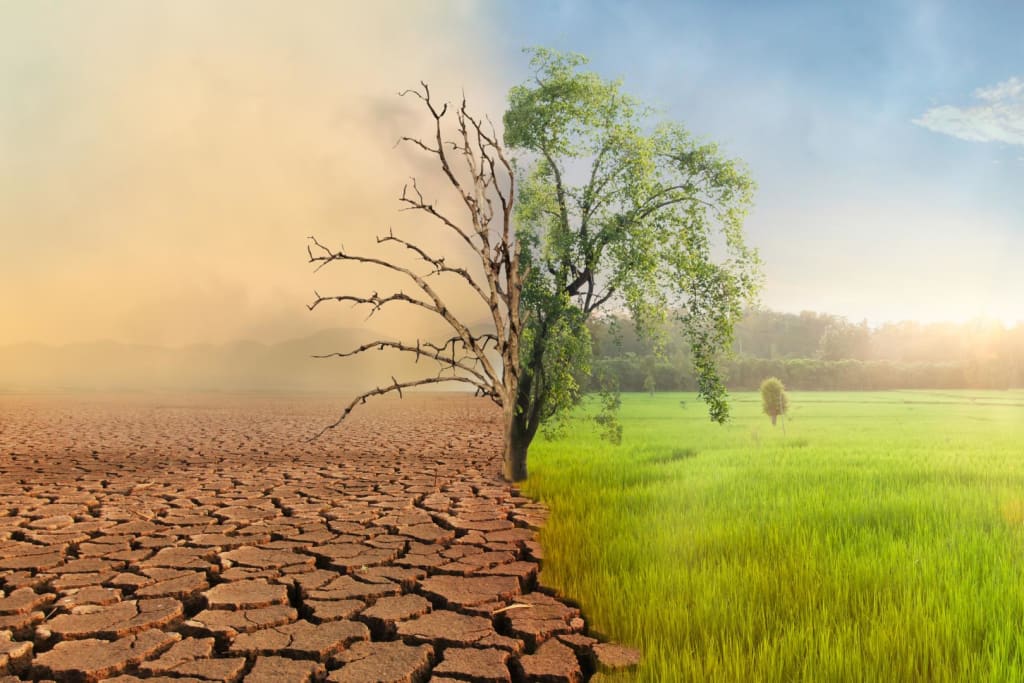
[8/23, 8:56 AM] Masters: Climate change refers to long-term shifts in temperature and weather patterns, primarily caused by human activities such as the burning of fossil fuels and deforestation. The science behind climate change is grounded in the understanding of greenhouse gases and their role in the Earth's atmosphere.
Greenhouse gases, including carbon dioxide (CO2), methane (CH4), and nitrous oxide (N2O), act like a blanket around the Earth, trapping heat and preventing it from escaping back into space. This phenomenon is known as the greenhouse effect. While the greenhouse effect is a natural process that helps maintain the Earth's temperature, human activities have significantly increased the concentration of greenhouse gases in the atmosphere, leading to an enhanced greenhouse effect.
The increased concentration of greenhouse gases intensifies the warming of the Earth's surface and alters weather patterns. This is because the Earth's climate system is a complex interconnected system, where changes in one component can have cascading effects on others.
One of the key impacts of climate change on weather patterns is the alteration of precipitation patterns. Warmer temperatures cause more water to evaporate from the oceans, leading to increased atmospheric moisture. This, in turn, can result in more intense rainfall events, leading to an increased risk of floods in some regions.
Conversely, higher temperatures can also lead to increased evaporation and drying of the land surface, resulting in drought conditions. Droughts can have severe impacts on agriculture, water availability, and ecosystems.
Climate change also influences the frequency and intensity of extreme weather events. For example, warmer ocean temperatures can fuel the formation and intensification of hurricanes and typhoons. Rising sea levels, another consequence of climate change, can exacerbate the impacts of storm surges associated with these tropical cyclones.
Heatwaves are another extreme weather event that is becoming more frequent and intense due to climate change. Higher temperatures and prolonged periods of heat can have detrimental effects on human health, agriculture, and ecosystems.
It is important to note that while climate change influences weather patterns, it does not cause every individual weather event. Weather variability is a natural occurrence, and it is challenging to attribute any single event solely to climate change. However, scientific studies have shown that climate change increases the likelihood and severity of certain weather events.
Understanding the science behind climate change and its impact on weather patterns is crucial for developing effective strategies to mitigate and adapt to its effects. It requires interdisciplinary research, including atmospheric science, climatology, and computer modeling.
In conclusion, climate change is a result of human activities that increase greenhouse gas concentrations in the atmosphere. This enhanced greenhouse effect leads to a warming of the Earth's surface and alters weather patterns. The impacts of climate change include changes in precipitation patterns, increased frequency and intensity of extreme weather events, and rising sea levels.
[8/23, 8:59 AM] Masters: Understanding the science behind climate change and its impact on weather patterns is crucial for individuals and communities to make informed decisions and take appropriate actions to mitigate its effects. By comprehending the scientific evidence, people can better grasp the urgency and severity of climate change, motivating them to take action.
With this knowledge, individuals can make informed choices in their daily lives. They can adopt sustainable practices such as conserving energy, reducing waste, and using renewable resources. Understanding the link between climate change and extreme weather events, such as hurricanes, droughts, and heatwaves, can also help individuals prepare for and respond to these events more effectively.
Communities can use scientific information to develop climate change adaptation and mitigation strategies. They can assess their vulnerability to climate impacts and implement measures to protect infrastructure, manage water resources, and ensure food security. Understanding the science behind climate change can also inform urban planning, leading to the development of more resilient cities that can withstand future climate challenges.
Furthermore, scientific knowledge empowers individuals and communities to advocate for policy changes and support initiatives aimed at reducing greenhouse gas emissions. By understanding the causes and consequences of climate change, individuals can engage in informed discussions, influence decision-makers, and contribute to collective efforts to address this global issue.
About the Creator
Keep reading
More stories from writers in Earth and other communities.
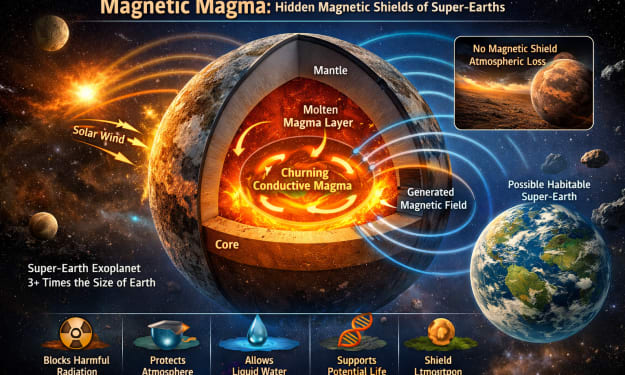
Magnetic Magma earth
Super-Earths are rocky exoplanets more than three times the size of our planet, with far greater internal pressures and temperatures. For years, scientists assumed that if these worlds had magnetic fields, they would form the same way Earth’s does — through movement in a molten iron core. However, new laboratory experiments suggest something very different may be happening deep inside these massive planets. Under extreme pressure, certain molten rocks become electrically conductive. When these materials churn and circulate between the core and the mantle, they can generate magnetic fields on their own. This means a super-Earth might not rely solely on its core for protection. Instead, a thick, dynamic layer of magma could act as a natural magnetic shield, powered by internal heat and motion.
By USA daily update 6 days ago in Earth
Media: The Amplifier of Injustice
Media does not report reality. It selects, compresses, and amplifies fragments of it according to incentives largely unrelated to truth. What reaches the public is not an account of events; it is an engineered sequence designed to capture attention, provoke reaction, and sustain engagement.
By Meridian Vox3 days ago in Earth



Comments (1)
Very nice ❤️