
Climate Change Adaptation Strategies: Evidence-Based Solutions for a Sustainable Future
How shifting weather patterns, fragile supply chains, and innovation are reshaping the future of food
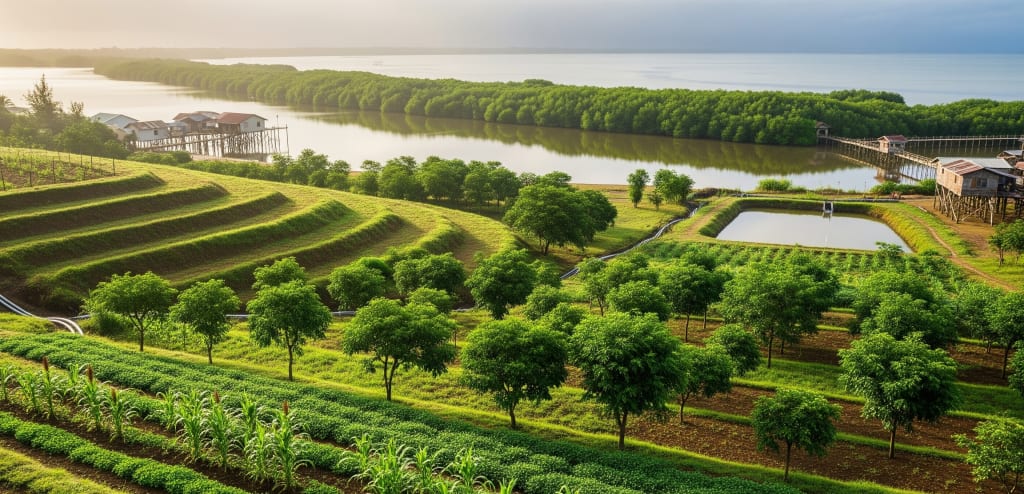
In 2022, catastrophic floods submerged one-third of Pakistan, displacing over 33 million people and devastating livelihoods (United Nations, 2022). That same year, Europe recorded its hottest summer, fueling wildfires and thousands of heat-related deaths (World Meteorological Organization [WMO], 2023). These events underline an urgent reality: climate change is no longer a forecast for the future but a crisis of the present. While global mitigation efforts to cut greenhouse gas emissions remain essential, adaptation strategies—actions designed to adjust societies, economies, and ecosystems to new climate realities—are equally critical for survival and resilience.
Why Adaptation Matters Globally
Mitigation and adaptation are often discussed together, but their roles differ. Mitigation addresses the causes of climate change by reducing emissions, while adaptation deals with its inevitable impacts (Intergovernmental Panel on Climate Change [IPCC], 2022). Even with strong mitigation, rising seas, shifting rainfall, and extreme weather will continue due to accumulated emissions.
The adaptation challenge is unevenly distributed. Wealthier nations often have resources to safeguard infrastructure and communities, while developing countries face growing vulnerabilities. According to the United Nations Environment Programme (UNEP, 2022), the adaptation finance gap could reach $300 billion annually by 2030. Bridging this divide is central to global climate justice.
Building Resilient Infrastructure
Strong infrastructure reduces climate risks and prevents costly disasters. The Netherlands, for example, has invested heavily in flood defenses, including the Maeslantkering storm surge barrier, which protects millions from flooding. Evidence shows that every dollar spent on climate-resilient infrastructure generates four dollars in avoided future losses (World Bank, 2021). Coastal cities worldwide can adopt similar approaches to protect vulnerable populations from rising seas and stronger storms.
Agricultural Innovation for Food Security
Agriculture is one of the most climate-sensitive sectors. Erratic rainfall and prolonged drought threaten global food supplies. Innovative practices are helping farmers adapt. In Kenya, smallholder farmers are using drought-resistant maize and mobile weather forecasts to guide planting decisions. Research in Nature Food (2021) suggests that adopting climate-smart agriculture could raise yields in sub-Saharan Africa by up to 15%, while also reducing vulnerability to shocks. Tools such as precision irrigation, soil moisture monitoring, and diversified crop systems are becoming central to adaptation.
Urban Planning and Green Cities
Cities are on the frontlines of climate change, with more than half the world’s population exposed to urban heat and flooding. Singapore has become a global leader by integrating green infrastructure—vertical gardens, rooftop greenery, and efficient drainage systems—into city planning. Evidence from the Journal of Environmental Management (2020) shows urban greening can reduce city temperatures by up to 2°C, improving health outcomes during heatwaves. Expanding sustainable public transport and retrofitting buildings further enhance resilience while reducing emissions.
Community-Based Adaptation
Adaptation is most effective when it involves local knowledge and participation. Indigenous communities offer valuable insights into sustainable land and water practices. In Pacific Island nations, mangrove restoration—an ancestral practice—has been revived to buffer coastlines from rising seas and storms. Studies in Climatic Change (2019) highlight that community-driven adaptation not only improves outcomes but also ensures cultural alignment and long-term sustainability. Empowering communities with training, resources, and decision-making authority ensures inclusivity in climate responses.
Barriers to Effective Adaptation
Despite proven strategies, multiple barriers slow progress. Financial limitations restrict investment in infrastructure and agriculture, especially in developing economies. Policy gaps and fragmented governance often leave adaptation under-prioritized compared to short-term economic growth. Public misinformation further undermines preparedness, as seen in U.S. coastal relocation programs delayed by political resistance (Hino et al., 2017). Without addressing these barriers, evidence-based strategies cannot achieve their potential impact.
Future Pathways for Global Cooperation
Effective adaptation depends on international solidarity. Frameworks such as the Paris Agreement encourage nations to fund adaptation initiatives and share knowledge. Wealthier states bear ethical responsibility to support vulnerable populations most at risk.
Technological advances also hold promise. Artificial intelligence, satellite monitoring, and advanced climate modeling can improve early warning systems and inform better decision-making. However, equitable access must remain central. Adaptation that leaves behind marginalized communities risks deepening inequality.
Toward a Resilient Future
Floods, fires, and heat waves show that adaptation is not a distant concern but an immediate necessity. Resilient infrastructure, climate-smart agriculture, urban greening, and community-led initiatives all demonstrate how evidence-based strategies can protect societies while opening opportunities for sustainable innovation.
Adaptation is not only about managing risks—it is about shaping a resilient, equitable future. The nations and communities that act decisively today, guided by science and inclusivity, will not just endure the climate crisis but emerge stronger from it.
About the Creator
San Francisco Food Banks: How Community Support Fights Hunger
San Francisco is a city filled with innovation, opportunity, and diverse communities, yet thousands of residents still struggle to secure enough nutritious food for their families. Rising living costs, fluctuating wages, and ongoing economic pressures make food insecurity a daily reality for many households. Food banks serve as an essential lifeline by providing access to healthy groceries, community resources, and supportive programs.
By Jason Prueta day ago in Earth


Comments
There are no comments for this story
Be the first to respond and start the conversation.