
The Silent Crisis: Tackling Pollution in India with Urgency and Innovation
Unveiling the Causes, Impacts, and Bold Solutions to Reclaim India's Air, Water, and Land


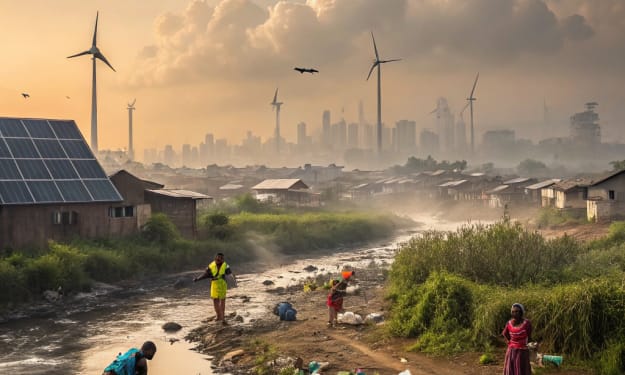
India, a land of vibrant culture and rapid growth, faces a formidable adversary: pollution. This escalating crisis threatens public health, ecosystems, and sustainable development. From choking urban smog to contaminated rivers, pollution in India demands immediate attention and innovative solutions. Let’s explore its causes, far-reaching impacts, and actionable steps to forge a cleaner, healthier future.
The Multifaceted Causes of Pollution
India’s pollution crisis stems from a complex interplay of factors. Rapid industrialization and urbanization have fueled economic growth but at a steep environmental cost. The World Health Organization (WHO) identifies India as home to 14 of the world’s 20 most polluted cities, with Delhi’s air quality index (AQI) frequently exceeding hazardous levels. Vehicular emissions, unchecked industrial discharges, and widespread construction dust are primary culprits. In rural areas, agricultural practices like stubble burning contribute significantly, with Punjab and Haryana alone generating 20 million tons of crop residue annually, much of it burned, releasing toxic pollutants.
Water pollution is equally alarming. The Central Pollution Control Board (CPCB) reports that 70% of India’s surface water is contaminated. Industrial effluents, untreated sewage, and agricultural runoff laden with pesticides pollute rivers like the Ganga and Yamuna. Plastic waste, with India generating 26,000 tons daily, clogs waterways and harms marine life. Soil pollution, driven by excessive pesticide use and improper waste disposal, degrades arable land, threatening food security.
The Devastating Impacts
The consequences of pollution are profound. Air pollution is linked to 2 million premature deaths annually in India, according to a 2020 Lancet study, with respiratory ailments, heart disease, and lung cancer on the rise. Children and the elderly are particularly vulnerable, with 1 in 10 asthma cases in urban areas tied to poor air quality. Waterborne diseases like cholera and typhoid claim thousands of lives yearly, with 80% of illnesses in rural areas linked to contaminated water, per the National Health Profile.
Ecosystems are crumbling under pollution’s weight. The Ganga, revered as a lifeline, supports 43% of India’s population but is choked with 1.5 billion liters of untreated sewage daily. Soil degradation affects 30% of India’s land, reducing agricultural yields by up to 20% in affected areas. Climate change exacerbates these issues, with rising temperatures intensifying smog formation and erratic monsoons disrupting water purification efforts.
Bold Solutions for a Cleaner India
Combating pollution requires a multi-pronged approach. First, stricter enforcement of environmental regulations is critical. The CPCB must enhance monitoring and penalize industries flouting emission norms. Expanding the National Clean Air Programme (NCAP) to more cities, with a goal to reduce particulate matter by 30% by 2025, is a step forward. Promoting electric vehicles (EVs) and improving public transport can curb vehicular emissions. India’s target of 30% EV penetration by 2030 is ambitious but achievable with incentives and infrastructure.
Water pollution demands robust waste management. Expanding sewage treatment plants—currently only 30% of urban sewage is treated—can revive rivers. Community-driven initiatives like the Namami Gange project show promise but need scaling. Banning single-use plastics and enforcing recycling can reduce the 9.3 million tons of plastic waste entering India’s environment annually.
Agriculture must shift to sustainable practices. Subsidizing alternatives to stubble burning, like bio-decomposers, and promoting organic farming can reduce air and soil pollution. Public awareness campaigns, coupled with school curriculums on environmental stewardship, can foster a culture of responsibility.
A Call to Action
India stands at a crossroads. Pollution is not just an environmental issue but a public health and economic crisis. Collaborative efforts—government policies, corporate responsibility, and citizen action—are vital. Innovations like air-purifying towers, river-cleaning technologies, and green urban planning hold immense potential. Every step, from planting trees to reducing waste, counts. Let’s unite to restore India’s skies, rivers, and lands, ensuring a thriving future for generations to come. The time to act is now—India deserves to breathe, drink, and live clean.
About the Creator
Arjun. S. Gaikwad
Truth Writing unveils reality beyond illusion, power, and propaganda words that awaken conscience and challenge comfort. Fearless, honest, and thought-provoking, it explores politics, humanity, and spirit to inspire awareness and change.
Keep reading
More stories from Arjun. S. Gaikwad and writers in Earth and other communities.
Pollution in Africa: A Continent’s Fight for a Cleaner Tomorrow
Introduction: Africa’s Pollution Crisis In 2025, Africa, with its 1.55 billion people, faces a mounting pollution crisis that threatens health, ecosystems, and development across its 54 nations. Contributing 15% of global greenhouse gas emissions and incurring $100 billion in annual health costs, per a 2024 UNEP report, Africa grapples with air, water, soil, and waste pollution. As the fastest-growing continent, with a 2.5% annual population increase, Africa’s challenges are intensified by urbanization and industrialization. This post explores Africa’s pollution landscape, its impacts, and innovative solutions, highlighting a resilient push for sustainability.
By Arjun. S. Gaikwad6 months ago in Earth
Britain in Talks With NATO to Boost Arctic Security
The Arctic Is No Longer a Frozen Backwater For decades, the Arctic sat quietly on the margins of global politics—remote, frozen, and largely ignored. That era is over. Britain is now in talks with NATO to strengthen Arctic security, acknowledging growing risks posed by Russia and China. In a notable shift, London’s assessment aligns closely with warnings long emphasized by Donald Trump, particularly as he continues to express strategic interest in Greenland. What once sounded like an eccentric fixation has evolved into a serious geopolitical conversation. The Arctic is rapidly becoming one of the world’s most contested regions, and Britain is positioning itself to play a larger role. Why Britain Is Paying Attention Now Although the UK is not an Arctic nation, it is an Arctic-adjacent power with significant strategic interests. British officials increasingly view the High North as critical to national and allied security. Melting ice is opening new shipping routes, exposing untapped natural resources, and making military movement easier than ever before. Britain’s talks with NATO focus on intelligence sharing, joint exercises, surveillance capabilities, and protecting undersea infrastructure such as communication cables and energy pipelines. These are not abstract concerns. Any disruption in the Arctic could have immediate consequences for European security and global trade. In short, what happens in the Arctic does not stay in the Arctic. Russia’s Expanding Arctic Footprint Russia is the dominant military power in the Arctic, and it is not slowing down. Moscow has reopened Soviet-era bases, deployed advanced missile systems, expanded its icebreaker fleet, and increased patrols across the region. The Arctic coastline represents a core part of Russia’s nuclear deterrent, making it strategically vital to the Kremlin. From NATO’s perspective, this military buildup creates both risk and uncertainty. Britain, which has long been vocal about Russian aggression—from Ukraine to cyber warfare—sees the Arctic as another front where deterrence must be strengthened before tensions spiral. The concern is not necessarily an immediate conflict, but miscalculation. In a region with harsh conditions and limited communication infrastructure, even minor incidents could escalate rapidly. China’s Quiet but Steady Arctic Ambitions While Russia’s presence is overt, China’s Arctic strategy is more subtle—and equally concerning to Western planners. Beijing calls itself a “near-Arctic state,” a label that has raised eyebrows in Europe and North America. Through investments, research stations, and partnerships, China is laying the groundwork for long-term influence. Britain shares NATO’s concern that China could use civilian projects for dual-use purposes, blending scientific research with intelligence gathering and infrastructure control. As Arctic shipping routes become commercially viable, China’s interest in controlling parts of the supply chain only grows. London’s alignment with these concerns reflects a broader shift in UK foreign policy: China is no longer viewed solely as an economic partner, but as a strategic competitor. Trump, Greenland, and Strategic Reality Donald Trump’s repeated interest in Greenland—most famously his suggestion that the United States should buy it—was widely mocked at the time. Yet behind the headlines was a strategic logic that many Western governments now openly acknowledge. Greenland sits at the heart of the Arctic, hosting vital air and naval routes between North America and Europe. It is also rich in rare earth minerals critical for modern technology and defense systems. As ice recedes, Greenland’s strategic value only increases. Britain’s current position, which aligns with Trump’s warnings about Arctic vulnerabilities, shows how quickly political perceptions can change. What once seemed unconventional now appears prescient. NATO’s Arctic Awakening NATO has traditionally focused on Eastern Europe and the North Atlantic. The Arctic, despite its importance, received less coordinated attention. That is changing. Britain’s talks with NATO reflect a broader alliance effort to integrate Arctic defense into its core strategy. This includes: Increased joint military exercises in cold-weather environments Enhanced monitoring of Russian and Chinese activity Strengthening cooperation with Arctic nations like Norway, Canada, and Denmark Protecting critical undersea and satellite infrastructure For Britain, this is also about credibility. As a leading NATO member and a key military power, the UK wants to demonstrate that it can contribute meaningfully beyond its immediate geography. Climate Change as a Security Multiplier One of the most striking aspects of Arctic security is how closely it is tied to climate change. Melting ice is not just an environmental issue—it is a strategic one. New sea lanes shorten travel between Asia and Europe, while access to oil, gas, and minerals becomes easier. This transformation increases competition and reduces natural barriers that once limited military movement. Britain’s involvement reflects recognition that climate-driven changes are reshaping the security landscape faster than traditional institutions were designed to handle. In this sense, Arctic security is a preview of future global challenges where environmental change and geopolitics collide. Domestic and Diplomatic Balancing Acts Britain’s Arctic engagement is not without challenges. Increased military involvement raises questions about defense spending, priorities, and escalation risks. Diplomatically, London must balance deterrence with dialogue, avoiding actions that could unnecessarily provoke Russia while still protecting allied interests. There is also the question of public awareness. Arctic security lacks the visibility of conflicts like Ukraine, making it harder to sustain political attention. Yet policymakers increasingly argue that prevention is cheaper—and safer—than crisis response. What This Means Going Forward Britain’s talks with NATO mark an important shift in how the Arctic is viewed: not as a distant frontier, but as a central arena in 21st-century security. Agreement with Trump-era assessments on Russia, China, and Greenland underscores how geopolitical realities can outlast political controversies. As competition intensifies, the Arctic will likely become a testing ground for cooperation, deterrence, and strategic foresight. Britain’s involvement signals that mid-sized powers are no longer content to watch from the sidelines. Final Thoughts The Arctic is warming faster than any other region on Earth—and so are the geopolitical tensions surrounding it. Britain’s move to boost Arctic security with NATO reflects a growing consensus that ignoring the High North is no longer an option. Whether driven by Russia’s militarization, China’s quiet expansion, or lessons drawn from Trump’s blunt warnings, one truth stands out: the future of global security may well be shaped at the top of the world, where ice, ambition, and power now intersect.
By Muhammad Hassan6 days ago in Earth
Miss Persephone's Manual to a Seemingly Ordinary Life
Miss Persephone was found at the dining table, her blue eyes swollen, her tears arriving and retreating like the tides of the ocean. Earlier that day, her family had visited her in the retirement home where she had lived for eight years. It was her eightieth birthday.
By Imola Tóth3 days ago in Fiction


Comments
There are no comments for this story
Be the first to respond and start the conversation.