
Chasing 8,000 Meters: My Manaslu Expedition Story
Manaslu wasn’t just about reaching another 8,000-meter summit—it was about testing myself, mentally and physically, in one of the most demanding environments on Earth.

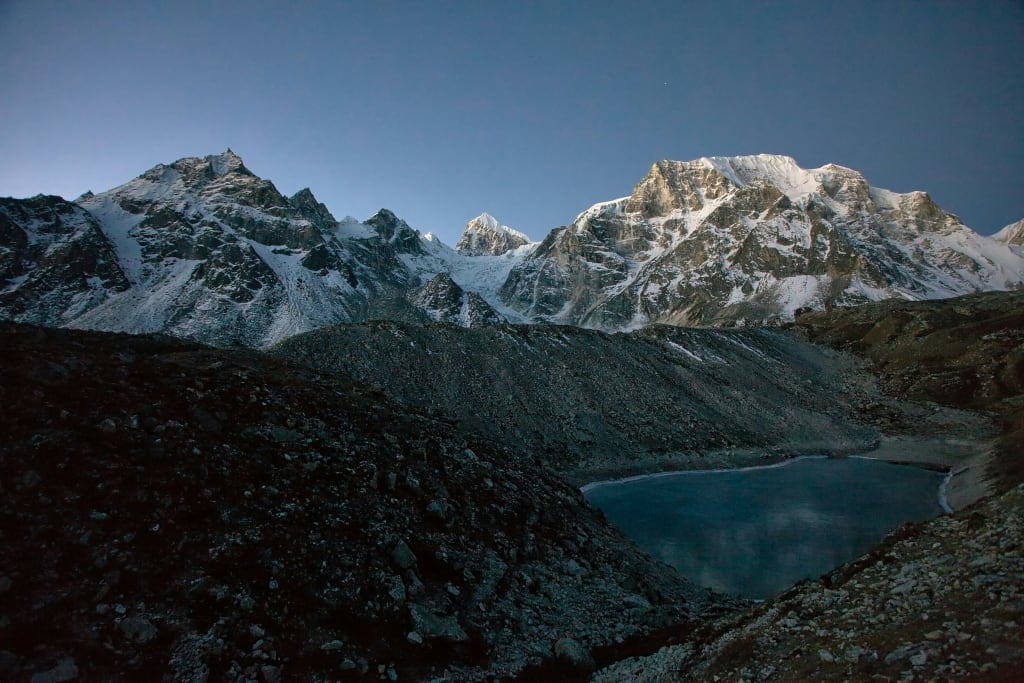
Mount Manaslu, the "Mountain of the Spirit," stands at 8,163 meters, the eighth-highest mountain in the world. It's less commercial than Everest, quieter than Cho Oyu, and yet every bit as formidable. For me, Manaslu wasn’t just about reaching another 8,000-meter summit—it was about testing myself, mentally and physically, in one of the most demanding environments on Earth.
This is the story of my expedition—of ambition, altitude, and everything in between.
A Dream Takes Shape
The idea of climbing an 8,000-meter peak had been on my mind for years. I had trekked in Nepal before—Everest Base Camp, Annapurna Circuit, even Island Peak. But Manaslu represented a new threshold: a mountain that didn’t just challenge your body, but your resolve.
Manaslu appealed to me because it was less crowded and offered a more raw, isolated expedition feel. I wanted to be away from the noise and see how far I could go when there was no audience—only the mountain and myself.
Kathmandu to Samagaun: The Approach Trek
Like most Himalayan expeditions, the journey begins long before you ever touch snow. After organizing gear in Kathmandu and securing permits, our team took a long drive to Soti Khola and started the trek up the Budhi Gandaki Valley.
The trail to Manaslu Base Camp is stunning—remote villages, swinging suspension bridges, waterfalls cutting through cliffs, and quiet forests untouched by mass tourism. We passed through places like Jagat, Deng, and Namrung before reaching Samagaun, the last big settlement before the mountain.
At Samagaun, we rested and acclimatized. The village sits at around 3,500 meters, and the views of Manaslu were already commanding. The scale of it was humbling. From there, we moved slowly toward Base Camp, taking time to adjust and letting the mountain become familiar.
Life at Base Camp
Manaslu Base Camp is perched at around 4,800 meters. From here, the summit felt impossibly far away.
Base Camp life is routine but essential. You eat, rest, hydrate, and wait—for weather windows, for rotations, for your body to catch up to the altitude. Every movement feels calculated. I remember waking up to snow-covered tents, breathing in the dry, icy air, and watching the sunrise hit the summit pyramid.
We trained in fixed rope systems, practiced glacier travel, and prepared mentally for what lay ahead. The Sherpa team was instrumental in helping us adapt. Their pace, efficiency, and humility reminded us every day that experience matters far more than ego in the mountains.
Climbing Rotations: Pushing Higher
To acclimatize, we did multiple rotations up the mountain. First to Camp I at around 5,700 meters. Then Camp II at 6,400 meters. Every climb was harder than the last.
The route was steep, icy, and exposed in sections. The Manaslu Glacier creaked underfoot. There were sections with ladder crossings and fixed ropes that required careful movement and sharp focus.
Sleep became more difficult above 6,000 meters. Eating was a chore. Fatigue became permanent. But this was the process—pushing the body just enough, then retreating to let it adapt.
By the time our summit push window arrived, we had made two full rotations and were confident in our acclimatization. But nothing can prepare you for the final push.
The Summit Push: Into the Death Zone
We left Base Camp for the final time with heavy packs and quiet minds. Camp III was the gateway to the death zone. At 6,800 meters, breathing became a conscious effort. From there to Camp IV at around 7,400 meters, the terrain became more serious, and the margin for error disappeared.
The night before summit day, I barely slept. The wind shook the tents. Oxygen tanks hissed softly beside me. We woke around 1 a.m., layered up, clipped in, and started climbing.
The cold was brutal. I felt it in my fingertips despite the gloves. My goggles iced up every few minutes. And yet, one step at a time, we gained altitude. Headlamps flickered above and below as climbers ascended in slow motion.
By sunrise, we were near the summit ridge. The wind had calmed, and the mountain revealed itself in the pale morning light. Every breath felt like a small victory. And then, just after 9 a.m., we stepped onto the summit.
The Summit: 8,163 Meters
The summit of Manaslu is narrow, sharp, and exposed. But from there, the entire Himalaya stretched out in all directions. Ganesh Himal, Annapurnas, and far to the west, even hints of Dhaulagiri.
I didn’t cry or raise my hands in triumph. I just stood there—silent, overwhelmed, and grateful. I thought of all the nights in tents, all the months of training, all the doubts. And I thought of the people I loved, far below, who never questioned why I needed to do this.
We didn’t stay long. No one does. Photos were taken. Hugs exchanged. Then we turned around—because reaching the summit is only half the journey.
The Descent and the Return
Descending was harder than expected. My legs were shaky. I was exhausted and dehydrated. But I focused on every step, knowing that most accidents happen on the way down.
We moved through Camp IV, then Camp II, eventually arriving back at Base Camp 48 hours later. I remember sitting in the mess tent, drinking tea, and feeling weightless—not physically, but emotionally. We had done it. Safely.
The trek back to Kathmandu was a blur. Forests replaced glaciers. Rivers replaced snowfields. And slowly, life returned to normal.
What Manaslu Taught Me
Climbing Manaslu wasn’t just about altitude. It was about vulnerability, resilience, and trust—especially trust in the Sherpa team and in the mountain itself. I learned that fear isn’t something to overcome, but something to carry with you. It sharpens your focus and reminds you what’s at stake.
I also learned that silence—true silence—is one of the most powerful experiences a human can have. High on that mountain, disconnected from the noise of the world, you hear yourself more clearly than ever before.
Would I Do It Again?
Absolutely. Not because I crave the summit, but because I crave the simplicity of the mountains. The purity of effort. The clarity of purpose. Manaslu changed me, and I think that’s the best thing a mountain can do.
If you're dreaming of chasing 8,000 meters, know this: it’s not just a climb. It’s a commitment. It demands everything, but it gives back more than you ever imagined.
About the Creator
Anya Gurung
I am a traveller/explorer
Keep reading
More stories from Anya Gurung and writers in Earth and other communities.
Annapurna Circuit Trek Guide: Route Map, Permits, and Daily Itinerary
The Annapurna Circuit Trek is one of Nepal’s most iconic and rewarding trekking adventures. Known for its jaw-dropping scenery, diverse landscapes, and cultural richness, this trail circles the Annapurna Massif and takes you from lush subtropical forests to arid high mountain deserts in a matter of days. If you're planning to embark on this life-changing journey, this comprehensive Annapurna Circuit Trek guide will help you with everything — from the route map and necessary permits to a detailed daily itinerary.
By Anya Gurung9 months ago in Earth
Falling Branch Victim’s Foundation ‘Will Help Kids’
A sudden tragedy has inspired a powerful initiative. Following the unfortunate death of a young child who was struck by a falling tree branch in a local park, the child’s family has launched a foundation dedicated to helping children and promoting safety in public spaces. The foundation, announced just weeks after the incident, aims to turn grief into meaningful action while raising awareness about community safety and supporting families in need.
By Muhammad Hassanabout 15 hours ago in Earth
GWR Confirms ‘Major Investment’ with Office Lease: What It Means for Plymouth and the South West
Great Western Railway (GWR) has confirmed a major long-term investment in Plymouth by securing a significant city-centre office lease close to the railway station. While the announcement may sound like a routine property deal on the surface, it actually signals something much bigger — a vote of confidence in the city, a boost for local regeneration, and a clear statement about the future direction of rail-led development in the South West.
By Muhammad Hassan4 days ago in Earth
Rachel Reviews: The Spiral Archive by Pieter Hendrik
It's difficult for me to know where to start with a review of this book as it was, for me, an entirely unique experience and one that I'll probably never have again. I don't want that to be interpreted as unenjoyable but it has left me scratching my head a little and ruminating on its content, its themes and its characters.
By Rachel Deeming6 days ago in BookClub


Comments
There are no comments for this story
Be the first to respond and start the conversation.