
Cave Painting:-
World's oldest Paintings known cave paintings are found in Indonesian Sulawesi

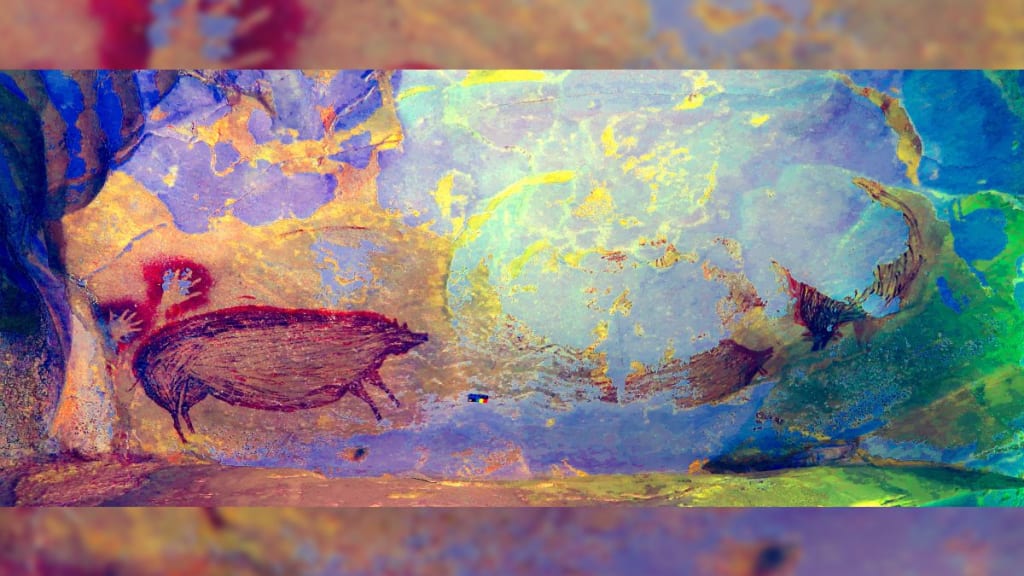
A team of archaeologists and researchers in Indonesia have made an extraordinary discovery - the world's oldest known cave paintings, which date back at least 45,500 years. These incredible artworks were found in a remote and hard-to-reach cave in the limestone hills of Sulawesi, an island in Indonesia.
The paintings, which are incredibly detailed and feature a range of animals and human-like figures, were created using red and purple pigments, and have been incredibly well-preserved. The level of sophistication and detail in the artwork is remarkable, and it is clear that the creators were highly skilled and had a deep understanding of the natural world around them.
The discovery of these paintings is an incredible breakthrough for the study of human history and the evolution of art. It sheds new light on the capabilities and creativity of our ancient ancestors, and gives us a glimpse into their daily lives and belief systems.
Researchers have been studying the paintings in great detail, using a range of techniques including 3D imaging and chemical analysis, in order to learn more about the people who created them and the world they lived in. They have also been working to preserve and protect the paintings, which are incredibly fragile and vulnerable to damage.
The discovery of the world's oldest known cave paintings in Sulawesi is a reminder of the incredible diversity and richness of human history, and the importance of preserving and studying our ancient past. It is also a testament to the power of human creativity and imagination, and the enduring beauty and significance of art across time and cultures.
The cave paintings in Sulawesi also challenge previous assumptions about the origins of art and the development of human creativity. Until recently, it was believed that the oldest cave paintings were located in Europe and dated back around 40,000 years. However, the discovery of these paintings in Indonesia suggests that humans were creating art in multiple regions of the world at around the same time.
In addition to the paintings themselves, researchers have also discovered a range of other artifacts and evidence of human habitation in the cave, including stone tools, animal bones, and evidence of fire. These findings provide important insights into the lives of the people who created the paintings and the environment in which they lived.

Despite the importance of the discovery, the cave paintings in Sulawesi are facing significant threats from human activity and environmental factors. The cave is located near a rapidly developing region, and pollution, deforestation, and climate change are all posing significant risks to the site and the paintings themselves.
As a result, there is an urgent need for greater protection and conservation efforts to preserve these extraordinary artifacts for future generations. This will require a coordinated effort from governments, researchers, and local communities to ensure that the site is protected and that the paintings are studied and appreciated for their immense cultural and historical significance.
The discovery of these cave paintings also has important implications for our understanding of the evolution of human cognition and creativity. The ability to create art represents a major milestone in the development of human intelligence and culture, and the fact that humans were creating art over 45,000 years ago suggests that our capacity for creativity is deeply embedded in our biology and evolutionary history.
Moreover, the remarkable level of detail and realism in these paintings suggests that the ancient humans who created them had a sophisticated understanding of the natural world and the animals they depicted. This challenges earlier assumptions that early humans lacked the cognitive ability to create realistic representations of the world around them.
Overall, the discovery of the world's oldest cave paintings in Sulawesi is a remarkable achievement that has profound implications for our understanding of human history and the evolution of art and creativity. By studying these ancient artifacts, we can gain new insights into the lives, beliefs, and creativity of our ancient ancestors, and deepen our appreciation for the power and beauty of human art across time and cultures. However, it is also important that we work to preserve and protect these extraordinary artifacts for future generations, so that they may continue to inspire and educate us for many years to come.
-AR
About the Creator
Abdul Razack
Writing has been my passion. Fiction, poetry, and fanfiction are my favorite forms of storytelling. Writing movie reviews is something I enjoy doing.
Feel free to subscribe, leave a comment, and spread the love
Keep reading
More stories from Abdul Razack and writers in Earth and other communities.
Air pollution:-
The atmosphere of Earth is a thin layer of gases that surrounds the planet and provides a protective shield for life. However, over the past few decades, human activities have been polluting the air we breathe, causing serious harm to the environment and human health.
By Abdul Razack3 years ago in Earth
Pearl
1980 something. we all hung out at Pearl and you and i were nothing special, or so i thought. i mean we all danced, drenched in our own sweat, our own saline solution of fear, too many beers, shots, laughter, tears, fucks in the bathroom and i don't know when we began to be afraid. do you?
By ROCK aka Andrea Polla (Simmons)6 days ago in Fiction



Comments (1)
45,000 years??!! Wow!