
Can you believe it? There is plastic in your body, and it keeps accumulating
There is plastic in the human body

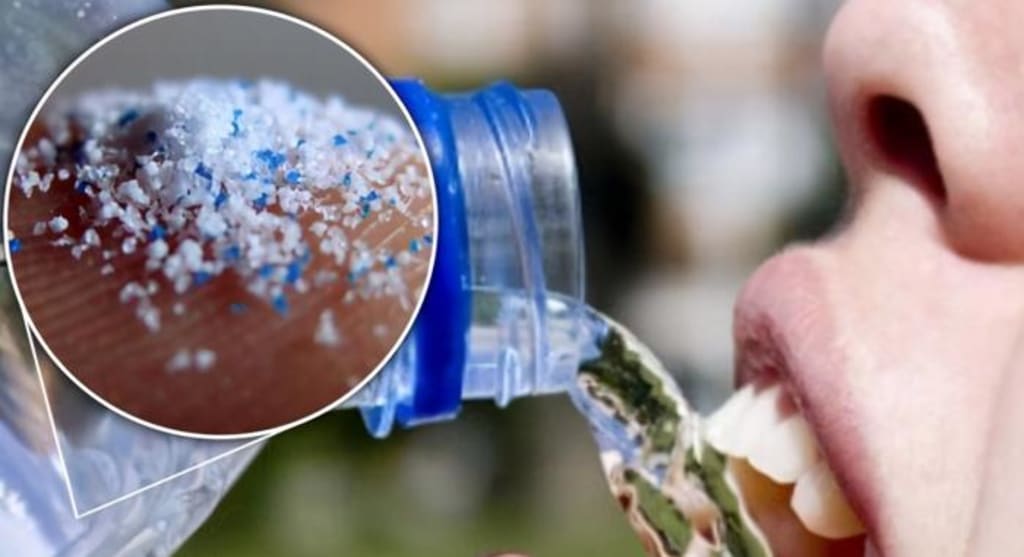
Can you believe it? According to a scientific report, plastic has contaminated the human body. Confused, I put my chin away, checked the information on the Internet, and found that there is such a thing.
In fact, to be precise, it is microplastics that pollute the human body. The researchers examined the feces of volunteers from eight countries and found microplastic particles in all of them. And this matter has also been reported by the New York Times, and its authority is beyond doubt.
Compared with our usual plastics, microplastics are smaller in size and are generally considered to be plastic particles smaller than 5mm. Plastic wastes such as plastic bags and beverage bottles used in our daily life are collectively referred to as "white waste".
The nature has a function of degrading garbage, and white garbage will become smaller and smaller after being degraded by microorganisms in rivers, oceans and soil in nature. Just like a plastic bag, it is continuously washed and ravaged by the river water, and then "bited" by microorganisms, and finally fragmented into particles.
In addition, other microplastics processed and produced by humans, such as the scrub facial cleanser we use, the microfibers of baby diapers, and the small fibers decomposed from plastic rags, are all sources of microplastics.
In the natural environment, microplastics have two characteristics: First, the quantity is large. According to incomplete statistics, there are more than 35,000 tons of microplastics in the ocean, accounting for 55% of the total garbage. Second, the growth rate is fast. Over the past 40 years, it has been found that the concentration of microplastics in the ocean currents of the central Pacific Ocean has continuously increased by two orders of magnitude.
The increase of microplastics not only brings harm to the environment, but more importantly, threatens human beings. The most direct impact, because microplastics have good adsorption, it will adsorb many toxic substances. Because it is too small, many marine organisms will accidentally eat it into the body, through the food chain, and eventually these tiny microplastics will accumulate on humans at the top of the food chain.
As mentioned earlier, because microplastics have adsorption capacity, they will adsorb toxic substances. If there is too much accumulation in the human body, there will be many adverse effects. If one day microplastics complete the process of quantitative change to qualitative change in the human body, human beings may go to extinction.
The most terrifying thing is that this process is silent, and humans will not see themselves eating these microplastics. It's like an elaborate murder, and by the time you die, you won't know who's behind it.
However, all of this is actually a human self-inflicted experience. The original intention of human beings to make plastic is to facilitate people's lives, so they have produced this kind of material that cannot be decomposed quickly in nature. Or it should be said that plastic should be the most undesirable material in the world.
In the late 19th century, with the development of industries around the world, many new materials continued to emerge. A natural insulating material, shellac, is gradually gaining popularity in the market. However, the origin of shellac is mainly concentrated in Southeast Asia. Due to the transportation technology at that time, shellac is scarce all over the world.
At this time, people are in urgent need of a substitute, and chemists are the main force in finding this material.
In the end, an American scientist named Baekeland came out on top. He successfully produced phenolic resin and created the first hard plastic. Bellanke discovered that this magical polymer compound has many advantages such as being insoluble, not melting, and insulating, and it can completely replace shellac.
After he applied for a patent, plastics began to be widely used and used around the world. Phenolic resin is deeply loved by people because of its low cost, insulation, fastness and durability, and gradually entered people's lives. Until now, plastic products can be seen in many small shops and supermarkets.
According to data, about 8 billion tons of plastic products are produced in the world in one year. Such a huge number shows that human beings have a "love" for plastic products.
It is precisely because of this "love" that many creatures in nature have suffered indelible damage. Because plastic is a polymer compound, it is difficult to degrade in the natural environment. For example, an ordinary plastic bag we use takes hundreds of years for nature to degrade completely.
In many news reports, we will see that animals ingest plastic by mistake, and then accumulate in the body and cannot excrete it, eventually leading to death.
According to a study by Oceania Conservation, 1,792 animals were entangled in plastic last year, and 88 percent of them were endangered species.
Therefore, plastic is the last material that human beings should invent, and the world will be a better place without it!
About the Creator
daron mychal
Give you a whole new vision to see the world
Keep reading
More stories from daron mychal and writers in Earth and other communities.
Can today's desolate Mars be regarded as another dead Earth?
5 billion years ago, there was a large mass of nebula matter that slowly condensed together and revolved around the center. Most of this mass of token matter was hydrogen, and there were also some heavy elements.
By daron mychal4 years ago in Earth
A Green Solution to Urban Pollution
Air pollution has become one of the most serious environmental challenges facing modern cities. Rapid industrialization, increasing vehicle emissions, and expanding urban populations have significantly degraded air quality around the world. Polluted air not only harms ecosystems but also poses severe health risks to humans, contributing to respiratory diseases, heart conditions, and reduced life expectancy. Among the many strategies proposed to combat this problem, planting and preserving trees stands out as one of the most natural, cost-effective, and sustainable solutions.
By Irshad Abbasi 2 days ago in Earth



Comments
There are no comments for this story
Be the first to respond and start the conversation.