
Can Sustainable Bowls Really Replace Plastic? The Bagasse Case Study Restaurants Can’t Ignore
From plastic bans to customer demand, here’s how sugarcane bagasse bowls are solving the toughest packaging problems restaurants face in 2025.

The global restaurant industry is in crisis—at least when it comes to packaging. Plastic bans are expanding, eco-conscious consumers are pushing back, and yet most takeout meals still arrive in cheap plastic containers that nobody wants anymore.
The contradiction is clear: businesses want sustainable options, but many don’t know which materials actually work in practice. Paper collapses with soups. Foam pollutes for centuries. “Compostable” plastics confuse both customers and regulators.
So, can sustainable bowls really replace plastic without sacrificing performance? The answer might surprise you. And it comes from a material most people overlook: sugarcane bagasse tableware.
The Pain Point: Why Restaurants Struggle With Packaging
Imagine you own a busy noodle shop. Every day you serve hundreds of bowls of hot ramen, oily stir-fried dishes, or chilled poke salads. The packaging options are all flawed:
Plastic bowls hold liquids well but carry toxic chemicals and take 400+ years to decompose.
Paper bowls look eco-friendly but get soggy in minutes when filled with hot broth.
Foam clamshells are cheap but banned in more and more cities worldwide.
The restaurant pays the price—not just in packaging costs but also in customer satisfaction. Leaks, spills, and negative reviews quickly add up.
This is why the demand for a reliable, sustainable alternative has never been stronger.
A Real-World Case: Switching to Bagasse Bowls
In late 2024, a mid-sized food chain in Seoul decided to test sugarcane bagasse bowls across 12 outlets. Within weeks, the results shocked management:
Customer complaints about leaking packaging dropped to zero.
Online reviews mentioning “eco-friendly packaging” increased by 28%.
Waste management costs fell by 18% because bagasse bowls could be composted instead of handled as plastic trash.
Bagasse bowls weren’t just sustainable—they performed better than the alternatives. They held up under hot ramen, greasy curries, and chilled desserts without losing structure.
Data That Changes Minds
Numbers don’t lie. Here’s the stark comparison:
Plastic bowls → 400+ years to decompose
Foam containers → never fully break down
Bagasse bowls → 60–90 days in industrial composting
If one restaurant serving 500 meals daily switched to bagasse, it would prevent more than 12 tons of plastic waste per year. Multiply that by 1,000 restaurants, and the industry suddenly eliminates 12,000 tons of plastic annually.
This is more than a trend—it’s a measurable environmental impact that businesses can use in marketing, compliance, and cost-saving strategies.
Why Bagasse Wins in 2025
Bagasse is made from sugarcane fiber left after juice extraction. For decades, it was treated as farm waste. Now, it’s turned into durable, compostable packaging. Its advantages are hard to ignore:
Heat resistance up to 220°F → safe for soups, noodles, and curries
Grease and oil resistance → perfect for fried or saucy dishes
Compostable lifecycle → aligns with EN13432 and ASTM D6400 standards
Consumer appeal → eco-conscious diners recognize and value the switch
Unlike paper or bioplastics, bagasse hits the sweet spot: eco-friendly and practical.
The Takeaway: From Hidden Waste to Everyday Solution
What started as agricultural waste is now reshaping the global packaging industry. Bagasse bowls are no longer a niche solution; they are the standard that smart restaurants adopt before regulations force their hand.
The quiet revolution is already here. Customers love it. Cities encourage it. And businesses benefit from both lower risks and stronger reputations.
So the question is simple: When your customers ask if your packaging is sustainable, will you still hand them plastic—or show them you’ve made the smarter switch?
About the Creator
Microbiota, microbiome or microflora: how to speak correctly and why it is for health.
You've probably heard the phrase, "We are what we eat." But modern science says more precisely: we are also those who live in us. Until 2016, it was believed that there are many times more bacteria in our body than our own cells. The latest calculations by mathematicians show that we divide the body with our microorganisms by about 50/50: about 30 trillion of our cells versus 38 trillion bacterial ones.
By Yaroslav Gorohov3 days ago in Earth
Chinese EVs Closing In on America After Canadian Tariffs Deal
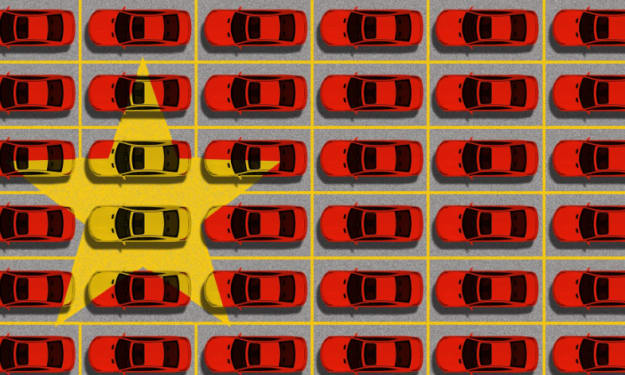
The electric vehicle race is no longer just about climate goals or consumer choice — it has become a geopolitical contest. And in early 2026, a subtle but powerful move by Canada may have tilted the board. By agreeing to sharply reduce tariffs on Chinese electric vehicles, Canada has opened a door that the United States has worked hard to keep shut. While Chinese EVs are still largely barred from the American market, they are now edging closer than ever — not by crossing the border directly, but by entering through Canada. This development raises a pressing question: Are Chinese EVs closing in on America, and what does that mean for the future of North American auto markets? The Deal That Changed the Game Canada’s new agreement with China allows up to 49,000 Chinese-made electric vehicles per year to enter the Canadian market at a tariff rate of just over 6%, a dramatic drop from the previous 100% tariff that effectively blocked them. On paper, the quota seems small. In reality, it carries enormous symbolic and strategic weight. For years, both Canada and the United States aligned closely on keeping Chinese EVs out, citing concerns over unfair subsidies, national security, and the protection of domestic auto industries. This new deal marks a clear shift — and a divergence from U.S. policy. Canada didn’t make the decision in isolation. The EV tariff reduction was part of a broader trade reset with China, tied to agricultural exports such as canola and efforts to stabilize a strained economic relationship. Why Chinese EVs Matter So Much China is the undisputed leader of the global electric vehicle industry. Its manufacturers produce EVs at scale, often at prices Western automakers struggle to match. Brands like BYD, Nio, and Xpeng have already expanded aggressively into Europe, Southeast Asia, and parts of the Middle East. North America has remained one of the final fortified markets — until now. Chinese EVs are appealing not just because they’re cheaper, but because they’ve rapidly improved in quality, range, and technology. For consumers priced out of North American and European EV models, Chinese vehicles offer something rare: affordability without sacrificing features. Canada’s decision gives Chinese automakers their first legitimate foothold in North America — and footholds tend to grow. Why the U.S. Is Nervous The United States still enforces a 100% tariff on Chinese EV imports, making them effectively unsellable in the American market. But Canada’s move has triggered concern in Washington. U.S. officials argue that Chinese EVs entering Canada could indirectly pressure American markets, influence supply chains, and weaken Washington’s leverage in future trade negotiations. There’s also a political dimension. Both major U.S. parties have framed Chinese dominance in EVs as a strategic threat — not just to auto jobs, but to technological leadership. Modern EVs collect vast amounts of data, and lawmakers have raised concerns about cybersecurity and foreign data access. While Chinese EVs aren’t rolling onto American roads yet, their presence just across the border changes the conversation. Canada’s Risk — and Opportunity Inside Canada, the reaction has been mixed. Automotive hubs like Ontario worry that opening the market could undermine domestic manufacturing and strain relations with the U.S., Canada’s largest trading partner. Some leaders have called the deal “lopsided,” warning it could cost jobs if American retaliation follows. Others see opportunity. A more competitive EV market could lower prices for Canadian consumers and accelerate EV adoption. It may also attract Chinese investment into Canada itself — including factories, battery plants, and supply chain partnerships. If Chinese automakers choose to build in Canada rather than simply export to it, the country could position itself as a bridge between Chinese EV innovation and North American demand. That balancing act — between economic opportunity and political risk — defines Canada’s strategy. Are Chinese EVs Really ‘Closing In’ on America? For now, the answer is: not directly — but strategically, yes. Chinese EVs sold in Canada won’t automatically flood the U.S. market. Regulations, trade rules, and tariffs still stand in the way. But proximity matters. Supply chains overlap. Consumer awareness spreads. Manufacturing footprints expand. There’s also the possibility of a workaround: Chinese companies could eventually build EVs in North America to bypass tariffs altogether. This idea has already been floated — but it faces fierce resistance from U.S. lawmakers and unions. Still, history shows that once a global industry leader gains regional access, momentum often follows. What This Means for Consumers For Canadian buyers, the impact could be immediate: more choice and lower prices in an EV market that has long been criticized for being expensive and limited. For American consumers, the effect will be indirect — at least at first. But increased competition could eventually pressure U.S. automakers to reduce prices, improve features, and accelerate innovation. The larger question is whether North America wants competition or insulation — and how long insulation can realistically last in a globalized EV economy. The Bigger Picture: A Global EV Power Shift Canada’s tariff deal reflects a broader reality: China’s dominance in electric vehicles is reshaping global trade, whether governments like it or not. Europe is already grappling with an influx of Chinese EVs. Emerging markets are embracing them. And now, North America has its first real crack in the wall. This isn’t just about cars. It’s about who controls the future of clean transportation, supply chains, and industrial policy. Final Thoughts Chinese EVs aren’t driving down American highways yet — but after Canada’s tariff deal, they’re closer than ever. This move doesn’t spell immediate disruption, but it does signal a shift. One country has decided that economic pragmatism outweighs political alignment. And in doing so, Canada may have opened the door to a new phase of EV competition in North America. Whether that door swings wider — or slams shut — will depend on how the U.S., automakers, and consumers respond. One thing is certain: the EV race just entered a new chapter.
By Muhammad Hassanabout 15 hours ago in Earth



Comments
There are no comments for this story
Be the first to respond and start the conversation.