
Can animals understand death?
Can animals understand death?
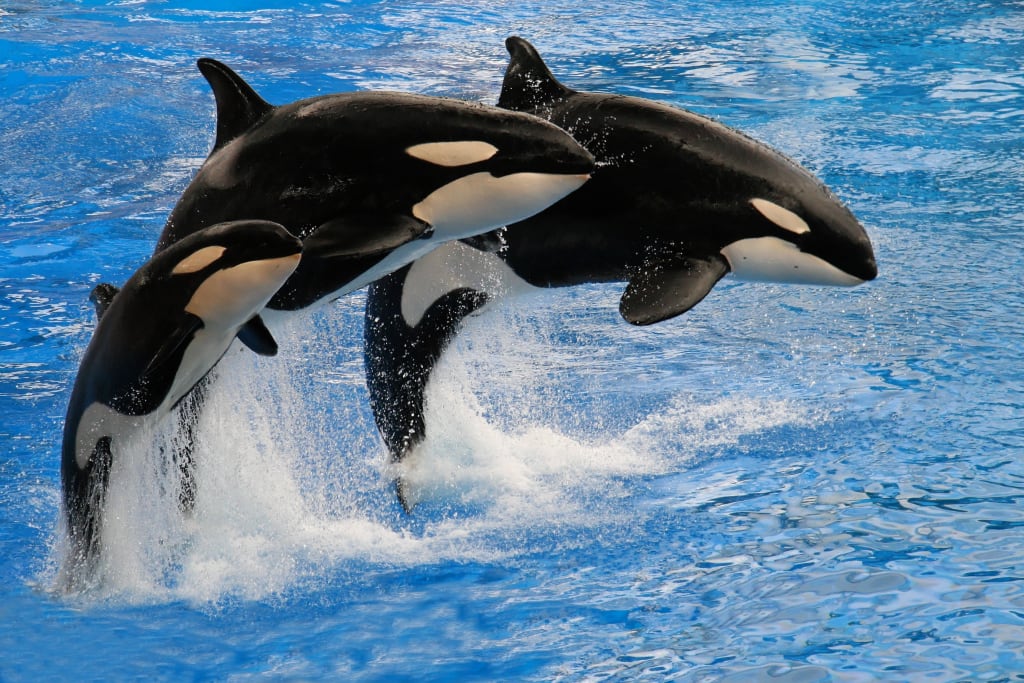
In 2018, an orca named Tahlequah experienced the heart-wrenching loss of her newborn calf, who tragically passed away shortly after birth. Despite the devastating circumstances, Tahlequah displayed an extraordinary act of devotion. For the following 17 days and over a distance of 1,600 kilometers, she carried her deceased calf's body above water, even as it deteriorated. This behavior, which involved altering her feeding and travel patterns, raised the question: was Tahlequah mourning or simply confused? Understanding whether non-human animals grieve is a complex matter.
In 1871, Charles Darwin argued that animals can experience a wide range of emotions, including grief. However, many scientists have been cautious about attributing human emotions to other animals, especially without a reliable means of communication between our minds and theirs. It has also been suggested that irregular behaviors displayed by animals after a death might serve adaptive purposes rather than indicate grief. For a long time, the prevailing belief was that humans were unique in their capacity for thinking and feeling, while other animals merely reacted and survived.
This perspective began to be challenged during the 20th century. For instance, in 1985, a gorilla named Koko, who had been trained in American Sign Language, was informed of her kitten companion's death. Koko made distress calls and, several weeks later, when shown a photo of another kitten, signed "cry," "sad," and "frown." Such instances, alongside an increasing body of data and observations, suggest that certain animals, including mammals and birds, may indeed experience what we recognize as grief.
In one case from 2003, an elephant matriarch named Eleanor collapsed. Within minutes, another matriarch named Grace approached and assisted Eleanor in standing, only for her to fall once again. Grace vocalized, stayed by Eleanor's side, and made efforts to help her rise. When Eleanor eventually passed away, a female elephant named Maui came forward, positioned herself over Eleanor's body, and swayed back and forth. Over the following week, elephants from five different families visited Eleanor's body. There have also been instances of elephants carrying the remains of their deceased family members, including jawbones and tusks.
In 2010, a giraffe calf born with a deformed foot struggled to walk and survived for only four weeks. On the day the calf died, 22 adult females and four juveniles closely surrounded and occasionally nuzzled the body. The mother giraffe remained by her dead calf's side, abstaining from eating, which is uncharacteristic for giraffes who typically feed continuously. She persisted in her vigil even as hyenas consumed the calf's body.
Scientists have also conducted quantitative studies to assess animals' responses to death. In 2006, researchers analyzed fecal samples from female baboons to measure glucocorticoid levels, stress hormones that increase when humans experience bereavement. They compared samples from females who had lost close relatives to predator attacks with those who hadn't. The results showed significantly higher glucocorticoid levels in baboons who had experienced loss, persisting for a month after the event. These baboons subsequently increased their grooming behavior and the number of grooming partners, expanding and strengthening their social networks. Within two months, their glucocorticoid levels returned to baseline.
Observations of primate mothers carrying their deceased infants have revealed conflicting behaviors. They alternate between behaviors like cannibalizing or dragging the corpse and gently carrying or grooming it, suggesting that they experience conflicting impulses toward the bodies.
However, our current understanding of the emotional experiences of non-human animals remains limited. More research is needed to gain a deeper comprehension of mourning in the animal kingdom. In the absence of comprehensive data, discussions about whether non-human animals can experience emotions such as grief can be emotionally charged. These conversations have significant real-world implications, such as deciding whether orcas should be isolated and kept in captivity or determining the separation of dairy cows from their newborn calves.
Until we have a more robust body of evidence on this subject, it is crucial to approach non-human animals with empathy and respect, acknowledging the possibility that they may possess the capacity to grieve. It is prudent to avoid assumptions that could cause harm and instead prioritize an attitude of compassionate consideration.
About the Creator
El Niño is likely to return in 2026. Here's what that means for Houston and Texas.
La Niña has been active since mid-October. However, according to the January update from the National Oceanic and Atmospheric Administration, it’s likely to end over the next couple of months, and a transition to El Niño is likely to occur later this year.
By Dena Falken Esq3 days ago in Earth
Icy Chaos in Central and Eastern Europe
Winter has unleashed its fury across central and eastern Europe, leaving travelers frustrated and transport networks struggling to keep up. Over the past few days, freezing rain and ice have wreaked havoc on airports, train stations, and highways — forcing flight diversions, delaying trains, and making roads treacherously slippery. From Vienna to Budapest, Prague to Bratislava, this icy grip has brought travel to a near standstill. Let’s take a closer look at what’s happening, how it’s affecting people on the move, and what it tells us about winter travel in Europe. A Sudden Winter Blow A sudden wave of freezing rain swept across the region, coating runways, rail tracks, and roads with a dangerous layer of ice. Major airports in Austria, Hungary, Slovakia, and the Czech Republic were particularly affected. At Vienna International Airport, operations were temporarily suspended when runways became too slick for flights to land safely. Travelers already in the air had to divert to alternative airports in Munich, Frankfurt, and Venice. Meanwhile, Budapest’s Ferenc Liszt International Airport paused all arrivals and departures, and Prague’s Václav Havel Airport continued operating but at limited capacity. Trains Crawling Through Ice Rail networks weren’t spared. Across Austria, Hungary, and the Czech Republic, ice on tracks and power lines caused delays and cancellations. Austria’s national rail operator, ÖBB, urged passengers to postpone non-essential journeys. In the Czech Republic, travelers at Prague’s main station faced long waits as trains struggled to maintain schedules. Hungary’s tram and suburban rail services were temporarily suspended due to ice buildup on power lines. This combination of black ice, frozen switches, and heavy snowfall has tested the limits of winter infrastructure in Europe. Roads Turn Into Skating Rinks The icy weather didn’t just affect public transport — roads became treacherous, too. Authorities in Slovakia and the Czech Republic warned residents to avoid non-essential travel as highways turned into slippery skating rinks. Accidents and minor collisions were reported, and emergency services were busy responding to dozens of injuries from slips and falls. Even schools weren’t immune: parts of Romania shifted to online learning, keeping children safe during the extreme temperatures, which dropped to around -13°C in some areas. Why This Weather Is So Disruptive Meteorologists point to several factors that made this storm particularly severe: Freezing rain on top of existing snow creates an icy layer that’s extremely hard to clear. Rapidly refreezing surfaces make conditions unpredictable. Temperatures hovering around freezing prevent efficient melting during the day. This “perfect storm” scenario underscores just how vulnerable transport systems are to extreme weather. Even well-prepared airports and rail networks can struggle when weather transitions from snow to freezing rain. Voices From the Ground Passengers took to social media to express their frustration: Crowded airports as travelers scrambled to rebook flights. Train stations packed with delayed commuters, unsure when the next train would depart. Warming centers opened to provide shelter and hot drinks for stranded travelers. For many, a simple trip turned into a test of patience and resilience. Tips for Traveling in Freezing Conditions If you must travel during winter storms, experts recommend: Check flight and train schedules regularly, as delays can change quickly. Allow extra time for travel to avoid missing connections. Consider travel insurance that covers weather-related disruptions. If driving, carry winter essentials: blankets, food, water, and check road conditions before departure. Most importantly, prioritize safety over schedules — icy conditions can change rapidly, making travel risky. A Reminder From Winter This recent chaos in central and eastern Europe serves as a stark reminder of how interconnected transport systems are, and how vulnerable they can be to extreme weather. Flights grounded, trains stalled, and highways turned icy show that winter can bring travel to a halt — sometimes with very little warning. As Europe continues to face volatile winter conditions, travelers and authorities alike are reminded: preparation and flexibility are key. Sometimes, the weather truly has the final say. ❄️🛫🚆
By Muhammad Hassan3 days ago in Earth


Comments
There are no comments for this story
Be the first to respond and start the conversation.