
Can a person know that he is dead at the moment of death? After collecting a lot of information, I finally found the answer
Human consciousness at the moment of death

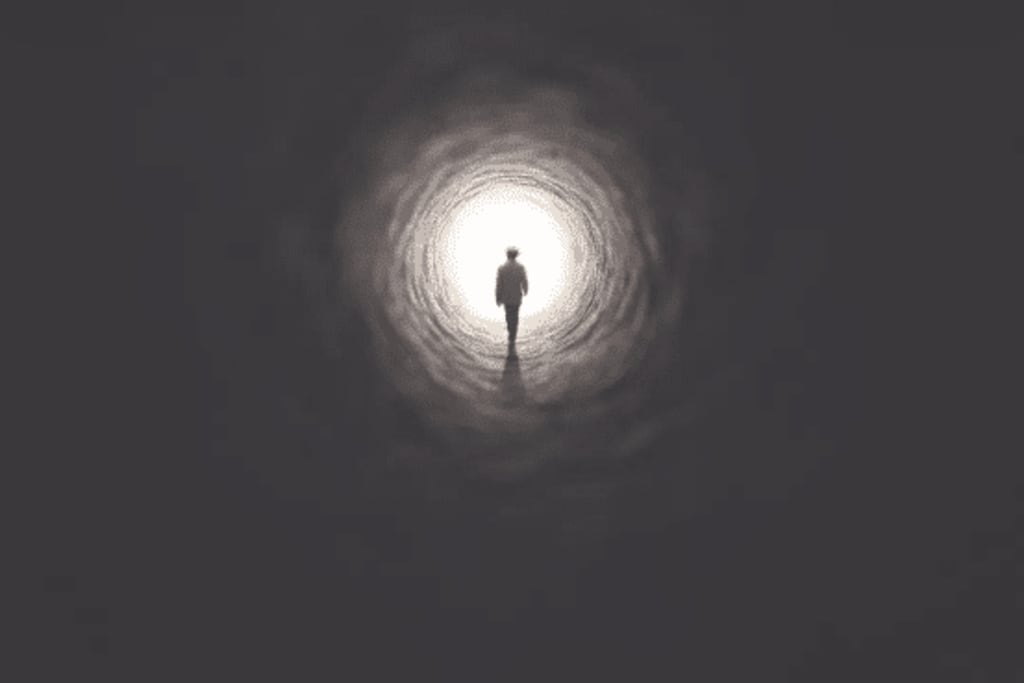
The moment life is born, it is destined to have the moment of death. This is the eternal law of nature. In general, birth is a joyful event, and death is a sad and terrifying event, but it is a moment that each of us has to face in the end. Parents who are older than us may leave this world first, and children younger than us may also leave this world first in an accident. At this time, the attitude towards death is particularly important.
If a long-term fear of death is caused by the death of a loved one, then our physical and mental health will gradually decline. Therefore, it is necessary for us to think about death in our spare time. How should we view death? In recent years, research on death has increased, and scientists want to define death more accurately and find out whether people become conscious at the moment of death. So what have the scientists discovered in these studies?
How is death defined in medicine?
Under normal circumstances, the death of the human body is judged by cardiac arrest, respiratory arrest and brain death. Cardiac arrest and respiratory arrest are the initial judgment methods. The appearance of these two signs tells us that this person is in serious danger of life and must be rescued immediately. At this time, the person is not necessarily brain dead, so it is still possible to wake the fallen person again through some emergency rescue measures. But if the injured person may also directly experience brain death, then the real death occurs.
Brain death refers to the irreversible and permanent cessation of whole brain function, which mainly includes two aspects. On the one hand, it is the complete cessation of brain function. Except for some movements and sensations, almost all the mental activities of the brain have stopped, and the brain waves have also disappeared at this time. If the function of the brain stem still exists at this time, then the injured person still has the ability to breathe spontaneously. At this time, it is not considered brain dead, but the injured person cannot move and is in a so-called "vegetative state".
On the other hand, the brainstem function is completely stopped. According to research, there are important structures such as cranial nerve nucleus, vascular motor center, and respiratory center in the brainstem. Once the brainstem function stops, the brain death of the injured person is irreversible. Medically, death is divided into three stages. The first stage is the dying stage. In this stage, the reflexes of the deceased are dull or weakened, and the respiratory and circulatory functions are also greatly weakened. The second stage is the clinical death stage, in which various reflexes in the body disappear, and the heartbeat and breathing stop.
The third stage is the biological death stage. In the last stage, the metabolism of all the important organs in the human body stops one after another. This stop is irreversible, which means that the human body cannot be resurrected.
At the moment of death, will the deceased have the consciousness of death? For a long time, people thought that death was a process with few transitions, so there was no consciousness after death. However, modern research shows that consciousness may still appear after death, which needs to be discussed on a case-by-case basis. If the injured person has been brain-dead at this time, which means that all functions of the brain have stopped, then consciousness cannot continue to be generated, so the deceased in this situation will not have death consciousness.
If the injured person does not experience brain death, and then brain death occurs within a short period of time, then death consciousness may appear at this moment. In recent years, scientists have come to a conclusion through research that people may be conscious at the moment of death, and it is still uncertain what the content of this consciousness is. It may be that the deceased already knows that he is dead. In this regard, you may suspect that the moment of death is extremely short, so short that it can hardly be measured by time units, so how did scientists reach this conclusion?
Some foreign scientists have found by measuring the biological signals of the dying person's body that a very weak biological signal can still be transmitted from the brain after the death of the brain, and then to other parts, but this signal is almost fleeting and cannot be detected. captured, and therefore cannot be further studied. In addition, scientists' awareness of the moment of death is more based on theoretical analysis, because there is still a time gap between the death of the heart and the death of the brain.
During this very small gap, although the heartbeat of the deceased stopped, the brain was still functioning, until the signal that the heart stopped was transmitted to the brain, and after the brain received the signal, it would issue instructions to make other organs of the body stop functioning. If we analyze the process of death from this perspective, we will find that this process can actually be subdivided into many steps. Of course, these steps are only in the theoretical stage at present, and more experiments are needed to prove them.
Although death is irreversible, there have been many cases of "resurrection" in history. How to explain these cases? First, let's look at the cases at home and abroad. A 72-year-old man in India once fainted while feeding a cow. When someone found him, he had stopped breathing. After the doctor arrived at the scene, he was judged dead. When the old man's family was about to cremate him, the old man suddenly opened his eyes and sat up, staged a "resurrection" drama.
There are similar cases in China. A 95-year-old Li Xiufen fell on the morning of February 1, 2012. At that time, the doctor diagnosed a slight concussion. But on February 17, when the neighbor brought her breakfast, she found her lying on the bed. No matter how she called or pushed, Li Xiufen was indifferent. The neighbor reached out to detect her breath and found that she had stopped breathing. Afterwards, the neighbors did not invite a doctor for a professional diagnosis, thinking that Li Xiufen had passed away.
So the neighbors and his son started to prepare for Li Xiufen's funeral. On the 19th, they put Li Xiufen's body into the coffin, but did not nail the lid of the coffin. The neighbor father and son came to burn incense for Li Xiufen every morning, but on the 23rd they found that the lid of the coffin was opened and Li Xiufen was gone! Finally, the neighbor saw Li Xiufen standing up in the kitchen. Li Xiufen said that she was hungry and was cooking noodles.
There are many similar incidents. If you only learned about these news from other people's words, I believe many people will think that this is "resurrection from the dead". But as long as we analyze these events in depth, we will find that the so-called resurrection from the dead does not exist. Either the person involved does not really die at all, or he cannot be resurrected after death. In the above case, the old man in India was diagnosed as dead after he stopped breathing. The doctor's diagnosis was not rigorous, ignoring the diagnosis of brain death, so the old man did not really die at this time.
In the second case, after discovering that Li Xiufen had stopped breathing and her hands and feet were cold, the neighbors concluded that the old man Li Xiufen had passed away based on past experience. This judgment was even more unscientific. Fortunately, he did not crucify the lid of the coffin, nor did he cremate the old man Li Xiufen, otherwise he would have really wronged his life. From the above analysis, the real death needs to be scientifically identified, and those cases that seem to be "resurrected from the dead" are actually not real deaths.
Are humans afraid of death?
Under normal circumstances, everyone has a fear of death when facing death. Why do humans fear death? This problem can be explained psychologically or religiously. From a psychological point of view, people already know what death is all about from past experience. Death means that everything a person has no longer exists, so when they face death, they will feel this kind of situation of nothingness. fear.
People struggle all their lives to have something, to have stable family relationships, social relationships, to have a certain amount of money and wealth, to have some survival skills, etc., and death means that these possessions are completely gone, and people will naturally feel about losing. Negative emotions are generated in the ground, so the emotions in the face of death can be interpreted as the emotions in the face of the loss of everything. This kind of loss is impossible to have any hope of regaining what you once had. This is true despair.
There are also scholars who analyze why people are afraid of death from the perspective of religious belief. Many religious beliefs have shaped unique "death views" in which death does not mean losing everything but entering another state. For example, in the Christian concept, people can go to heaven after death, and in the Buddhist concept, people can go to the Ultimate Bliss after death. These pre-determined ideas for the situation after death have helped to a great extent. Humanity overcomes the fear of death.
In real life, there are many people who are non-religious, does this mean that these people must have a strong sense of fear of death? The author believes that everyone has a sense of fear when facing death, even people with religious beliefs, but different people have different degrees of fear, which is based on the cognition and attitude of the deceased towards death before his death. It can be seen that human emotions towards death depend to a large extent on the cognition of death.
How to deal with the fear of death?
Psychological research has found that fear is an emotion, and any emotion has two sides. On the one hand, fear makes us afraid to face death, and on the other hand, it drives us to find ways to stay away from the source of fear. When it comes to death, all we have to do is to find ways to keep the fear from happening, which is death. While you're alive, try to stay as healthy as possible to reduce the chance of disease consuming your life.
At the same time, we also need to create more value. These values will form a strong protection for our hearts after being fed back by the society, and let us face death and reduce our fear.
About the Creator
sondra mallen
Share a little bit of science every day
Keep reading
More stories from sondra mallen and writers in Earth and other communities.
Cremation is a serious waste? Animals will return to nature after death. Why do humans break the laws of nature?
Death is the fate that every individual cannot escape, including human beings with advanced technology. Before the emergence of human civilization, after the death of human beings, the remains will re-enter the ecological chain, such as: sky burial, scavenger vultures will come to destroy human remains, and then leave the remains that are difficult to destroy for people to bury, these remains will be buried again after burial Decomposed by the decomposer, the energy is reused.
By sondra mallen3 years ago in Earth
The Dryads Are Calling
Deep within the heart of ancient forests, where sunlight filters through towering canopies and the air hums with life, there exists a world few humans truly understand. It is a world of dryads, the mythical tree spirits of folklore, silently observing, nurturing, and sometimes guiding the creatures that dwell among the trees. Today, their legend continues to captivate the imagination, blending myth, nature, and a touch of magic.
By Aarif Lashariabout 22 hours ago in Earth
Inside Trump's $11 Billion Health Plan to Replace “Neo-Colonial” USAID
In the landscape of global health aid, few proposals have stirred as much debate as former President Donald Trump’s ambitious plan to restructure American assistance abroad. Dubbed an $11 billion health initiative aimed at replacing USAID’s current framework, the plan seeks to pivot away from what Trump and his allies have criticized as the “neo-colonial” approach of U.S. foreign aid. While the plan promises greater efficiency and impact, experts are split on whether it is a practical solution or a politically driven gamble. Trump’s Critique of USAID The United States Agency for International Development (USAID) has long been a central pillar of American foreign assistance, distributing billions in aid annually to address health crises, food insecurity, and development challenges worldwide. However, Trump’s administration and its supporters have often described USAID’s approach as bureaucratic, inefficient, and reflective of a “neo-colonial” mindset. In public statements, Trump argued that the U.S. was spending taxpayer dollars on programs that benefited foreign governments or contractors more than the intended local communities. Critics of the plan say that while USAID has flaws—as any large bureaucracy does—its extensive networks and decades of experience provide an unmatched capacity to deliver aid efficiently and safely. The Core of the $11 Billion Proposal At the heart of Trump’s proposal is an $11 billion fund designed to consolidate, modernize, and streamline U.S. health aid. Unlike the traditional USAID model, which relies heavily on long-term partnerships with governments and NGOs, the new plan emphasizes: Direct Impact Funding: Allocating resources to frontline health workers and local initiatives rather than intermediaries. Data-Driven Investments: Using real-time health data to target outbreaks and crises more efficiently. Private Sector Partnerships: Leveraging U.S. pharmaceutical companies, tech firms, and healthcare startups to deliver vaccines, treatments, and medical infrastructure. Shorter Program Cycles: Moving away from multi-year funding commitments in favor of more flexible, results-oriented programs. Proponents argue that this approach could reduce bureaucratic overhead and ensure U.S. aid reaches communities faster. By “cutting out the middlemen,” Trump supporters claim, America can avoid the pitfalls of slow-moving aid programs that sometimes fail to adapt to crises. Reactions from the Global Health Community Global health experts, however, have expressed concern about both the logistics and philosophy of the plan. Dr. Melissa Ortega, a senior researcher at the Global Health Policy Institute, explained, “The idea of bypassing established structures like USAID may sound appealing on paper, but in practice, it risks undermining decades of institutional knowledge. Health systems are complex, and short-term projects cannot replace long-term capacity building.” Some critics have also questioned the characterization of USAID as “neo-colonial.” While U.S. foreign aid has historically been tied to geopolitical interests, many programs today are designed collaboratively with recipient countries and local organizations. Reducing oversight could unintentionally increase the risk of misuse, corruption, or health inequities. On the other hand, supporters of Trump’s plan point to examples of inefficiency in USAID programs, citing cases where aid was delayed or mismanaged. By introducing more direct funding models, they argue, U.S. taxpayer dollars could achieve a higher “return on health outcomes.” Political Implications Trump’s health aid overhaul proposal is not just about international development—it is also deeply political. Framing USAID as a “neo-colonial” institution resonates with a populist narrative that America should prioritize its own citizens and assert greater control over how taxpayer money is spent abroad. Domestically, the $11 billion plan faces scrutiny from Congress. Lawmakers from both parties have questioned whether dismantling USAID’s systems could destabilize ongoing health programs in countries where the U.S. has long-term commitments. The potential impact on global health security—including the fight against pandemics like COVID-19—adds another layer of concern. Internationally, U.S. allies and partner nations are watching closely. Sudden shifts in aid delivery could disrupt health programs in low- and middle-income countries, many of which rely on predictable funding cycles to maintain vaccination campaigns, maternal health services, and disease surveillance. Possible Benefits and Risks If executed carefully, the Trump-backed model could bring several benefits: Faster Response Times: Direct funding could accelerate delivery of vaccines, treatments, and emergency support. Innovation Boost: By partnering with private sector companies, the plan could accelerate development of new health technologies. Accountability: With performance-based metrics, the plan may better measure the impact of U.S. aid. However, the risks are equally significant: Disruption of Existing Programs: Abrupt changes could destabilize ongoing health projects. Loss of Expertise: USAID’s decades of experience in navigating local governance, supply chains, and community engagement may be hard to replace. Geopolitical Fallout: Allies accustomed to collaborating with USAID might see the move as destabilizing, reducing cooperation on global health initiatives. Looking Ahead As Trump and his allies continue to advocate for this $11 billion overhaul, the debate over the future of U.S. health aid is intensifying. Proponents view it as a necessary modernization of an outdated system, while critics fear it could undercut decades of carefully built infrastructure and global partnerships. Ultimately, the success of this plan will hinge on its ability to balance efficiency with stability, innovation with oversight, and political objectives with humanitarian needs. For now, the proposal remains controversial, representing a dramatic departure from traditional approaches to U.S. foreign aid. Whether it will reshape global health for the better—or simply create more uncertainty—remains to be seen. In the end, the Trump health plan is as much about ideology as it is about dollars. It challenges the conventional wisdom of international development and asks whether a more streamlined, results-focused approach can truly replace a system built over decades. As the world watches, the stakes could not be higher: the future of U.S. global health aid—and the lives it touches—hangs in the balance.
By Muhammad Hassan6 days ago in Earth



Comments
There are no comments for this story
Be the first to respond and start the conversation.