
By Planting More Than One Billion Trees Since the 1990s, China Has Slowed Desert Expansion and Restored Vast Areas of Degraded Land
How Long-Term Reforestation Is Reshaping China’s Environment

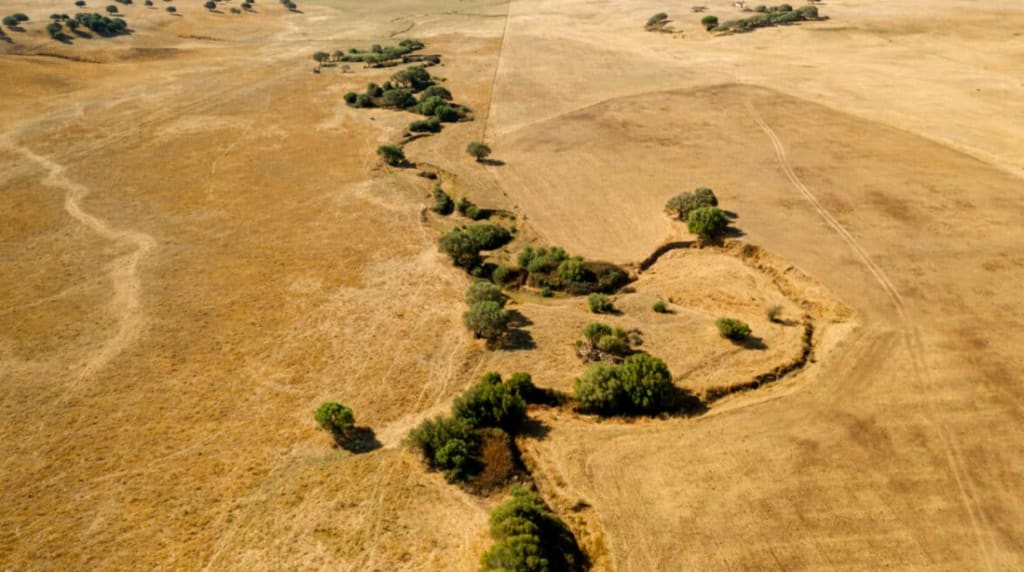
Over the past three decades, China has carried out one of the largest environmental restoration efforts in human history. By planting more than one billion trees since the 1990s, the country has significantly slowed the spread of deserts and helped revive vast areas of once-degraded land. This ambitious reforestation campaign has not only reshaped China’s landscapes but also altered how the world views large-scale environmental recovery.
Desertification has long been one of China’s most serious environmental challenges. Expanding deserts threatened farmland, water supplies, biodiversity, and the livelihoods of millions of people. Faced with these risks, China turned to trees—not as a quick fix, but as a long-term strategy.
The Growing Threat of Desertification
Before large-scale planting began, desertification was advancing at an alarming pace. Northern and western regions of China were particularly vulnerable, with deserts encroaching on villages, farmland, and infrastructure. Dust storms became more frequent, sometimes traveling thousands of miles and affecting neighboring countries.
Desertification does not happen overnight. It is often the result of deforestation, overgrazing, climate change, and unsustainable land use. Once land degrades, restoring it becomes difficult and expensive. By the late 20th century, Chinese authorities recognized that without intervention, desert expansion could undermine food security and economic development.
The Launch of a Massive Tree-Planting Effort
In response, China launched multiple reforestation and land restoration programs in the 1990s. Among the most well-known is the “Three-North Shelterbelt Program,” often referred to as the “Great Green Wall.” Its goal was simple but ambitious: create vast belts of forest to block desert winds, stabilize soil, and protect agricultural land.
Tree planting became a national priority. Local governments, communities, students, and even businesses were encouraged to participate. Over time, these efforts added up—more than one billion trees planted across deserts, plains, and degraded regions.
How Trees Help Stop Desert Expansion
Trees play a crucial role in slowing desertification. Their roots anchor soil in place, reducing erosion caused by wind and water. Leaves and branches act as windbreaks, limiting the movement of sand. Trees also help retain moisture in the soil, creating conditions that allow grasses and other plants to grow.
As vegetation returns, ecosystems begin to recover. Wildlife slowly reappears, soil fertility improves, and land once considered unusable can support agriculture again. In many areas of China, regions previously labeled as barren have been transformed into productive landscapes.
Restoring Degraded Land at Scale
Beyond slowing deserts, China’s reforestation programs have helped restore millions of hectares of degraded land. Formerly overused farmland has been replanted with trees and grasses, allowing soil to recover. Hillsides vulnerable to erosion have been stabilized, reducing flooding risks downstream.
Satellite images over the years show a visible increase in green coverage across large parts of the country. These changes are not just cosmetic; they represent improved land health and resilience against climate extremes.
Importantly, restoration efforts have evolved over time. Early projects focused on planting large numbers of trees quickly, sometimes using non-native species. More recent programs emphasize sustainability, biodiversity, and selecting tree species suited to local climates.
Environmental and Climate Benefits
The environmental benefits of planting more than one billion trees extend far beyond desert control. Forests absorb carbon dioxide, helping mitigate climate change. Increased vegetation also improves air quality, reduces dust storms, and supports water cycles.
China’s expanding forests have contributed to global greening trends observed by scientists using satellite data. While tree planting alone cannot solve climate change, it plays a meaningful role when combined with emissions reductions and sustainable land management.
Challenges and Criticism
Despite its successes, China’s tree-planting campaign has not been without criticism. In some regions, fast-growing trees were planted in dry areas where water resources were limited. This led to concerns about water shortages and long-term survival rates.
Environmental experts have emphasized that planting trees is only effective when ecosystems are respected. Grasslands, for example, may not benefit from dense forests. Recognizing this, newer initiatives focus on ecosystem-based restoration, not just tree counts.
These lessons highlight an important truth: restoration is complex, and success depends on adapting strategies to local conditions.
Community Involvement and Economic Impact
Reforestation has also had social and economic impacts. Many rural communities have benefited from jobs related to planting, maintaining, and managing forests. Eco-tourism has grown in some restored areas, providing alternative income sources.
Involving local communities has proven essential. When people have a stake in protecting restored land, projects are more likely to succeed in the long term.
A Model for Global Land Restoration?
China’s experience offers valuable lessons for other countries facing desertification. Large-scale restoration is possible, but it requires long-term commitment, scientific planning, and community involvement.
While no single model fits all regions, China’s efforts show that degraded land does not have to remain degraded forever. With patience and sustained investment, ecosystems can recover—even at a massive scale.
Final Thoughts
By planting more than one billion trees since the 1990s, China has demonstrated how determined action can slow desert expansion and restore vast areas of degraded land. The transformation has not been perfect, but it has been significant.
As the world grapples with climate change, land degradation, and food insecurity, China’s reforestation journey stands as a powerful reminder: restoring nature is possible—and the benefits can last for generations.
About the Creator
Muhammad Hassan
Muhammad Hassan | Content writer with 2 years of experience crafting engaging articles on world news, current affairs, and trending topics. I simplify complex stories to keep readers informed and connected.
Keep reading
More stories from Muhammad Hassan and writers in Earth and other communities.
Gold Soars Past $5,100 an Ounce as Silver Hits a New Record Amid Tariff and U.S. Shutdown Fears
Gold and silver are once again stealing the spotlight in global markets. Gold has surged past $5,100 an ounce, while silver has climbed to a new all-time high, reflecting growing investor anxiety over rising trade tensions and renewed fears of a potential U.S. government shutdown. These dramatic moves underline a familiar pattern: when uncertainty rises, investors often rush toward assets perceived as safe havens. The latest rally in precious metals is being driven by a mix of political instability, economic uncertainty, and concerns about the future direction of global trade and monetary policy. Together, these factors are reshaping market sentiment and pushing gold and silver to record levels. Why Gold Is Breaking Records Gold has long been viewed as a store of value during times of crisis. Its surge past $5,100 an ounce signals deep unease across financial markets. Investors are increasingly worried about the long-term consequences of aggressive trade policies, escalating tariffs, and political gridlock in Washington. Tariff disputes between major economies raise fears of slower global growth and higher inflation. When tariffs increase the cost of goods, purchasing power weakens, and confidence in traditional currencies can decline. Gold often benefits in such environments, as it is not tied to any one government or central bank. At the same time, uncertainty surrounding U.S. fiscal policy has added fuel to the rally. The risk of a government shutdown brings concerns about delayed payments, weakened public services, and broader economic disruption. For investors, gold represents stability when political systems appear fragile. Silver’s Record Run: More Than Just a Safe Haven While gold often grabs headlines, silver’s performance has been equally remarkable. Unlike gold, silver plays a dual role in global markets. It is both a precious metal and an industrial commodity, widely used in electronics, renewable energy, and manufacturing. Silver’s record-breaking rise reflects not only fear-driven buying but also optimism about long-term demand. As industries such as solar power, electric vehicles, and advanced electronics continue to grow, silver’s industrial value strengthens. When combined with its appeal as a hedge against uncertainty, silver becomes especially attractive during volatile periods. This combination of industrial demand and safe-haven appeal has helped silver outperform expectations, pushing prices to levels few analysts predicted just months ago. The Role of Tariffs in Fueling Market Anxiety Trade tariffs have emerged as a central driver behind the surge in precious metals. When governments impose or threaten new tariffs, businesses face higher costs and disrupted supply chains. These pressures often slow economic activity and create uncertainty for investors. Markets tend to react quickly to tariff announcements, pricing in the risk of inflation and reduced corporate earnings. As confidence in equities weakens, investors often shift funds toward assets like gold and silver that are less sensitive to trade disruptions. In this context, the metals rally reflects broader fears that global trade tensions could deepen, harming economic growth and destabilizing financial markets. U.S. Shutdown Fears Add to Safe-Haven Demand The prospect of a U.S. government shutdown has further unsettled investors. Shutdowns disrupt federal operations, delay economic data releases, and weaken confidence in political leadership. Even short shutdowns can have ripple effects across markets. For international investors, political dysfunction in the world’s largest economy raises questions about fiscal discipline and long-term stability. These concerns often lead to increased demand for gold, which is viewed as a neutral asset unaffected by domestic political struggles. Silver, though more volatile than gold, often follows the same trend during periods of heightened uncertainty. Central Banks and the Precious Metals Boom Another important factor behind rising gold and silver prices is central bank behavior. Many central banks have been increasing their gold reserves in recent years, seeking to diversify away from the U.S. dollar and reduce exposure to geopolitical risk. When central banks buy gold, it sends a strong signal to markets. It reinforces gold’s role as a strategic asset and supports higher prices. This institutional demand adds another layer of support to the current rally. At the same time, expectations around interest rates continue to influence precious metals. Lower or stable interest rates reduce the opportunity cost of holding non-yielding assets like gold and silver, making them more attractive to investors. What This Means for Investors The surge in gold and silver highlights how sensitive markets have become to political and economic uncertainty. While rising prices can present opportunities, they also come with risks. Precious metals can be volatile, and sharp gains are sometimes followed by sudden corrections. For long-term investors, gold and silver are often seen as portfolio diversifiers rather than primary growth assets. Their value lies in providing balance during turbulent times, not necessarily in delivering consistent returns. Short-term traders, meanwhile, are closely watching political developments, trade negotiations, and fiscal decisions, knowing that headlines alone can move prices significantly. Looking Ahead: Will the Rally Continue? Whether gold and silver can maintain their record levels depends largely on how current uncertainties unfold. If tariff tensions ease and political stability improves, some of the safe-haven demand could fade. However, if uncertainty persists—or worsens—precious metals may remain well supported. What’s clear is that gold and silver are once again playing a central role in global markets, reflecting deeper concerns about economic resilience and political stability. Final Thoughts Gold’s surge past $5,100 an ounce and silver’s record-breaking rally are more than just market milestones—they are signals of widespread unease. Tariff fears, political gridlock, and global uncertainty are reshaping investor behavior, pushing money toward assets that have historically offered protection in turbulent times. As markets navigate these challenges, precious metals remain a powerful reminder that confidence, trust, and stability still matter deeply in the global financial system.
By Muhammad Hassan2 months ago in Earth
Environmental Volunteering in Sri Lanka
Reforestation and tree planting is one of the best ways to give back to nature. When you travel, you contribute to air pollution in a very big way. Emissions from air travel being one of the main contributors of global warming, everyone who travel should find a way to at least compensate for some of the pollution they are responsible for.
By Jayantha Wijesinghaabout 4 hours ago in Earth


Comments
There are no comments for this story
Be the first to respond and start the conversation.