
Build Organic Matter in Soil Using Green Manure Cover Crops
Create a Healthier Garden Ecosystem Using Cover Crops

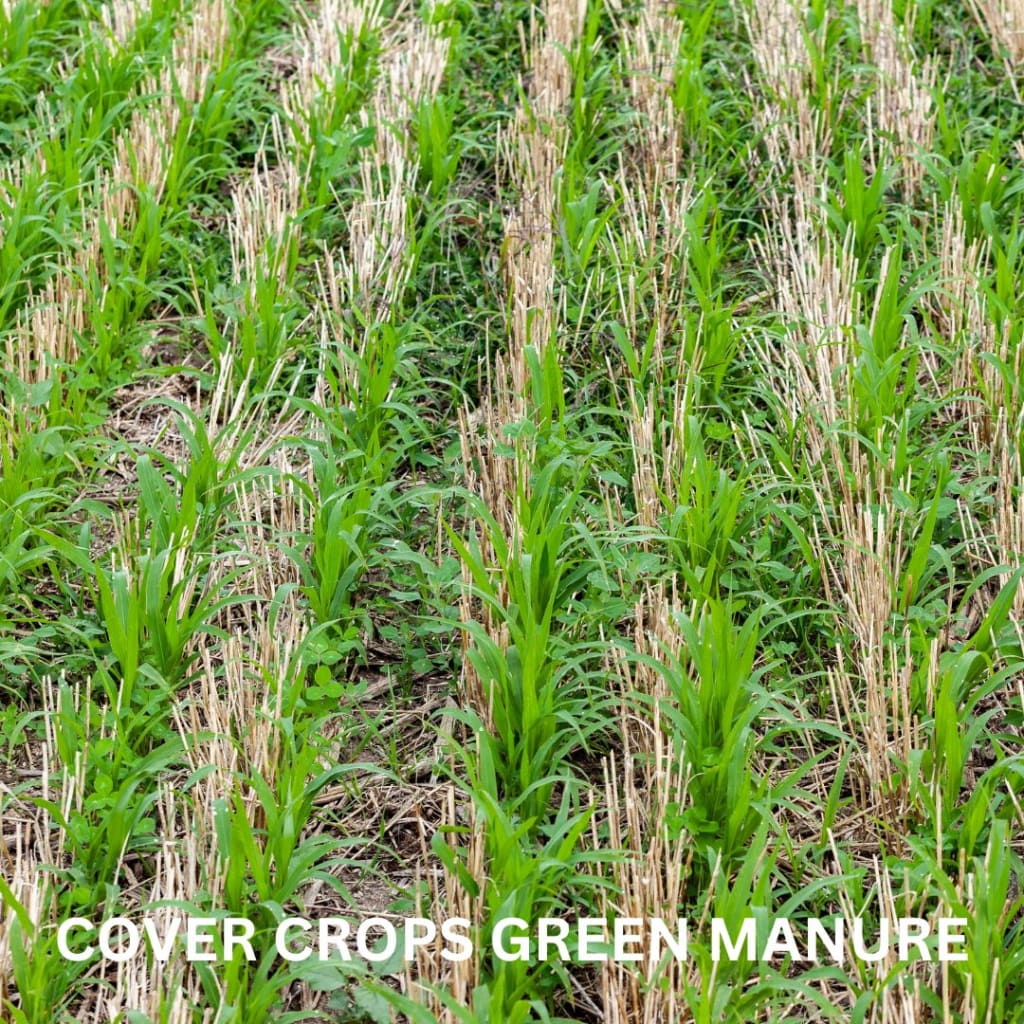
Home gardens can benefit by using green cover crop manure to increase garden soil fertility and structure. This will have a direct impact on next year's harvest and bounty.
This is important in home gardens that produce vegetables and other food sources. Fall and winter months are the perfect time to put in place this organic method in gardens.
What is green cover crop manure?
In typical home gardens, green cover crop manure is not used as often as it should be. So much value and benefit yields to soil health it's time to look further into this.
Cover crops are plants that are sown in the fall and winter to improve soil health. These are plants that are not used, in and of themselves, yet provide great benefits to the garden.
These cover crops are sometimes known as "green manure" because, like regular manure, they enrich the soil. But instead of using animal manure, you're using plants! Once grown, these cover crops are cut down and mixed back into the soil, where they break down further to improve soil quality.
Why Use Cover Crops as Green Manure?
Cover crops benefit the garden's soil quality in several different ways. This directly affects next year's health, growth, and harvest of plants.
They add nutrients to the soil. Several types are 'nitrogen fixers' in that they absorb nitrogen from the air and transfer it to the soil. This is an invaluable fertilizer to garden plants yet without putting chemicals into the soil.
These cover crops also help prevent erosion of soil, especially in the fall and winter months when little is actively growing in the garden. It improves soil texture by helping to break up hard, compacted soils. The improved soil will be better at retaining nutrients and water while encouraging stronger plant growth.
Green cover crops also help choke out weeds by filling empty spaces and making it harder for weeds to get established. This means, less weeding next year.
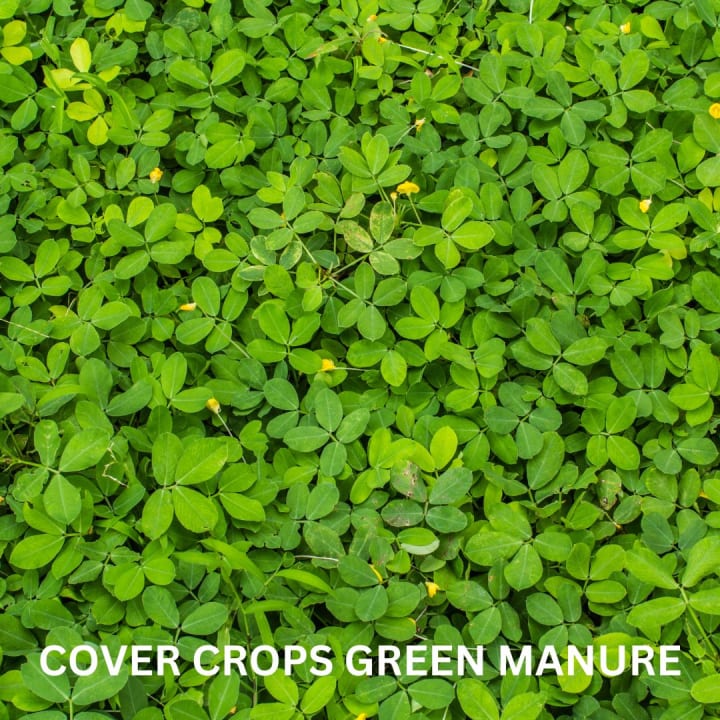
Best Options for cover crops in the home garden
There are many different cover crops to choose from. Each has its advantages, so choose what is best for your garden's needs.
Clover
A great option for its nitrogen-fixing properties and low maintenance ease. It is quickly growing and great for beginners.
Red clover is perfect for cooler climates.
White clover is beneficial for compacted soil types and is hardy.
Crimson clover attracts pollinators and produces red flowers.
Hairy Vetch
This plant is officially in the legume species and known for its nitrogen-fixing uses. Grows in cool weather and is ideal for fall planting.
Winter Rye
This cover crop excels at breaking up compacted, hard soil types and providing erosion control. Gardeners who face challenging hills in their growing area could benefit from these traits.
It is a tough grass that can survive winter's cold. It's best to plan in late fall, to cut down and turn into soil in the spring.
Buckwheat
These cover crops' strong points are weed control and fast growth. Its flowers attract pollinators as well.
It should plant in early spring or suumer and takes only 4–6 to be ready to turned into the soil.
If gardeners rotate crops at all, this makes a great solution between gaps in gardening schedules.
Field Peas
These are hardy plants that grow well in cooler weather and for adding nitrogen to the soil. Plant in the fall months and allow them to over winter. In spring they are ready to turn over into garden soil.
For best results, try to rotate both your vegetable and cover crops every year to different areas of the garden.
Planting green cover crops in home gardens
After selecting and obtaining the cover crop seed you intend to use, rake the top level of the soil you intend to plant. This helps the seed to take root.
Scatter the seeds over the soil and lightly cover them with a thin layer of dirt.
Keep the soil evenly moist until the seeds germinate and start growing. Once they're established, they won't need much watering.
Turning cover crops into green manure
In spring, when your cover crop has grown to a good size, cut it down, and allow it to dry for a few days, then turn it into the soil.
This process allows the plants to break down and release nutrients back into the soil.
If you've never used cover crops in your home garden, this is the perfect time to try. Consider sharing this with fellow gardeners as well.
By Val Garner - all rights reserved.
___________________________________________________
Here you can find a curated list of garden supplies, articles, tutorials, and other helpful resources for gardeners.
This article contains affiliate links, and I may receive a small commission after you click one of the links at no extra charge to you.
About the Creator
Val Garner
Writer and coffee addict in the Pacific Northwest. Follow me over on Newsbreak. You can sign up there as well to earn income with your writing, good to diversify and expand your earnings.
Keep reading
More stories from Val Garner and writers in Earth and other communities.
How Repair Cafés Are Empowering People to Embrace Sustainable Living
Discover how Repair Cafés transform communities by providing practical, hands-on solutions to reduce landfill waste and support sustainable living. These innovative hubs don’t just fix broken items — they empower people, inspire creativity, and unite communities around a shared mission for a greener future and helping their neighbors.
By Val Garnerabout a year ago in Earth
“Are You Dead?”: A New App Reflects the Loneliness of Young Chinese Living Alone
In China’s rapidly changing cities, living alone is no longer unusual—especially among young adults pursuing education, careers, and independence. But as solo living increases, so do concerns about isolation, safety, and what happens when no one is around to check in. Against this backdrop, a new app with a blunt, unsettling question—“Are you dead?”—has captured public attention and ignited debate. Despite its shocking name, the app is not designed to provoke fear. Instead, it aims to address a practical and emotional gap in modern urban life: how to ensure the well-being of people who live alone, and how technology is stepping in where traditional community networks have weakened. The Rise of Solo Living in China China has witnessed a dramatic shift in household structures over the past two decades. Urbanization, delayed marriage, rising housing costs, and changing cultural values have contributed to a growing number of single-person households, particularly among people in their 20s and 30s. For many young Chinese professionals, living alone represents freedom and self-reliance. It allows flexibility, privacy, and independence from family expectations. Yet this independence often comes with trade-offs: fewer daily social interactions, weaker neighborhood ties, and limited support in emergencies. In megacities like Beijing, Shanghai, and Shenzhen, it is increasingly common for neighbors not to know each other at all. In this environment, concerns about what happens if someone becomes ill, injured, or simply disappears from daily routines have become more pronounced. What the App Actually Does Despite its provocative name, the app’s purpose is surprisingly simple. It functions as a digital check-in system. Users set regular times to confirm they are okay—by tapping a notification or completing a brief check-in. If the user fails to respond after a certain period, the app automatically alerts designated contacts, such as friends, family members, or emergency responders. The stark question, “Are you dead?”, is intentionally designed to grab attention and prompt action. Developers argue that softer language is often ignored, while blunt phrasing cuts through digital noise and encourages consistent use. In essence, the app acts as a safety net, especially for people who live alone and may not have daily contact with others. Why Young People Are Downloading It The app’s popularity reflects deeper anxieties among young adults navigating modern life. Many users say they downloaded it not because they fear the worst every day, but because it provides peace of mind—both for themselves and for loved ones. For parents living far from their children, the app offers reassurance without constant phone calls. For users, it creates a sense of being quietly watched over, without sacrificing independence. Some users have also described the app as a form of emotional comfort. Even a routine notification can feel like a reminder that someone, somewhere, would notice if they vanished from daily life. A Name That Sparked Debate The app’s name has been its most controversial feature. Critics argue that the phrase “Are you dead?” is unnecessarily harsh and reflects a growing desensitization in digital culture. Others worry that such language could amplify anxiety rather than reduce it. Supporters, however, see the name as a reflection of reality rather than a provocation. In densely populated cities where people can go unnoticed for days or weeks, the question is uncomfortable—but relevant. They argue that avoiding blunt language does not eliminate the underlying problem of isolation. The debate highlights a broader tension in tech design: Should apps prioritize emotional sensitivity, or practical effectiveness—even if it makes people uncomfortable? Technology Filling a Social Gap The rise of this app points to a larger issue: technology increasingly compensates for weakened social structures. In the past, extended families, close-knit neighborhoods, and workplace communities naturally checked in on individuals. Today, those informal safety nets are often absent. Apps like this one are not just tools; they are symptoms of a society where digital solutions are replacing human presence. While convenient, this raises questions about whether technology is addressing the root causes of loneliness—or simply managing its consequences. Still, for many users, the app is not a replacement for relationships, but a supplement to modern life realities. Living Alone Does Not Mean Wanting to Be Alone An important takeaway from the app’s success is that living alone is not the same as wanting isolation. Many young Chinese adults value independence but still crave connection, security, and acknowledgment. The app’s routine check-ins, though minimal, provide a structured moment of contact. In a fast-paced, high-pressure environment, even small gestures of recognition can matter. This trend also reflects changing attitudes toward mental well-being and personal safety. Younger generations are more open to discussing vulnerability and using tools that previous generations might have dismissed. What This Says About Modern Urban Life The popularity of an app that asks such a stark question speaks volumes about the realities of contemporary urban living—not just in China, but globally. As cities grow larger and lives become more individualized, people are searching for new ways to ensure they are seen, remembered, and protected. The app’s success suggests that people are willing to engage with uncomfortable ideas if they address real needs. It also underscores the importance of designing technology that is honest about modern challenges, rather than masking them with euphemisms. Conclusion: A Wake-Up Call, Not a Warning While the phrase “Are you dead?” may sound alarming, the app behind it is less about fear and more about care. It reflects a generation navigating independence in a world where traditional support systems no longer function as they once did. Rather than signaling a morbid obsession, the app serves as a quiet reminder of something deeply human: the need to be noticed. In that sense, its blunt question is not about death at all—but about presence, connection, and the reassurance that someone would check if you were gone. As solo living continues to rise, tools like this app may become less shocking and more commonplace—symbols of how society adapts to changing ways of life in the digital age.
By Muhammad Hassanabout 12 hours ago in Earth




Comments
There are no comments for this story
Be the first to respond and start the conversation.