
Breaking Barriers of Gender and Identity
The Journey of Alex

The Summer Games were always Alex’s dream. From the moment they could run, jump, or swim, the Olympic torch seemed to light a path in their mind. But for Alex, it wasn’t just about gold medals or world records. It was about being seen—for who they truly were.
Growing up in a small town, Alex never quite fit into the rigid boxes that society tried to place them in. Born biologically female, they were constantly reminded of what they should be—graceful, feminine, delicate. But those labels felt suffocating, like an ill-fitting uniform they were forced to wear. On the track, however, everything felt different. Running was freedom. It didn’t matter how Alex looked or what name people called them; the wind didn’t care. The finish line didn’t judge.
Still, the outside world wasn’t as kind. School was a battlefield, filled with teasing, bullying, and cruel whispers behind locker doors. “Why don’t you dress like a girl?” “Are you trying to be a boy?” The questions hurt, not because Alex didn’t know the answer, but because they did. They just didn’t have the words yet.
By high school, Alex began to understand that they didn’t fit into the binary world of male or female. They were somewhere in between, or perhaps beyond it altogether. Coming out as nonbinary was supposed to bring relief, but instead, it unleashed a storm. Coaches told them they couldn’t compete with the boys, but running with the girls felt equally wrong. Parents of other athletes whispered at meets, questioning Alex’s place on the team. For years, they fought silently, feeling like their body, their identity, and their dream to compete in the Games were at war with one another.
But Alex didn’t give up. They couldn’t.
With every step, every race, they carried not just their own hopes, but the hopes of so many others who felt trapped between the lines society had drawn. The weight was heavy, but their spirit was stronger. They continued to train, running through the pain of isolation, jumping over the barriers of prejudice, and swimming through the waves of doubt. And somehow, despite the odds, Alex qualified for the Summer Games.
The moment they stepped onto the world stage, everything seemed to fade. The jeers, the doubts, the cruel comments—they were still there, of course, but they were drowned out by something louder: the roar of possibility. For the first time, Alex felt truly visible. Not just as an athlete, but as a person—whole and real.
But it wasn’t easy. Media outlets ran stories questioning their right to compete. Strangers on social media questioned their gender, their body, their humanity. “This is unfair,” some said. “You don’t belong,” others insisted. Alex read the comments late at night, in the silence of their Olympic dorm room, where the weight of the world’s gaze felt unbearable.
Yet, every morning, they laced up their shoes. Every morning, they reminded themselves of the young kid who had once run, free from labels and expectations, just for the love of it. And they reminded themselves that they weren’t running for those who doubted them—they were running for the kid who needed a role model, for the young athlete who felt unseen, for every person who had ever been told they didn’t belong.
The day of the final race arrived, and as Alex stood on the starting line, they took a deep breath. They weren’t just an athlete today. They were a symbol, a reminder that identity doesn’t fit into neat categories. That gender isn’t as simple as a uniform or a pronoun. As the gun went off, Alex sprinted forward, each stride a defiant declaration: I am here. I belong.
When Alex crossed the finish line, tears welled in their eyes—not because of the time on the scoreboard, but because of what this moment represented. It was a victory far greater than any medal.
As they stood on the podium, wrapped in their country’s flag, Alex looked out at the crowd and, for the first time, saw acceptance in the faces of so many. They had done it. They had broken the barriers that once seemed insurmountable—not just for themselves, but for every person who had ever felt trapped by the limits of identity.
And in that moment, Alex knew their journey wasn’t over—it was only just beginning. They would continue to fight, to run, to speak out, because every race was a chance to challenge the world’s expectations and show that authenticity is the greatest victory of all.
In the end, it wasn’t the medal that mattered. It was the fact that Alex had run, unapologetically, as themselves—and that was the greatest win anyone could ever hope for.
About the Creator
Keep reading
More stories from writers in Earth and other communities.
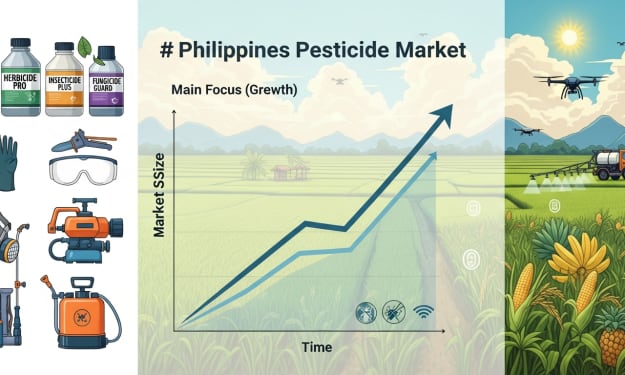
Philippines Pesticide Market 2026: Crop Protection Demand, Farm Productivity & Regulatory Shifts
Philippines Pesticide Market Overview The Philippines pesticide market continues to develop as agriculture remains a vital sector supporting food security, rural employment and economic activity. Pesticides play an important role in protecting crops from insects, weeds and diseases, helping farmers improve yields and reduce post-harvest losses. The market includes insecticides, herbicides, fungicides and other crop protection chemicals used across rice, corn, fruits, vegetables, sugarcane and plantation crops.
By Manisha Dixit2 days ago in Earth



Comments
There are no comments for this story
Be the first to respond and start the conversation.