
Boomslang Snake Captures Chameleon In Tree Ambush
Watch as a sneaky snake snatches a quick meal

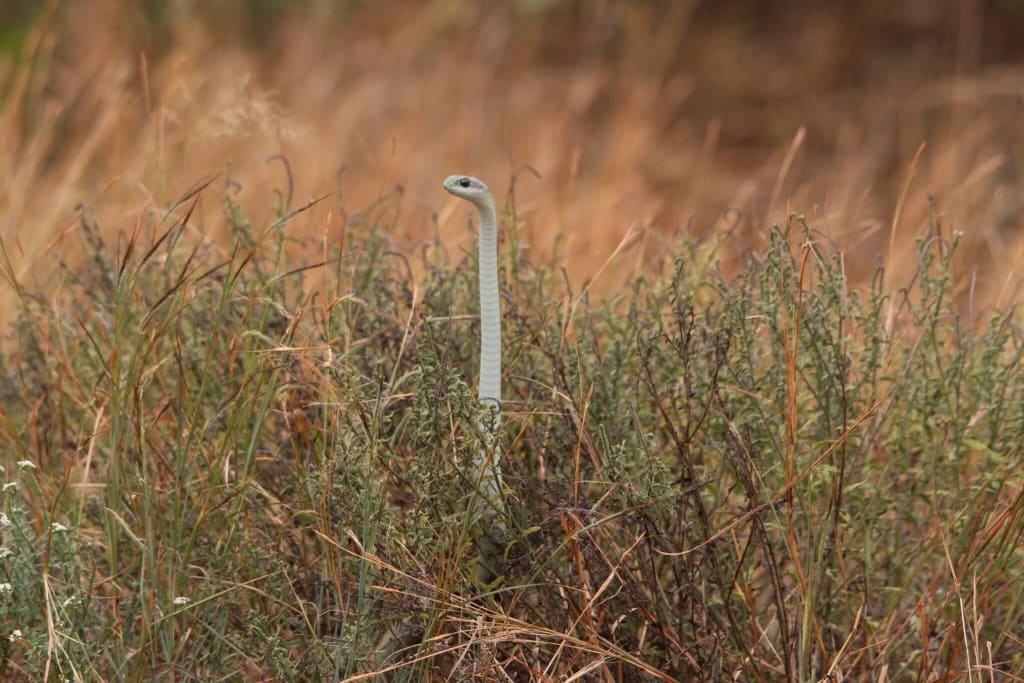
This incredible and deadly encounter between a boomslang and an unsuspecting chameleon was filmed in the Kruger National Park.
Watch The Sighting:
In this instance, a chameleon was vulnerable and visible as it crossed the road. Chameleons are known as slow movers, and this one took a steady stroll towards the bushveld on the other side of the road.
Waiting on the other side was a boomslang snake, which is a predator that, unlike the chameleon, is incredibly fast
Snake Strikes Out At Chameleon
Boomslangs are highly venomous snakes. They have large eyes, which provide excellent binocular vision. Before attacking the chameleon, this one had lifted up its body and its head, and peered out of the long grass, spying the lizard from a distance and preparing to attack.
Its body was a periscope above the grass’s surface as it surveyed the horizon.

The boomslang has a hemotoxic venom. This venom disrupts blood clotting and can cause internal and external bleeding. Its bite can be fatal to humans, although bites are rare.
Hemotoxic venom works relatively slowly, especially compared to neurotoxic venoms (like those from cobras or mambas), which act quickly on the nervous system to paralyse prey.
Instead of instant paralysis, the boomslang relies on stealth and precision to bite and then waits for the prey to weaken or die from massive internal haemorrhaging before swallowing it whole.

Boomslang Captures Chameleon In Dramatic Moment
The boomslang now had the chameleon in its grip. Its large eyes could be seen peering over the chameleon’s body, holding the chameleon firmly in its venomous grip.
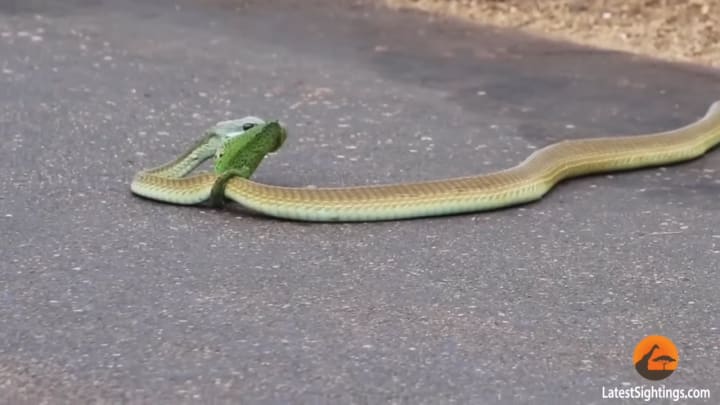
It didn’t intend to stay on the road and decided instead to return to the shelter of the long grass.

All the while, it carried the chameleon’s relatively large body with little effort or struggle.
Boomslang Disappears With Trophy Kill
Once off the road, the boomslang lifted its head and frontal body area high, and carried the chameleon off into the distance, disappearing in the thicket.
The moment happened with lightning speed, and the sure and steady chameleon had little chance of getting out of the way.
Boomslangs have expandable jaws which allow them to swallow their prey whole. They can open their jaws wide to nearly 170 degrees. This allows them to swallow prey that is even larger than the size of their own head.
While this chameleon seemed quite a big fellow to be considered as food for the boomslang, chameleons are, in fact, part of the boomslang’s natural diet, along with birds, lizards, frogs, and small mammals.
A Reminder To Look Out For The Small, As Well As The Big
This incredible sighting was a reminder that dramatic predator-prey moments happen on a small scale, as well as on a large scale in the bushveld. Too often, we search for lions or leopards, but miss incredible wildlife moments which, while larger-than-life, are a little smaller and harder to spot while on a drive.
Author: Heather Djunga
Did You Know?
The boomslang (Dispholidus typus) is a large, highly venomous snake in the family Colubridae. It is native to Africa, and its common name means 'tree snake' in Afrikaans. Boomslangs have exceptionally large eyes, and their head has a characteristic egg-like shape. These snakes have excellent eyesight and often move their head from side to side to get a better view of objects directly in front. The colouration of their skin is very variable. Males are light green with black or blue scale edges, but adult females may be brown or grey.
Like and follow for more exciting animal content :)
About the Creator
Latest Sightings
Latest Sightings, is a real-time wildlife spotting community that connects nature lovers with the most incredible animal encounters, captured and shared by rangers, tourists, and locals across Africa's national parks and reserves.
Keep reading
More stories from Latest Sightings and writers in Earth and other communities.


Comments
There are no comments for this story
Be the first to respond and start the conversation.