
Body Emerges from the Glacier After 28 Years
Kohistan Witnesses a Stirring Scene of Nature, Memory, and Loss
Body Emerges from the Glacier After 28 Years: Kohistan Witnesses a Stirring Scene of Nature, Memory, and Loss
In accordance with the immutable laws of nature, ice has long been known to preserve objects, bodies, and memories across decades — sometimes even centuries. It conceals the past within its cold grip, keeping it frozen in time until the moment of release arrives. Such a moment has recently occurred in the snow-clad highlands of Kohistan, where an extraordinary discovery has captivated local residents and resonated deeply with anyone who has known loss.
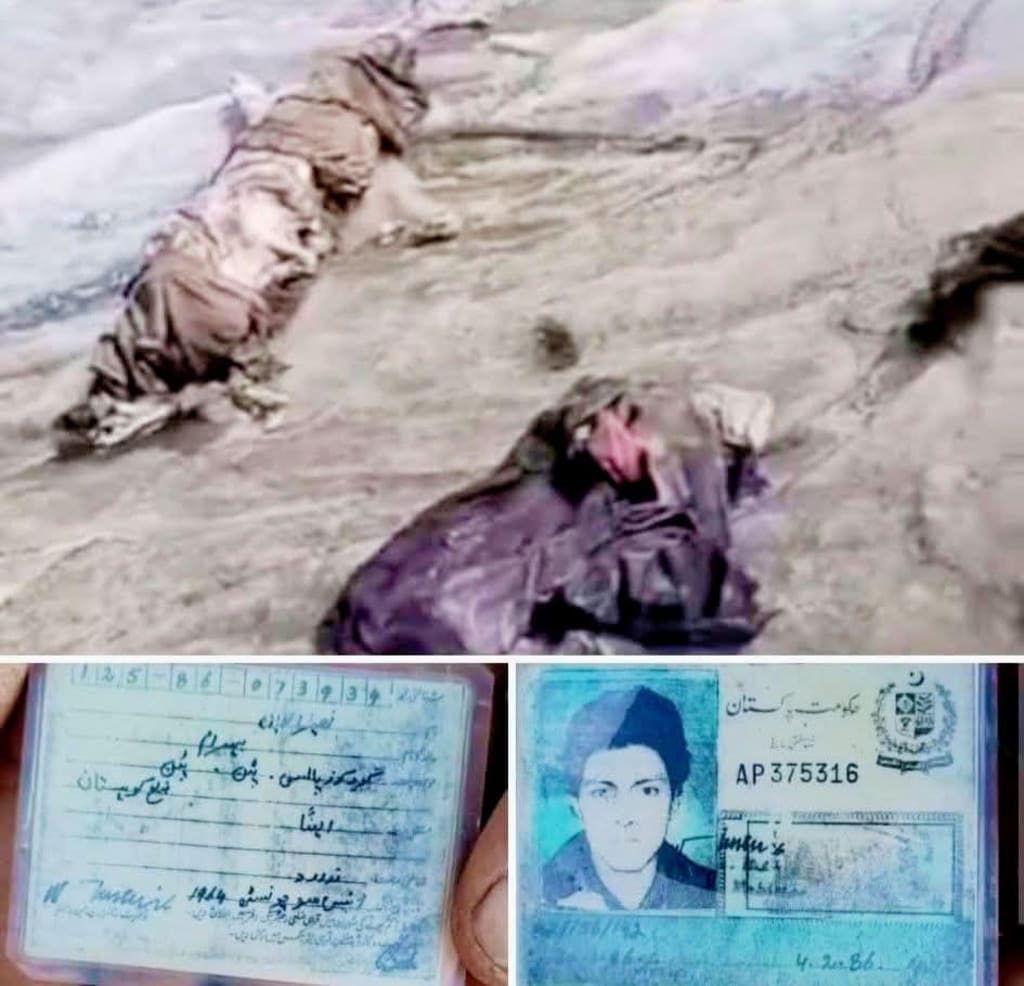
From the mighty glaciers of the Lady Pals region — tucked deep within the formidable Bar Pals mountains — a body has emerged after nearly three decades. The remains of Naziruddin, son of Behram from the Salih Khel tribe, have been found in a remarkable state of preservation, having been locked in the embrace of ice for 28 long years. The body was recovered wearing a waistcoat, and, astonishingly, an intact national identity card found in the pocket confirmed his identity beyond any doubt.
This discovery has reopened a chapter that the people of the region — particularly the family and loved ones of Naziruddin — thought had long closed. Known affectionately as Hajo by his friends and kin, Naziruddin disappeared in 1997 during a return journey from Supt, a remote area often traversed by nomads and local traders. As per accounts shared by village elders and local historians, he had set out on horseback, likely accompanied by supplies, perhaps even with news to share or plans to unfold. But fate had different plans. He never reached his home. Somewhere along the treacherous trail back, he and his horse slipped into a deep crevasse in the Lady Glacier — one of many hidden dangers of the unforgiving mountainous terrain.
Following his disappearance, local search teams and villagers carried out exhaustive efforts to locate him. In those days — absent of drones, GPS trackers, or sophisticated rescue equipment — all they had was their knowledge of the land, sheer determination, and the support of one another. For days, they combed the glaciers, called out his name, and prayed for a sign. But nature remained silent. The glacier kept its secret, and Naziruddin was eventually declared missing, his fate buried beneath layers of snow and sorrow.
Years passed. Life in Kohistan moved on. Seasons changed, generations grew up hearing only stories of the man who disappeared into the glacier. His name became a whispered memory in the valleys — a quiet reminder of nature’s majesty and mercilessness.
And then, nearly three decades later, in the summer of 2025, the glacier finally released its long-held secret.
As global warming and rising temperatures continue to impact even the most remote corners of the Earth, the glaciers of Kohistan have begun to recede. Melting patterns, once predictable and seasonal, have grown erratic. During one of these recent melting periods, local shepherds grazing their flocks in the higher altitudes of the Bar Pals region noticed something unusual. Near the edge of the glacier, they saw what appeared to be human remains — a haunting and unexpected sight.
They immediately informed the nearby villagers. A group of elders and residents assembled and hiked up to the spot, driven by both curiosity and caution. What they discovered was nothing short of miraculous — the frozen remains of a man still partially clothed, preserved by the cold, as if time had simply paused around him. The intact identity card, nestled inside the folds of his waistcoat, left no doubt: this was Naziruddin.
News of the discovery spread quickly, sending shockwaves through the entire region. For some, it was a spiritual moment — a sign from nature, or even a divine gesture offering closure after so many years of unanswered prayers. For others, it was a deeply emotional reckoning, bringing back memories that had been buried under decades of acceptance, sorrow, and silence.
Naziruddin’s family was notified without delay. As the tragic confirmation reached them, they rushed to the site — a journey filled with trembling anticipation and heartache. When they saw the body of their beloved, long presumed gone forever, emotions overflowed. Grief mingled with relief. Tears flowed freely. After 28 long years of waiting, wondering, and mourning in uncertainty, they could finally offer him the dignity of a proper burial.
Local residents describe the scene with both awe and heartbreak. Elderly villagers who remembered the day he vanished said that seeing his body again was like reopening an old wound — but also like turning the final page of a painful story. One elder recalled, “We thought he had become a part of the mountains forever. Now, it feels like he came back to us… not alive, but returned.”
The community came together in solidarity with the family. A funeral was arranged with traditional rites. Men, women, and children from surrounding hamlets and valleys gathered, not just to mourn Naziruddin, but to bear witness to a story that spoke to the enduring power of memory, the strength of nature, and the resilience of the human heart.
This incident has sparked broader conversations about how many others may have met similar fates in these majestic but dangerous mountains — their stories still hidden beneath layers of ice. It has also highlighted the need for documentation of local oral histories, as well as the importance of equipping rescue teams for extreme terrain.
For the Salih Khel tribe, and for Naziruddin’s immediate family, his return — even in death — has been bittersweet. His grave now lies not far from the glacier that held him for so long, a place where visitors may go not only to pay respects, but to reflect on the fragility of life and the power of patience.
In the end, the mountains gave him back. And in doing so, they gave his people peace.
About the Creator
Keep reading
More stories from Ikram Ullah and writers in Earth and other communities.
🌊 Is a Mega Disaster Looming Over Pacific Nations?
🔴 A Powerful Earthquake Hits Russia – Magnitude 8.8 On July 30, 2025, the world witnessed a massive natural disaster when a magnitude 8.8 earthquake struck near the Kamchatka Peninsula in far-eastern Russia. The quake, which occurred in one of the most seismically active zones on earth—the Ring of Fire—sent tsunami alerts across the Pacific Ocean.
By Ikram Ullah7 months ago in Earth
World-largest: China’s 792 million kWh compressed air energy station now fully operational
Britain must accelerate its transition toward renewable energy sources as geopolitical conflicts continue to drive global energy prices higher, according to leading energy analysts and climate policy experts. The warning comes as wars and political tensions across key energy-producing regions expose the vulnerability of countries still heavily reliant on imported fossil fuels. In recent years, the United Kingdom has made significant progress expanding renewable energy capacity, particularly in offshore wind and solar power. However, experts argue that the pace of the transition remains insufficient to shield the country from the volatility of international energy markets. Conflicts in the Middle East and Eastern Europe have demonstrated how quickly supply disruptions can translate into rising costs for households and businesses. Energy economists say the lesson from recent global crises is clear: the more dependent a country is on imported oil and gas, the more exposed it becomes to geopolitical shocks. Britain imports a substantial portion of its natural gas and refined fuel products, meaning instability in global supply chains can quickly affect domestic energy bills. During periods of international conflict, oil prices often spike due to fears that shipping routes or production facilities could be disrupted. Even rumors of attacks near key energy chokepoints — such as major pipelines or shipping lanes — can cause markets to react sharply. These fluctuations, analysts say, ultimately filter down to consumers through higher electricity and heating costs. Renewable energy sources offer a potential solution to this problem because they rely on domestic resources such as wind and sunlight rather than imported fuels. Once renewable infrastructure is built, operating costs remain relatively stable because there is no need to purchase fuel on global markets. The United Kingdom already operates some of the world’s largest offshore wind farms, and renewable energy now accounts for a significant share of the country’s electricity generation. Government data indicates that wind power alone has become one of the largest sources of electricity in Britain, particularly during periods of strong weather conditions. Despite this progress, energy specialists argue that further investment is essential. Expanding renewable generation capacity requires not only building more wind and solar farms but also upgrading the national electricity grid. A modernized grid would allow energy produced in remote offshore locations to be transmitted efficiently to cities and industrial centers. Energy storage is another critical piece of the puzzle. Because renewable sources like wind and solar are intermittent, large-scale battery systems or alternative storage technologies are needed to ensure a stable supply of electricity during periods when generation drops. Developing these systems will require both technological innovation and sustained financial investment. Some experts also emphasize the importance of diversifying the country’s renewable portfolio. While offshore wind remains a cornerstone of Britain’s energy strategy, solar power, tidal energy, and green hydrogen could also play important roles in the future energy mix. The government has already announced plans to increase renewable capacity dramatically over the next decade. Officials argue that reducing reliance on fossil fuels will not only strengthen national energy security but also help the country meet its climate targets. However, critics say policy uncertainty and slow planning approvals have sometimes delayed renewable projects. Industry leaders have urged authorities to streamline regulatory processes and provide clearer long-term incentives for investors. For many analysts, the link between energy security and climate policy has never been more obvious. Wars and geopolitical tensions have shown that fossil fuel dependence can create economic vulnerability, while domestically produced renewable energy offers greater stability. “The global energy system is changing,” said one energy policy researcher. “Countries that invest early in renewable infrastructure will be better protected from geopolitical shocks and price spikes.” As international conflicts continue to reshape global energy markets, the debate over Britain’s energy future is likely to intensify. For supporters of renewable power, the current moment represents both a warning and an opportunity — a chance to accelerate the transition toward a more secure and sustainable energy system.
By Fiaz Ahmed 6 days ago in Earth
The Politics of Playing Dress-Up
Well, to start off I'd like to say a happy world book day to all who celebrate. I know I haven't really posted anything on my socials about it but I'm not a jubilant kind of person. I lay low most of the time. Let's start off with a popular anecdote from the vaults...
By Annie Kapur7 days ago in Geeks


Comments
There are no comments for this story
Be the first to respond and start the conversation.