
Blue Oddities of Nature: Rare Plants and Animals in Shades of Sky and Sapphire
Beneath the vast sky and across distant seas, nature whispers in blue — a hue of calm, mystery, and quiet majesty. These rare plants and animals wear the shade like a secret, painting the wild in glimmers of sapphire, cerulean, and indigo.


The Himalayan Blue Poppy: A Ghostly Bloom
In the cold mists of the Himalayas, a flower grows where few dare tread. The Himalayan blue poppy glows like a soft lantern — delicate, nearly translucent petals of periwinkle swaying in silence. It’s a symbol of the impossible: beauty born from thin air.
Found at elevations of over 10,000 feet, this plant defies harsh winds, rocky terrain, and freezing nights. Its seeds may take years to germinate, and even then, not all will bloom. The rarity of its appearance adds to its mystique — a ghost in the wild, sighted only by the patient or the lucky. With petals tinged in serenity, the Himalayan blue poppy is not just a flower but a fleeting miracle, living proof of resilience in the face of extremes.

The Blue Poison Dart Frog: Beauty That Warns
Tiny but unforgettable, this frog wears vibrant blue like a carnival costume. But its color is not for show — it signals danger. Native to the rainforests of South America, this frog’s skin carries alkaloid toxins, a defense against predators who dare to touch. Despite its size, it commands attention with both color and potency.
These frogs are diurnal, active by day, hopping among leaf litter and moss. Their dazzling hue warns birds and mammals alike: beware. Interestingly, the toxins are not produced by the frog itself but come from its diet of ants and mites in the wild. When raised in captivity without these insects, the frog loses its toxicity — a reminder of how deeply intertwined it is with its native ecosystem.

The Ribboned Wonder: Blue Ribbon Eel
The blue ribbon eel glides like a silk ribbon through coral reefs. Males are a vivid cobalt blue with bright yellow accents — a sharp contrast in the dim sea. Its shape is sinuous, its movements hypnotic — a dancer cloaked in ocean twilight.
This eel is one of the few species that undergo a complete sex change. Born male, it transitions into female later in life. With jaws constantly agape, it appears to be perpetually gasping, but in truth, it’s simply breathing. Its bright colors serve both as camouflage among corals and as a signal of its unusual life cycle. A graceful predator, it flows with elegance through its watery world.

The Feathered Phantom: Greenbottle Blue Tarantula
Despite its name, this tarantula boasts vibrant blue legs that glisten with iridescence. Native to northern Venezuela, it constructs webbed tunnels in desert-like habitats. Its metallic colors are for display, not disguise — an evolutionary enigma.
With a turquoise carapace, electric blue limbs, and fiery orange abdomen, the greenbottle blue looks almost artificial. It weaves elaborate silk carpets at the entrance of its burrow and waits patiently for prey. Though it may look fierce, it's relatively calm when raised in captivity. Its striking appearance makes it a favorite among exotic pet keepers, though its wild beauty truly belongs in the scrublands it calls home.

The Jewel of the Sky: Blue Jay’s Flashing Feathers
The blue jay isn't truly blue. Its feathers merely appear so due to light scattering — a trick of structure, not pigment. When sunlight hits its plumage, it bursts into dazzling layers of azure, cobalt, and snow-white. This optical illusion, called structural coloration, manipulates light in ways that paint the bird in blues nature never needed to dye.
Native to North America, the blue jay is more than just beautiful — it’s brilliant. It’s known for mimicking the calls of hawks and even imitating human speech. These intelligent birds are also fiercely loyal to their family groups, often working together to defend nests and cache food for winter. In the dappled light of the forest, the blue jay's flash of color becomes both a beacon and a warning, signaling a bird as clever as it is captivating.
Final Thoughts
Nature’s palette is never plain. In corners unseen and habitats often overlooked, life glows in every hue — and blue, with its calm ferocity, reminds us that the wild is both soft and strange. These are nature’s sky-born wonders, dressed in sapphire, whispering their secrets into the wind.
About the Creator
How Much Do You Need in an ISA for a Passive Income That Beats the State Pension?
For many people in the UK, the State Pension is expected to form the backbone of retirement income. But with rising living costs and growing uncertainty about the future, more savers are asking a crucial question: Can I build a passive income that beats the State Pension — and how much would I need in an ISA to do it?
By Aarif Lashariabout 21 hours ago in Earth
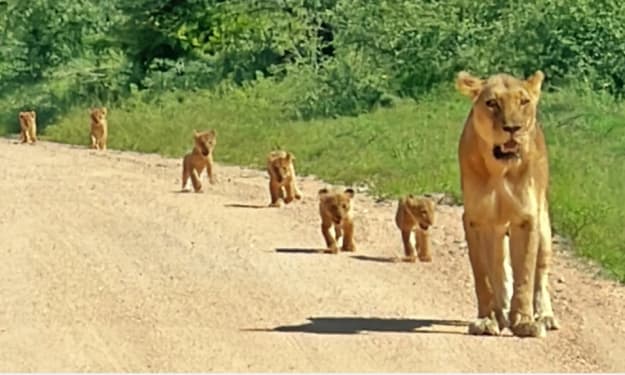
Tiny Lion Cubs Struggle To Keep Up With Mom
In the heart of the African savannah, life is a constant lesson for young animals. Few scenes are as endearing — or as heartwarming — as tiny lion cubs trying to keep pace with their mother. These little bundles of fur face a world full of challenges, from learning to hunt to avoiding dangers, all while depending on the guidance and protection of their experienced mom. Watching cubs wobble and tumble as they attempt to keep up with their mother reminds us that growing up, even in the wild, is a journey full of struggle, determination, and adorable missteps. The Early Days of Lion Cubs Lion cubs are born blind and helpless, usually in litters of two to six. For the first few weeks, they rely entirely on their mother for warmth, food, and safety. Even after opening their eyes and beginning to explore, the cubs are far from independent. The first months are crucial. Cubs learn social cues, hunting basics, and survival skills simply by watching their mother and the pride. But as anyone who has observed them knows, there’s often a huge gap between observation and action. Tiny cubs often struggle to match their mother’s pace, especially when she moves through long stretches of savannah or leads the family on patrols. A Mother’s Role in the Wild For a lioness, raising cubs is a full-time commitment. She hunts, defends her territory, and teaches her young, all while staying alert to predators such as hyenas, leopards, and even rival lions. The cubs, meanwhile, attempt to mimic her every move — often with clumsy yet charming results. A mother lion’s patience is remarkable; she frequently slows down, nudges them along, or stops to ensure no cub is left behind. These moments, while stressful for the tiny cubs, are vital learning opportunities. Struggling to Keep Up: Why It’s So Hard There are several reasons why tiny lion cubs have trouble keeping pace with their mother: Short Legs, Big Steps: Lion cubs’ legs are tiny and their coordination is limited, making it difficult to cover the same distance as an adult lioness. Curiosity: Cubs are naturally curious. A single butterfly or rustling bush can distract them, leaving mom to pause repeatedly. Energy Levels: Young lions tire quickly. Even with frequent naps, the cubs’ stamina is far lower than their mother’s. Learning Through Play: Play is not just fun; it teaches hunting, balance, and social skills. Running off to pounce on a sibling or chase an insect is all part of their education. Despite these challenges, the cubs’ determination to keep up demonstrates their resilience and growing understanding of the wild world. Lessons in Teamwork and Survival Every cub struggling to keep up is also learning crucial survival skills. The journey across the savannah is more than a test of speed — it’s a lesson in: Coordination: Cubs learn how to move efficiently across different terrains. Patience: They begin to understand the rhythms of adult life and the pace required for survival. Social Skills: Staying with the group teaches cubs how to interact with siblings and the pride, which is essential for their future roles. Observation: By following their mother, cubs study hunting techniques, territorial behavior, and predator awareness. Even the moments when cubs stumble or lag behind are essential for their development. These experiences prepare them for independence, which comes sooner than many might expect. The Cutest Moments in the Wild Anyone who has watched tiny lion cubs knows that their struggles are often irresistibly cute. Video clips from wildlife reserves frequently show cubs toddling along, tumbling over each other, or getting distracted mid-step. Observers often comment that these little stumbles reveal personality, determination, and playfulness, making them one of nature’s most heartwarming spectacles. While their mother is serious and focused, the cubs inject a sense of humor and lightness into life on the savannah. Why This Matters The struggles of lion cubs aren’t just adorable — they’re vital for understanding wildlife behavior. Conservationists and animal behaviorists use these moments to study growth patterns, social structures, and survival strategies in lion populations. These observations also highlight the importance of preserving natural habitats. Cubs must learn in a safe environment to survive; habitat loss, poaching, and climate change make these early struggles even more dangerous. Protecting the African savannah ensures that future generations of lions can experience the same lessons and playful tumbles. The Road to Independence Within a year, these tiny cubs will be more agile, faster, and more confident. By the time they reach two to three years old, males may begin to leave the pride, while females often stay and become caretakers themselves. Every misstep, tumble, and lagging moment is part of the journey toward strength, coordination, and independence. Watching them now gives us a glimpse of the challenges they will overcome, and the survival skills they will carry for life. A Celebration of Motherhood Ultimately, these scenes remind us of the incredible bond between mother and cubs. Her patience, vigilance, and teaching are the foundations of their future. The cubs’ struggles highlight the trials of growing up, while their determination showcases the resilience and beauty of wildlife. For those observing, it’s a powerful lesson in care, guidance, and perseverance, not just in lions but in the natural world as a whole. Final Thoughts Watching tiny lion cubs try to keep up with their mother is both entertaining and enlightening. It’s a story of growth, struggle, and resilience — a reminder that even the fiercest creatures start small, learning step by step. These little lions capture hearts while teaching life lessons: patience, determination, teamwork, and the importance of guidance. As they tumble and waddle across the savannah, they show us that growth is a process, one adorable misstep at a time. For wildlife enthusiasts, animal lovers, and anyone enchanted by nature, these tiny cubs are proof that even in the wild, love, care, and persistence are universal truths.
By Aarif Lashariabout 22 hours ago in Earth



Comments
There are no comments for this story
Be the first to respond and start the conversation.