
Best 10 Things to Look at Under a Microscope
Most interesting things to view through a microscope!


The Microscope's History
Who created the first real microscope is a mystery. Magnifying lenses (and lenses for lighting fires) have been utilized since the time of ancient Greece. The archaeological museum in Heraklion has a lot of these lenses on exhibit.
"The use of lenses [in antiquity] was widespread throughout the Middle East and the Mediterranean basin over several millennia," write scholars George Sines and Yannis A. Sakellarakis, "[and] the quality of some of these lenses was sufficient to permit their use as magnifying glasses."

The modern laboratory microscope, on the other hand, has obvious origins and was created by Dutch spectacle-makers Zacharias and Hans Jansen between 1590 and 1600. Due to the fact that their innovation was a compound microscope, which means it had at least two lenses, it served as the basis for the current laboratory microscope.
A further Dutchman named Antonie van Leeuwenhoek started developing his own compound microscope using his own ground lenses around 60 years later. Although his microscopes were basic, he was able to examine single-celled organisms thanks to their 200-fold maximum magnification. In London, at the Royal Society, where Robert Hooke was using his own microscope to make comparable discoveries, he presented the results of his microscopic research.
Still, it took scientists another 150 years to utilize the microscope extensively! This was a result of their predisposition for color separation and visual blurring. However, the first microscopes that addressed these significant problems were created by Joseph Jackson Lister and William Tulley in 1830. Because of this, scientists found microscopes to be very appealing, and their use quickly spread.
We are aware of the incredibly small world of tiny creatures and bacteria because of the microscope. Additionally, it has been crucial to numerous significant developments in science and medicine. We'll be looking at some of the most fascinating things to see under a microscope in this article!
10 Spectacular Things You Can Only See Under a Microscope
1. Cacoxenite and Nsutite
2. Peacock Feather
3. Dandelion
4. Kosher Salt
5. Vinyl Record
6. Tapeworm Head
7. Orange Juice
8. Shark Skin
9. Chalk
10. Mite
1. Cacoxenite and Nsutite
The majority of natural substances discovered in the ground don't seem any more intriguing than other stones or rocks. However, based on their chemical composition, they might be concealing a beautiful object under a microscope. You probably won't hear about them because they aren't in high demand.
For instance, iron phosphate and aluminum-containing mineral cacoxenite are typically found in places where iron ore is extracted. Its Latin name, which means "unwelcome guest," alludes to the fact that its presence will result in lower-quality iron being extracted from the ore. Therefore, whenever it emerges, it's typically taken as bad news.
Nsutite is a boring mineral with a manganese and oxygen composition. Around the world, it is typically found in greater manganese resources. Cathodes for zinc-carbon batteries were originally made with it, but this practice is being phased out in favor of synthetic alternatives.
The photograph in Burgess' Atlas Obscura article (see Sources section) shows how these two minerals blend together so well that it almost seems natural, proving that if you look hard enough, beauty can be found in almost everything.

2. Peacock Feather
Three species of peacock exist, two of which are native to Asia and one of which is African in origin. They are known for being among the most majestic and exquisite of all birds. This is because the males have complex feather trains that display a variety of iridescent colors to attract potential mates.
Although they are lovely to look at in their normal size, a microscope reveals much more complex than what the naked eye can see. Within the feathers, nanostructures produce stunning hues that vary in intensity depending on the viewing angle and are each a different color.
You can see every little line and curve of the feathers, the many bundles of barbules, and the distinct coloration of each segment in greens, blues, golds, and other hues when the feathers are magnified 500 times. Photographing these in such detail is somewhat challenging due to how brightly the iridescent colors are reflected.
The mesmerizing colors of a peacock aren't produced by pigments, as you might expect, but rather by interactions with light that reflect in various ways depending on how you look at it. It's amazing to see in such detail how this enhances the magnificence of a creature that is already great.

3. Dandelion
They are a group of blooming plant species that are mainly found in Europe and North America. You can often see them in meadows and fields as yellow blossoms that eventually convert into seed heads. You might not be aware that they are actually classified as a group of tiny blooms that come together to form a flower head called a floret rather than as a single flower.
You'll realize this when you take a quick glance at them and realize why they generate so many seeds, ready to be blown away by the wind or rubbed against an approaching animal's fur. Under normal conditions, they have a few traits that have developed to aid in their spread, but when observed under a microscope, everything is clear. Given that the seeds are at the bottom, a tuft of white fiber that is wrapped around a stalk is growing above them and will eventually merge with the growing white ball.
Above this is a golden floret, and at the top of the flower is the stigma, which contains several lobes covered in pollen. Because of these features, dandelions are very well-liked by insects, who are drawn in by the nectar and collect pollen grains on them, which they then spread to the following bloom they feed on.
However, when the dandelion forms a seed ball, it is even more amazing since each seed is covered in a series of tiny spikes. These not only assist the seed stick to move animals but also help it anchor to the ground after it has been dropped, which enables it to germinate.
4. Kosher Salt
Depending on how it is created, salt can take on a variety of shapes. Although at first glance it may seem like a dull substance, things become much more interesting when examined under a microscope.
Kosher salt, commonly referred to as cooking salt or rock salt, is distinct from table salt since it is coarser and has fewer chemicals. Since sodium chloride makes up the majority of it, its purest version is known for having a cleaner flavor. It can be used to bring meat to temperature or even to clean cookware due to the sizes of the crystals. Due to the size of the crystals, they can be used to brine meat or even clean kitchen utensils.
Because it isn't as thoroughly ground, this type of salt seems fantastic under a microscope when numerous different shapes become apparent. Depending on the process used to manufacture it, you will see something different; instead of cubic crystals, it will typically be flat and plate-like or, in some circumstances, hollow pyramids made by evaporating salty water.
Because salt is so common, we rarely give it a second thought, but the fact that it appears so fantastic when magnified shows how surprising the little world can be.
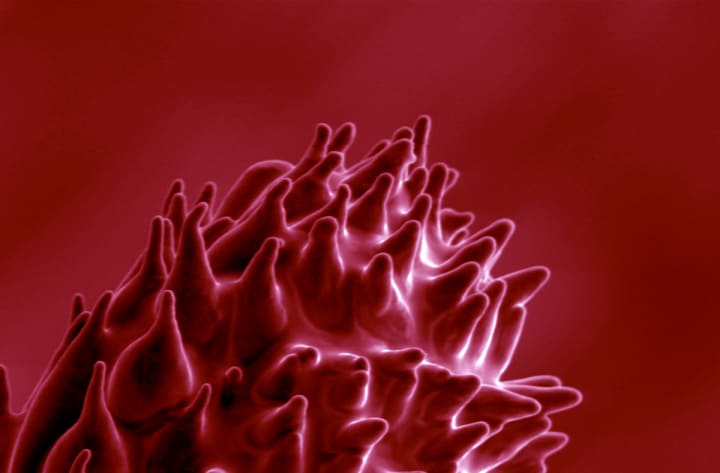
5. Vinyl Record
It wasn't that long ago that we had to rely on cassette tapes and vinyl records made from a resin called shellac, which, starting in the 1940s, would become the primary way that music was recorded and distributed during the twentieth century, even though music technology has advanced significantly in recent decades and we now primarily stream songs in high fidelity.
Vinyl records are analog, which means that the sound waves are successfully imprinted on them because of the relatively soft material they are made of, as opposed to digital, like the majority of current approaches. After that, all that's left to do is put them in a special player, where a needle moves down the record's groove and produces music.
Holding a record in your hands allows you to see the grooves and the beginning, which will aid in appropriately positioning the player's needle. But the complexity of their structure is even more obvious when viewed under an electron microscope.
It's amazing to believe that something so simple, in the context of modern technology, could function so well. Many people think that these imprints can offer sound quality that is significantly better than even the most cutting-edge digital technologies.
Phonograph Needle: Slow-motion Microscopy
6. Tapeworm Head
The parasitic worms known as tapeworms have the appearance of ribbons and are continually releasing proglottids, or egg bundles, into the environment to infect other animals.
Depending on the species, they can enter a new host in a variety of ways, but once they are fully grown, they latch onto an animal's digestive tract and feed on the nutrients that are being passed by. They then use this food to produce more eggs. The majority of human tapeworm infections occur through undercooked pork, beef, or shellfish, and while the idea of contracting one is horrifying enough, actually seeing one up close is even scarier.
The worms are made up of three fundamental components: an egg-filled body, a short neck, and a scolex (head). The scolex is the component that is most noticeable when viewed under a microscope, and this is due to its intended role. They don't need mouths because they can absorb nutrition directly via their bodies.
Instead, they stabilize themselves using their heads. Once they have located the ideal location, they will use the rows of hooks or suckers on their bodies to latch onto their host's intestine, a connection that is very difficult to break once formed.
7. Orange Juice
The most startling truth about orange juice, which is frequently found in refrigerators around the world, is that it didn't become widely consumed until the latter few decades of the 20th century when it was found to be a tasty way to consume nutrients during World War II.
Tens of millions of gallons are produced annually in locations like Florida, where it is already a significant industry. However, this is much harder than it first appears. Orange juice appears very different under a microscope because it contains a variety of compounds, such as Vitamin C, sugar, and carbohydrates, as well as potassium thiamine, folate, and citric acid.
A complex crystalline structure that resembles something you'd find in a mining operation rather than a breakfast beverage may be seen when the juice is magnified a hundred times. When seen with polarised light, the various compounds exhibit strikingly distinct colors. This holds true for both the beverage's smooth and pulpy varieties.
So be aware that what you're swallowing is far more complex than it seems the next time you have a drink.

8. Shark Skin
Top predators in the water strike fear into the hearts of every other species they encounter. Of course, one of the most important traits that makes them such good predators is their countless rows of sharp teeth, but their skin is also essential to their abilities.
If you've ever felt the skin of a shark, you'll know it's different from any other animal's skin because it feels like sandpaper. You won't understand why until you look at their skin under a microscope because, unlike human skin, which is made up of cells, their skin is actually a dermal corset that is organized as a helical network around their body.
Simply put, this means that they have a layer of small teeth covering their bodies, arranged in a certain pattern that serves two objectives. The first is that it serves as an external skeleton for their swimming muscles, helping them to save energy, and the second is that it offers a hydrodynamic advantage, allowing them to move through the water more quickly and with less effort than they would otherwise need to.
Each tooth-like structure in the shark's skin also causes a little swirl as it passes through the water, which has been found to provide a suction effect that gives the shark additional propulsion and enables it to move forward even more quickly.
Sharks will quickly repair any skin damage, and certain species will develop colored dermal denticles to help them blend in with their surroundings in specific aquatic habitats, exactly like their teeth.
9. Chalk
One of the most commonly used natural materials on the earth is chalk. Although it's probably best recognized for its use on sidewalks and chalkboards, it's also used in the production of antacids, building materials, fertilizers, and cleaning products.
Although CaCO3 seems like a simple molecule, it is actually a lot more sophisticated than most people realize. To understand why this happens, it is essential to comprehend how chalk initially came to be. The Cretaceous epoch, which spanned between 99 and 65 million years and was characterized by the presence of dinosaurs, is the source of all of the world's resources.
During a period of relatively calm climatic conditions, where there wasn't much ocean bed erosion in some areas, layer upon layer of microscopic organisms whose cells were comprised of calcite grew up on top of each other as they perished. Layer after layer of microscopic organisms with calcite-based cells accumulated over millions of years as they died.
The result is a solid substance that is easily crumbling or whose layers may be peeled off when it is pressed up against something harder. It is now the only variety of limestone that exhibits compaction signs.
Chalk can still be observed to have a long history when studied under a microscope, but it is only then that the material reveals itself to be a marine graveyard with the individual remains of these species being clearly visible.
10. Mite
Last but not least, dust mites are one of the most prevalent indoor allergens, and the more you know about them, the more you'll want to get rid of them for good.
Instead of referring to a particular species, the name describes a wide range of minuscule spider-related arachnids that can only grow to be three-hundredths of an inch long, much smaller than what the human eye can see.
Even though their bodies aren't as segmented as those of larger species, it's still simple to notice how spider-like they are under a microscope. Instead of a head, eyes, or brain, the front of their bodies contain a retractable feeding apparatus that may either suck in particles or bite into prey.
Mites come in more than 48,000 different species, with an estimated million or more in existence. They can be discovered almost anywhere, including in soil, caverns, fresh water, and our homes.
Dust mites, as an illustration. If they flourish in warm environments and feed on the skin flakes we naturally shed, large colonies can form in mattresses. If you have a natural sensitivity to the proteins they produce, their presence may cause asthma or other allergies.
Sources and Further Reading
"Biomimicry Shark Denticles." (n.d.). Smithsonian Institution, https://ocean.si.edu/ocean-life/sharks-rays/biomimicry-shark-denticles.
Burgess, Anika. (2017). "The World’s Tiniest Wonders, Revealed Through Photomicrography." Atlas Obscura, https://www.atlasobscura.com/articles/photomicrography-microscope-contest-cells.
"Chalk." (n.d.). Ministry of Energy and Mineral Resources, Jordan, https://www.memr.gov.jo/EBV4.0/Root_Storage/EN/Project/Chalk.pdf.
"The History of Vinyl Records: An In-Depth Guide." (2022). The Sound of Vinyl, https://thesoundofvinyl.us/blogs/vinyl-101/the-history-of-vinyl-records.
"I found a moving Face Mite (Demodex) and put it under the microscope." (n.d.). Microbehunter Microscopy, https://www.microbehunter.com/i-found-a-moving-face-mite-demodex-and-put-it-under-the-microscope/.
"The Microscope." (2019). Science Museum, https://www.sciencemuseum.org.uk/objects-and-stories/medicine/microscope.
"Microscopes." (n.d.). National Geographic Resource Library, https://education.nationalgeographic.org/resource/microscopes.
"Microscopy of the dandelion flower." (n.d.). Microbehunter Microscopy, https://www.microbehunter.com/microscopy-of-the-dandelion-flower/.
O'Hare, Sean. (2012). "Ancient Optical Lenses." Ancient Cinema, https://www.ancient-cinema.org/index.php/stories/77-ancient-optical-lenses.
Pritchard, Emma-Louise. (2016). "This is what peacock feathers look like under a microscope." Country Living, https://www.countryliving.com/uk/wildlife/farming/news/a554/this-is-what-peacock-feathers-look-like-under-a-microscope/.
Shannon, Kate. (2019). "Our Favorite Kosher Salt." Cook's Illustrated, https://www.cooksillustrated.com/articles/1946-our-favorite-kosher-salt.
Shephard, Roy. (n.d.). "What is chalk?" Discovering Fossils, http://www.discoveringfossils.co.uk/chalk_formation_fossils.htm.
"Tapeworms." (n.d.). ScienceDirect, https://www.sciencedirect.com/topics/agricultural-and-biological-sciences/tapeworms.
Waldvogel, Michael, Bertone, Matt, and Charles Apperson. (n.d.). "Mites That 'Bug' People." North Carolina State U Extension, https://content.ces.ncsu.edu/mites-that-bug-people.
About the Creator
Ahamed Thousif
🌟 Welcome to the realm of exploration, where communities come alive through the power of words! 📚✨ Join me as we embark on a journey to discover the vibrant tapestry of stories and Poems.
VISIT - "MY FOOD BLOG"
Keep reading
More stories from Ahamed Thousif and writers in Earth and other communities.
This New Hydrogen Development May Revolutionize the Automotive Industry!
Hydrogen is a tender foot in the race for green electricity despite being the most abundant component on the intermittent table. The difficulties in producing hydrogen and its limited storage capacity have long been outweighed by other endless advances.
By Ahamed Thousif3 years ago in Earth




Comments
There are no comments for this story
Be the first to respond and start the conversation.