
Beneath Colombo: The True Story of the City’s Underground Tunnels and Bunkers
Separating fact from myth, exploring flood-control tunnels, historic passages, and secretive bunkers hidden beneath Sri Lanka’s capital.

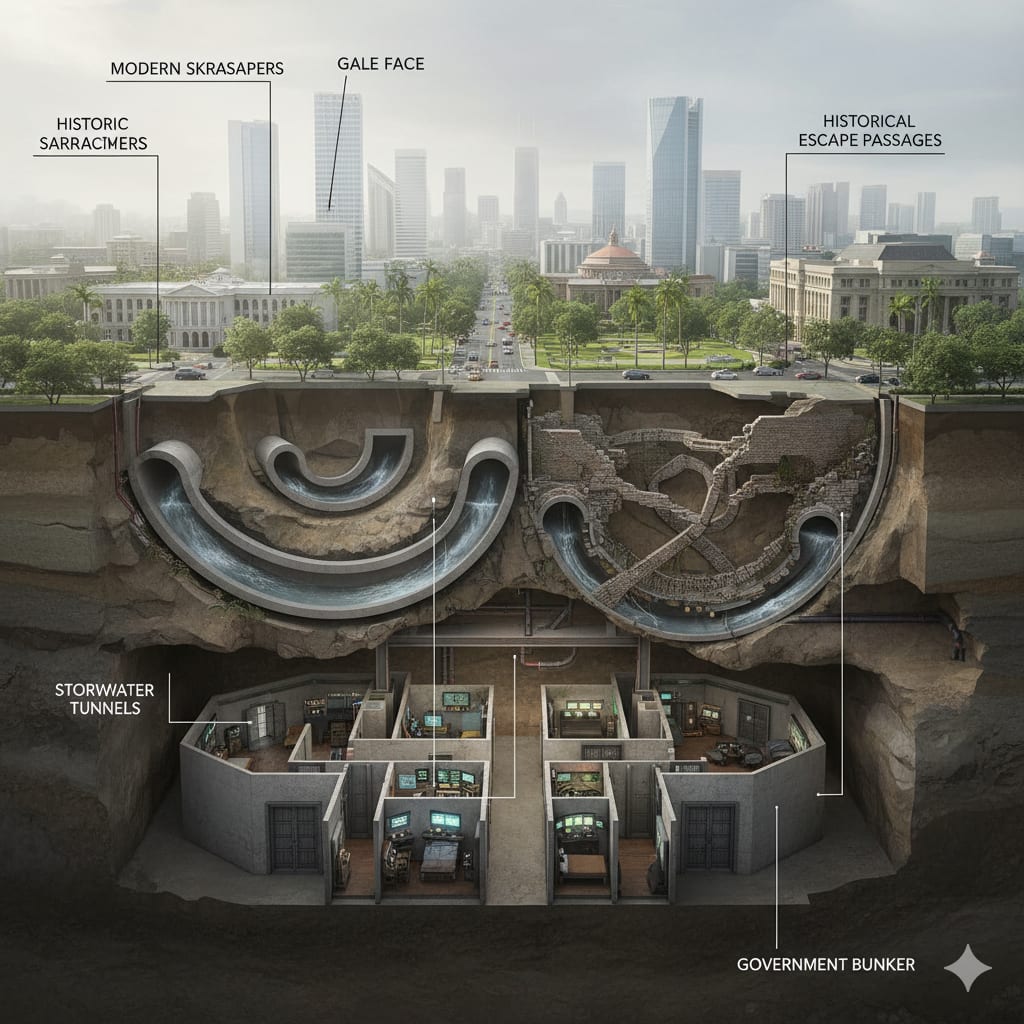
Colombo, the bustling capital of Sri Lanka, is a city of vibrant streets, historic landmarks, and rich cultural heritage. But beyond the lively markets and colonial-era architecture lies a lesser-known world — a network of underground tunnels and bunkers that has fueled urban legends for decades. Stories of secret cities and hidden passageways have circulated widely, creating a sense of mystery around what lies beneath the streets. But how much of this is real, and how much is myth?
The truth is fascinating: Colombo does have underground structures, but they are largely functional or historical, not part of a vast secret city. From flood-control tunnels and drainage systems to colonial-era escape passages and modern bunkers, the underground of Colombo reveals a different kind of story — one of engineering, history, and strategic planning.
In this article, we’ll take a deep dive into Colombo’s underground world, exploring the tunnels, bunkers, and hidden pathways that have shaped the city’s past and present, while separating fact from fiction.
The Functional Underground – Civil Engineering Marvels
One of the most practical reasons for tunnels in Colombo is civil engineering. The city’s tropical climate, combined with its proximity to the Indian Ocean, makes it highly susceptible to heavy rainfall and flooding. To address this, engineers have constructed tunnels designed specifically to manage water flow, protect the city, and prevent disasters.
Flood-Control Tunnels
Two of the most notable examples are the New Mutwal Tunnel and the Torrington Tunnel. These tunnels were constructed to divert excess stormwater directly into the sea, minimizing the risk of urban flooding.
The New Mutwal Tunnel, situated along Colombo’s western coastline, serves as a primary conduit for stormwater during monsoon seasons. Its construction involved advanced techniques to ensure stability under both soil and tidal pressures. Engineers designed it to handle heavy water flow, using reinforced concrete and carefully calculated slopes to allow gravity to assist in water movement.
Similarly, the Torrington Tunnel helps redirect water away from densely populated areas. These tunnels are vital during heavy rains, preventing floods that could otherwise paralyze traffic, damage property, and disrupt daily life.
Other Civil Uses
Beyond flood control, Colombo’s underground is home to drainage and sewage networks. While not glamorous, these systems are critical to urban life, keeping streets clean and minimizing public health risks. Some tunnels were also constructed as part of metro or railway plans, although many remain incomplete or restricted to government use.
It’s important to understand that these tunnels are practical, not secret hideouts. Their construction reflects Colombo’s efforts to manage a growing city while facing natural challenges. By looking at these functional structures, we see how engineering has shaped Colombo’s underground landscape in ways most residents never notice.
Historical and Heritage Tunnels
Colombo’s underground isn’t only about modern engineering; it also preserves a rich history. Some tunnels date back centuries, serving strategic purposes for kingdoms and colonial rulers.
Kotte-Era Tunnels
Near the ancient city of Kotte, a suburb of modern Colombo, archaeologists have discovered tunnels that likely served as escape routes or defensive passages during times of conflict. The Kingdom of Kotte, which flourished in the 15th and 16th centuries, faced repeated invasions, and these tunnels allowed royal officials and soldiers to move discreetly.
Constructed with bricks and stone, these tunnels were narrow and often winding, designed to confuse potential invaders. Some passages connected fortified locations or led to hidden exits in surrounding forests. While much of this history has been lost over time, remnants of the tunnels remain, offering a glimpse into strategic thinking centuries ago.
Colonial-Era Structures
During the Portuguese, Dutch, and British periods, Colombo saw the addition of underground passages, particularly in forts and government buildings. These structures were used for storage, secret communications, or as protective bunkers. In some cases, they allowed colonial administrators to escape during emergencies, reflecting the turbulent political landscape of the time.
One fascinating example is the old Presidential Bunker, constructed during the Rajapaksa era. While often sensationalized in media reports, it was a small, functional structure built for safety and government continuity — not part of a hidden city.
Debunking the Myths
Despite these real tunnels, urban legends have exaggerated their presence. Many stories claim a vast underground city exists beneath Colombo, complete with secret facilities and hidden treasures. While intriguing, these tales are largely fiction.
Several factors contributed to the myths:
Restricted Access: Many tunnels and bunkers are off-limits to the public. Secrecy around government or military installations naturally leads to speculation.
Misinterpretation of Civil Structures: Ordinary flood tunnels or drainage passages have been mistaken for elaborate underground complexes.
Media Sensationalism: Reports on bunkers or restricted sites often amplify the mystery, giving rise to exaggerated claims.
The reality is straightforward: while Colombo has functional tunnels and historical passages, there is no sprawling hidden city. Most underground structures are small, purpose-built, and accessible only to engineers or authorities.
Mapping Colombo’s Underground
To better visualize Colombo’s underground, here is a simplified overview of known structures:
Functional Tunnels:
New Mutwal Tunnel: Stormwater diversion into the sea.
Torrington Tunnel: Flood-control and drainage.
Historical Tunnels:
Kotte-Era Tunnels: Escape routes for royalty and soldiers.
Colonial Fort Passages: Storage and secret communications.
Modern Bunkers:
Presidential Bunker: Safety structure during the Rajapaksa era.
Military Installations: Restricted access, functional use only.
While a full map would require restricted government data, this overview helps readers understand the distribution and purpose of Colombo’s underground network. Most tunnels are located near the coast, central government areas, or historic sites, reflecting practical or strategic needs.
The Fascination with Urban Legends
Why are people so captivated by stories of underground cities? It’s a phenomenon seen worldwide. Cities like Montreal, Beijing, and Tokyo have extensive underground networks, from shopping malls to transportation tunnels. For outsiders, these structures can seem mysterious or secretive, fueling imagination.
In Colombo, legends of hidden cities may also reflect cultural fascination with secrecy, power, and history. The stories provide an alluring mix of danger, intrigue, and mystery. However, understanding the real tunnels — their construction, purpose, and history — allows us to appreciate Colombo’s underground without falling for myths.
Engineering and Heritage Appreciation
Colombo’s underground is a testament to both human ingenuity and historical preservation. Modern civil engineering projects protect the city from natural disasters, while historical tunnels offer insights into past strategies and architectural skills. Recognizing these achievements encourages appreciation rather than fear or sensationalism.
For residents and visitors, the takeaway is clear: Colombo’s underground is not a hidden world of secrets and treasures, but a layered story of practical engineering and historical ingenuity. Each tunnel, passage, or bunker tells a story — whether it’s diverting stormwater, safeguarding a fortress, or preserving a slice of history.
About the Creator
Ashen Asmadala
Hi, I’m Ashen, a passionate writer who loves exploring technology, health, and personal development. Join me for insights, tips, and stories that inspire and inform. Follow me to stay updated with my latest articles!
Keep reading
More stories from Ashen Asmadala and writers in Earth and other communities.
Sri Lanka Drowning in Tears — When the Sky Broke and a Nation Fell Under Water
When Rain Overstayed Its Welcome Sri Lanka is no stranger to rain. For generations, the rhythmic sound of monsoon showers has been part of our national heartbeat. Farmers welcomed it, children danced under it, lovers wrote poetry about it. Rain is meant to heal the soil, not wash it away.
By Ashen Asmadala3 months ago in Earth
A Green Solution to Urban Pollution
Air pollution has become one of the most serious environmental challenges facing modern cities. Rapid industrialization, increasing vehicle emissions, and expanding urban populations have significantly degraded air quality around the world. Polluted air not only harms ecosystems but also poses severe health risks to humans, contributing to respiratory diseases, heart conditions, and reduced life expectancy. Among the many strategies proposed to combat this problem, planting and preserving trees stands out as one of the most natural, cost-effective, and sustainable solutions.
By Irshad Abbasi 2 days ago in Earth


Comments
There are no comments for this story
Be the first to respond and start the conversation.