
Bearish Dollar Bets Move Toward Levels That Raise Risk of Recoil
Bearish Dollar Bets Hit Extreme Levels, Raising Risk of Sharp Rebound

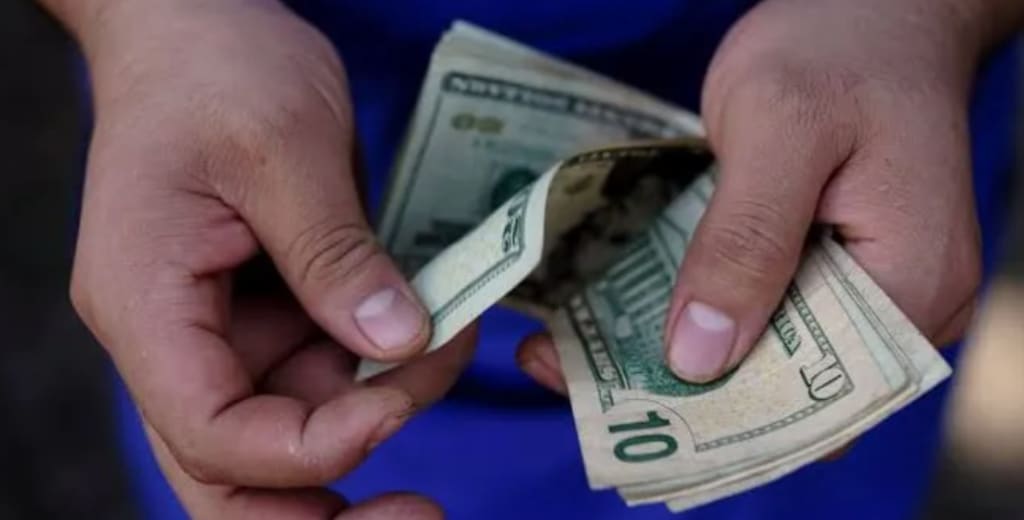
The risk of a sharp rebound is increased when bearish dollar bets reach extreme levels. April 22, 2025
The U.S. dollar is under mounting pressure as traders and investors continue to pile into bearish bets, driving the currency to multi-year lows. The crowded nature of these positions, on the other hand, is alarming financial analysts, who believe that the situation is ripe for a sudden and potentially sharp rebound—a scenario that is frequently referred to as a "short squeeze." The dollar's once-unchangeable status as the world's reserve currency is being challenged as the global financial community loses faith in U.S. economic policy and concerns about the Federal Reserve's independence grow. Yet paradoxically, a near-term rally may be sparked by this extreme bearish sentiment. Dollar drops to a low not seen in years The U.S. Dollar Index (DXY), which tracks the value of the dollar against a basket of major currencies, has dropped to its lowest level in over three years. The index has dropped nearly 9% since the beginning of 2025, indicating widespread dissatisfaction with the fiscal and monetary trajectory of the United States government. President Trump's increasingly protectionist stance, his public criticism of Federal Reserve Chair Jerome Powell, and investor concerns that the Fed's policy decisions are no longer immune from political influence are all major contributors to this decline. Global investors have moved away from the dollar and toward alternative assets like gold, the euro, and the Japanese yen as a result of these developments, which have created an atmosphere of economic uncertainty. Extremes of Bearish Sentiment Approach An unprecedented number of short positions have been created as a result of the dollar's weakness. The dollar's continued decline has been heavily bet on by institutional investors, asset managers, and hedge funds. The Commodity Futures Trading Commission (CFTC) recently released data that shows that net short positions in dollar futures have increased to their highest levels since 2020. Notably, companies like RBC BlueBay Asset Management have made their short positions public, citing a decline in investor confidence in the economic framework of the United States. Mark Dowding, BlueBay's Chief Investment Officer, stated, "The policy uncertainty in Washington is undermining the credibility of the U.S. dollar." "The dollar is no longer regarded as a safe haven." Even though the current fundamentals appear to support this overwhelming bearish consensus, seasoned traders are aware that when everyone is moving in the same direction, the risk of a countermove is greatly increased. Risks of Rebound on the horizon A sharp rebound in the dollar — even if only temporary — could be triggered by several factors. To begin, technical indicators indicate that the dollar is currently oversold. The DXY has recently experienced a false breakout and a descending triangle pattern, both of which are typically signs of reversals in technical analysis. Support levels at 95 and 90 are being closely watched, and in the event of a bounce, resistance is likely to emerge around 101 and 107. If the dollar begins to retrace, even modest upward momentum could force short sellers to cover their positions, sparking a rally.
Second, external circumstances may be the cause of a shift in sentiment. A strong declaration of independence from the Federal Reserve or progress in easing trade tensions with key partners like China and the European Union could quickly restore confidence in the dollar. Additionally, central banks in emerging markets — many of which are highly sensitive to a weak dollar — may begin to intervene, either by adjusting interest rates or directly supporting the greenback in forex markets.
Squeeze-type scenarios A short squeeze is the biggest risk for dollar bears in the near future. When people who bet against an asset are forced to quickly buy it back as its price rises, the rally gets even stronger. A move of this nature could be swift and violent given the scope of short interest at the moment. Rabobank Head of FX Strategy Jane Foley stated, "Markets rarely move in a straight line." “When bearish bets become too crowded, any positive surprise can send traders scrambling for the exits. That is precisely the risk dollar faces right now. The squeeze risk is especially acute because many traders are using leverage — borrowed money — to amplify their bets. These positions could be quickly canceled out by margin calls if the dollar starts to rise. Looking Forward The extreme positioning in currency markets suggests that a near-term rebound is increasingly likely, despite the fact that the fundamentals that have led to the decline of the dollar—such as political pressure on the Fed and global diversification away from the United States—are still intact. The main takeaway for traders and investors is to exercise caution. There is a lot of risk involved in betting heavily against the dollar at the current levels. Sentiment-driven trades can quickly unravel, as history has demonstrated, particularly when technicals and positioning are aligned for a reversal. Whether the dollar's comeback will be short-lived or the start of a more sustained recovery remains to be seen. But one thing is clear: the risk of a sudden recoil is growing with every additional bearish bet.
About the Creator
GLOBAL NEWS
World News Updated
Short News upload
Technology News
Keep reading
More stories from GLOBAL NEWS and writers in Earth and other communities.
Tesla Stock Is Falling. Odometers, Low Priced Cars, Earnings Loom Over Shares.
Shares of Tesla fall as a result of delays, brand issues, and competition. As Tesla's stock continues its sharp decline in 2025, investors are increasing their scrutiny of the company, which was once the undisputed market leader in electric vehicles (EVs). The automaker is facing a variety of challenges, including delayed vehicle launches, reputational damage, and stiffening global competition, as well as a market capitalization loss exceeding $500 billion and shares down more than 40% year to date. Low-Cost EV's Delay in Launching The delay of Tesla's highly anticipated low-cost electric vehicle, which was originally scheduled for release in early 2025, is a major contributor to the company's current stock woes. The vehicle was positioned as Tesla's response to the increasingly crowded mass-market EV market and was expected to cost between $25,000 and $30,000. However, recent reports suggest that this model's production will not begin until late 2026. This delay occurs at a crucial moment when EV adoption is primarily driven by affordability and accessibility, particularly in cost-conscious markets. Investors, who had hoped that the model would revive demand and drive volume sales, are frustrated by Tesla's inability to deliver on this front. Concerns have been raised regarding the company's capacity to keep up with rapidly changing industry dynamics because it has provided very little in the way of a detailed roadmap. Earnings fall short, and margins are strained. Investors' concerns have not been alleviated by Tesla's financials. The company reported earnings of $0.66 per share in its most recent report, which were lower than the $1.05 per share it earned a year ago and significantly below the expectations of analysts. Even though revenues fell short of expectations, they increased by 9% to $23.35 billion. Tesla's profit margins are under a lot of stress. The company has aggressively cut prices on a number of its models in an effort to remain competitive in the face of decreasing demand. Although this strategy temporarily increased sales volume, it has also reduced profitability, particularly in markets with higher operating costs like the United States and Europe. This squeeze on margins comes at a time when Tesla needs money to finance its robotaxi initiative and AI-powered vehicle software. Political Debates and Damage to the Company's Image Reputational damage caused by CEO Elon Musk's personal involvement in politics is another issue that is affecting Tesla's stock. Parts of the customer base have criticized Musk for his public support of far-right figures and advisory role in Donald Trump's reelection campaign, particularly in progressive markets like Europe and California. The backlash has been evident, with public calls for boycotts and protest actions like vandalism in Tesla showrooms. Real business effects have resulted from this political alignment. In the first quarter of 2025, Tesla reported a 13% drop in vehicle deliveries—the lowest in nearly three years. Analysts have pointed to Musk's contentious public persona as a growing brand liability. JPMorgan recently reduced its outlook for Tesla's profit in a rare move, citing "unprecedented brand damage" as the primary reason. Wells Fargo went even further, stating that deteriorating fundamentals and waning investor confidence could cause Tesla stock to fall another 50%. Global competition growing External threats are getting worse while Tesla struggles with internal issues. The largest of these is BYD, a Chinese manufacturer of electric vehicles that recently surpassed Tesla as the company with the most customers worldwide. Because of its strong domestic base and vertically integrated manufacturing, BYD is able to offer a wide range of models at affordable prices. Nio, XPeng, and even older automakers like Volkswagen and Hyundai are rapidly gaining market share. In addition to offering pricing that is more competitive, these businesses are also making significant investments in software, battery technology, and design—areas in which Tesla once clearly dominated. Elon Musk has acknowledged the growing threat posed by Chinese automakers, stating that these businesses could "demolish" their global counterparts without trade protections. This comment contrasts sharply with previous years, when Tesla's market position appeared almost untouchable. Uncertain Future Among Bets on Innovation Tesla is betting heavily on the future, despite the obstacles. Full Self-Driving (FSD) software, which Musk claims will eventually power a fleet of autonomous robotaxis, is still being developed by the company. Additionally, there is talk of a new Model Y, enhancements to the Cybertruck, and an expansion of Tesla's energy business. However, these long-term bets will not alleviate investor anxiety in the immediate future. The deployment timeline for robotaxi is still a mystery, and regulatory obstacles persist. In the meantime, Tesla's rivals are moving quickly, frequently with funding that is supported by the state and aggressive pricing strategies that Tesla is unable to match without hurting its margins. Last Thoughts The slump that Tesla will experience in 2025 is not the result of a single mistake; rather, it is the culmination of multiple pressures coming together simultaneously. The electric vehicle giant is going through one of its toughest periods in its history, with issues like delayed products, low earnings, challenges with its brand, and threats to its competition. Tesla will need to offer more than just bold promises in order to regain investor confidence. For the company to get back on track, timely execution, clear communication, and a renewed focus on its core values—innovation, sustainability, and customer trust—will be crucial. The market will keep a close eye on the situation until then because the path ahead appears uncertain.
By GLOBAL NEWS9 months ago in Earth
Microbiota, microbiome or microflora: how to speak correctly and why it is for health.
You've probably heard the phrase, "We are what we eat." But modern science says more precisely: we are also those who live in us. Until 2016, it was believed that there are many times more bacteria in our body than our own cells. The latest calculations by mathematicians show that we divide the body with our microorganisms by about 50/50: about 30 trillion of our cells versus 38 trillion bacterial ones.
By Yaroslav Gorohov3 days ago in Earth
Chinese EVs Closing In on America After Canadian Tariffs Deal
The electric vehicle race is no longer just about climate goals or consumer choice — it has become a geopolitical contest. And in early 2026, a subtle but powerful move by Canada may have tilted the board. By agreeing to sharply reduce tariffs on Chinese electric vehicles, Canada has opened a door that the United States has worked hard to keep shut. While Chinese EVs are still largely barred from the American market, they are now edging closer than ever — not by crossing the border directly, but by entering through Canada. This development raises a pressing question: Are Chinese EVs closing in on America, and what does that mean for the future of North American auto markets? The Deal That Changed the Game Canada’s new agreement with China allows up to 49,000 Chinese-made electric vehicles per year to enter the Canadian market at a tariff rate of just over 6%, a dramatic drop from the previous 100% tariff that effectively blocked them. On paper, the quota seems small. In reality, it carries enormous symbolic and strategic weight. For years, both Canada and the United States aligned closely on keeping Chinese EVs out, citing concerns over unfair subsidies, national security, and the protection of domestic auto industries. This new deal marks a clear shift — and a divergence from U.S. policy. Canada didn’t make the decision in isolation. The EV tariff reduction was part of a broader trade reset with China, tied to agricultural exports such as canola and efforts to stabilize a strained economic relationship. Why Chinese EVs Matter So Much China is the undisputed leader of the global electric vehicle industry. Its manufacturers produce EVs at scale, often at prices Western automakers struggle to match. Brands like BYD, Nio, and Xpeng have already expanded aggressively into Europe, Southeast Asia, and parts of the Middle East. North America has remained one of the final fortified markets — until now. Chinese EVs are appealing not just because they’re cheaper, but because they’ve rapidly improved in quality, range, and technology. For consumers priced out of North American and European EV models, Chinese vehicles offer something rare: affordability without sacrificing features. Canada’s decision gives Chinese automakers their first legitimate foothold in North America — and footholds tend to grow. Why the U.S. Is Nervous The United States still enforces a 100% tariff on Chinese EV imports, making them effectively unsellable in the American market. But Canada’s move has triggered concern in Washington. U.S. officials argue that Chinese EVs entering Canada could indirectly pressure American markets, influence supply chains, and weaken Washington’s leverage in future trade negotiations. There’s also a political dimension. Both major U.S. parties have framed Chinese dominance in EVs as a strategic threat — not just to auto jobs, but to technological leadership. Modern EVs collect vast amounts of data, and lawmakers have raised concerns about cybersecurity and foreign data access. While Chinese EVs aren’t rolling onto American roads yet, their presence just across the border changes the conversation. Canada’s Risk — and Opportunity Inside Canada, the reaction has been mixed. Automotive hubs like Ontario worry that opening the market could undermine domestic manufacturing and strain relations with the U.S., Canada’s largest trading partner. Some leaders have called the deal “lopsided,” warning it could cost jobs if American retaliation follows. Others see opportunity. A more competitive EV market could lower prices for Canadian consumers and accelerate EV adoption. It may also attract Chinese investment into Canada itself — including factories, battery plants, and supply chain partnerships. If Chinese automakers choose to build in Canada rather than simply export to it, the country could position itself as a bridge between Chinese EV innovation and North American demand. That balancing act — between economic opportunity and political risk — defines Canada’s strategy. Are Chinese EVs Really ‘Closing In’ on America? For now, the answer is: not directly — but strategically, yes. Chinese EVs sold in Canada won’t automatically flood the U.S. market. Regulations, trade rules, and tariffs still stand in the way. But proximity matters. Supply chains overlap. Consumer awareness spreads. Manufacturing footprints expand. There’s also the possibility of a workaround: Chinese companies could eventually build EVs in North America to bypass tariffs altogether. This idea has already been floated — but it faces fierce resistance from U.S. lawmakers and unions. Still, history shows that once a global industry leader gains regional access, momentum often follows. What This Means for Consumers For Canadian buyers, the impact could be immediate: more choice and lower prices in an EV market that has long been criticized for being expensive and limited. For American consumers, the effect will be indirect — at least at first. But increased competition could eventually pressure U.S. automakers to reduce prices, improve features, and accelerate innovation. The larger question is whether North America wants competition or insulation — and how long insulation can realistically last in a globalized EV economy. The Bigger Picture: A Global EV Power Shift Canada’s tariff deal reflects a broader reality: China’s dominance in electric vehicles is reshaping global trade, whether governments like it or not. Europe is already grappling with an influx of Chinese EVs. Emerging markets are embracing them. And now, North America has its first real crack in the wall. This isn’t just about cars. It’s about who controls the future of clean transportation, supply chains, and industrial policy. Final Thoughts Chinese EVs aren’t driving down American highways yet — but after Canada’s tariff deal, they’re closer than ever. This move doesn’t spell immediate disruption, but it does signal a shift. One country has decided that economic pragmatism outweighs political alignment. And in doing so, Canada may have opened the door to a new phase of EV competition in North America. Whether that door swings wider — or slams shut — will depend on how the U.S., automakers, and consumers respond. One thing is certain: the EV race just entered a new chapter.
By Muhammad Hassana day ago in Earth




Comments
There are no comments for this story
Be the first to respond and start the conversation.