
Aurora The Beauty of Nature
Beauty of the night sky

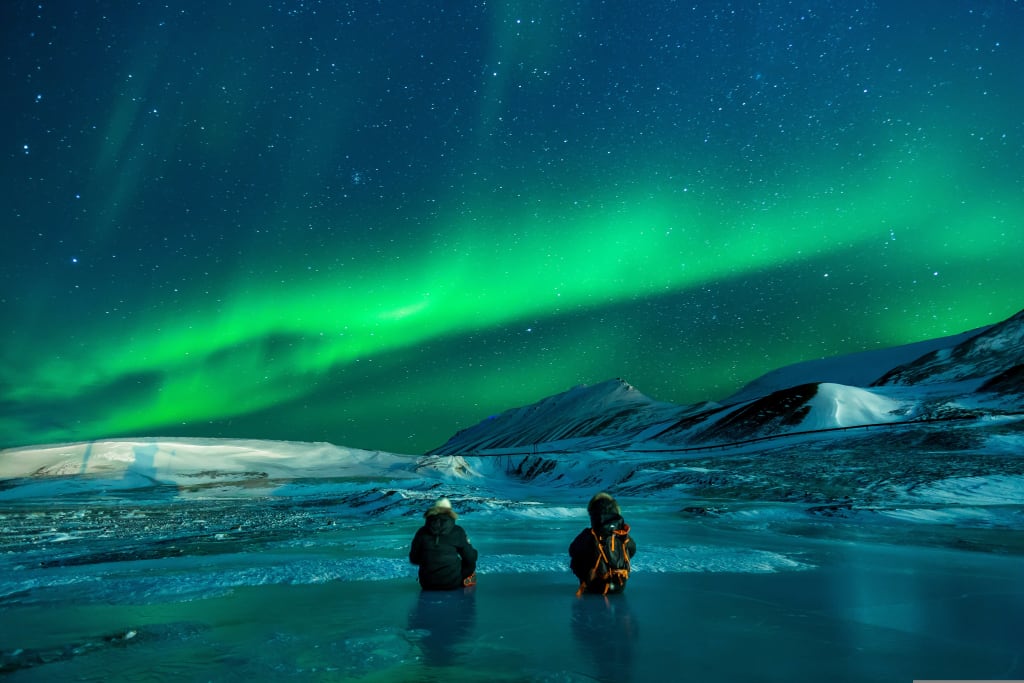
The Northern Aurora, scientifically referred to as the Aurora Borealis, is one of Earth’s most mesmerizing natural phenomena. Dancing across the night skies in the polar regions, these luminous displays of green, pink, red, purple, and blue have fascinated humankind for millennia. Their ethereal beauty, scientific complexity, and cultural significance make them a subject of enduring interest. In this essay, we will explore the origins, science, history, mythology, observation, and future of the Northern Aurora, uncovering the many layers of this celestial spectacle.
Scientific Explanation and the Origins
At the heart of the auroral display is a complex interaction between the solar wind and the Earth's magnetosphere. The solar wind is a stream of charged particles that the Sun continuously releases. When these particles reach Earth, they collide with the planet's magnetic field. Most of the particles are deflected, but some become trapped in the magnetosphere and are funneled toward the polar regions. As these energetic particles plunge into Earth’s upper atmosphere, primarily between 80 to 300 kilometers above the surface, they collide with atoms and molecules—mostly oxygen and nitrogen. These collisions excite the atmospheric particles, pushing electrons to higher energy levels. When the electrons fall back to their original states, they emit photons, or light particles, producing the glow we perceive as the aurora. Different gases produce different colors. Oxygen can emit green (the most common color) or rare red light, depending on the altitude. Nitrogen contributes blues and purples. The resulting light displays are not only beautiful but also scientifically informative, offering insights into space weather and atmospheric science.
Geography and Frequency
The Northern Aurora primarily occurs in regions encircling the magnetic poles, particularly within the auroral oval, a ring-shaped zone around the geomagnetic poles. The best places to witness the Northern Lights include:
Northern Canada and Alaska
Norway, Sweden, and Finland
Iceland
Northern Russia
Greenland
These regions experience the aurora more frequently due to their proximity to the magnetic pole. However, the aurora can be seen much further south, even into the northern United States and central Europe, during intense solar activity such as solar flares or coronal mass ejections (CMEs). Historical and Cultural Significance
The Northern Aurora has long held cultural and spiritual significance for indigenous and ancient peoples. Without a scientific framework, many cultures turned to mythology and legend to explain the awe-inspiring lights.
Indigenous Beliefs
Inuit tribes of North America believed the aurora was the spirits of the dead playing ball with a walrus skull or guiding souls to the afterlife. In Sámi mythology (from northern Scandinavia), the aurora was seen as a powerful force that must be respected; people were warned not to wave or whistle at it, lest they be whisked away.
Norse and European Lore
The Vikings thought the lights were reflections from the shields of Valkyries, warrior maidens who chose who would die in battle. In medieval Europe, the aurora was often interpreted as a portent of war or disaster.
Asian Perspectives
In parts of East Asia, such as China and Japan, the aurora was considered a dragon in the sky or a sign of upcoming good fortune or pregnancy. These rich traditions underscore the profound emotional impact of the phenomenon on human societies.
Aurora Borealis and Aurora Australis
While the term “Aurora Borealis” refers to the northern hemisphere lights, the southern hemisphere counterpart is called the Aurora Australis. Both are mirror images of each other in terms of their scientific cause and patterns. However, due to the sparse population and remoteness of southern polar regions like Antarctica, sightings of the Aurora Australis are less common for most people.
Modern Research and Exploration
With the advent of space exploration and modern physics, our understanding of auroras has expanded greatly. Satellites like NASA’s THEMIS mission and the European Space Agency’s Cluster project monitor Earth’s magnetosphere to study auroras. These scientific endeavors seek to understand not only the mechanics of auroras but also their implications for space weather and technology.
Space Weather Impact
Space weather events that can disrupt satellite communications, GPS systems, and even electrical grids can be detected by auroras, which are more than just a light show. The infamous Carrington Event of 1859 was a massive solar storm that caused auroras visible near the equator and disrupted telegraph systems worldwide. Understanding auroras thus has practical importance in protecting modern technological infrastructure.
Photography and Tourism
In the age of smartphones and digital cameras, aurora tourism has grown into a lucrative industry. Travelers flock to locations like Tromsø (Norway), Fairbanks (Alaska), and Yellowknife (Canada) to capture the lights with long-exposure photography.
Aurora photography requires some technical skill—typically a DSLR or mirrorless camera with manual settings, a tripod, and knowledge of long exposures. Many tour operators now provide guided experiences to maximize chances of witnessing the lights under favorable weather and solar conditions.
Best Viewing Conditions
The best time to view the Northern Aurora is during the winter months in high-latitude regions, when nights are long and dark. Clear skies away from city lights offer optimal visibility. Peak activity is often associated with the solar cycle, an 11-year period of changing solar activity. The next solar maximum is expected around 2025, likely increasing aurora visibility and frequency.
The Role of Technology and Apps
Tracking the aurora has become easier thanks to modern technology. Apps and websites now provide real-time aurora forecasts, based on data from space weather monitoring centers. These platforms use the Kp index, a scale from 0 to 9 that measures geomagnetic activity. Values of 5 or higher generally indicate auroras may be visible in regions farther from the poles.
Citizen Science
Amateur aurora watchers contribute to aurora science through photography and real-time reporting. Organizations like Aurorasaurus crowdsource sightings to improve aurora forecasting and scientific models.
Artistic and Literary Inspirations
The Northern Aurora has inspired countless works of art, poetry, and literature. Writers like Philip Pullman, in his His Dark Materials series, use the aurora as a gateway between worlds. Painters have attempted to capture its flowing forms and colors, while musicians and composers reference its grandeur in their compositions.
This artistic fascination underscores the aurora’s role as a bridge between science and the humanities—a natural phenomenon that inspires not only research but wonder.
Climate Change and Auroras
While solar and geomagnetic activity have the most impact on the aurora, there is growing interest in how climate change might affect the visibility of the aurora indirectly. For example, increased cloud cover, air pollution, or urban light pollution could reduce the ability to observe auroras. Moreover, changing atmospheric chemistry may influence how particles interact in the upper atmosphere, although more research is needed in this area.
Mysteries and Future Research
Despite centuries of observation, the aurora still holds many mysteries. Researchers are exploring questions such as:
Why do auroras form specific shapes like spirals, arcs, or curtains?
How do substorms (sudden bursts of auroral activity) originate?
Can auroras exist on other planets?
Indeed, other planets with magnetic fields and atmospheres, like Jupiter and Saturn, also exhibit auroras—though these are generally observed via spacecraft. Planetary auroras offer insights into the universality of magnetic and atmospheric processes.
About the Creator
Tanvir Hosain
I am a University student in Bangladesh studying in Agriculture major
Keep reading
More stories from Tanvir Hosain and writers in Earth and other communities.
Intercultural Operations Practiced in Fruits
Intercultural operations play a pivotal role in modern agriculture, especially in the cultivation of fruits and plantation crops. This abstract provides a concise overview of the significance and specific practices involved in special intercultural operations designed to enhance productivity and quality in fruit and plantation crop production.The cultivation of fruits and plantation crops demands meticulous attention to intercultural operations, which encompass a range of agronomic practices aimed at managing the crop environment, optimizing resource utilization, and mitigating potential challenges. This paper focuses on the unique set of intercultural operations tailored to the specific needs of fruits and plantation crops, taking into account the intricacies of their growth patterns, nutrient requirements, and susceptibility to pests and diseases.
By Tanvir Hosain10 months ago in Education
Malfunction Forces Japan to Take Restarted Nuclear Plant Offline: What It Means for Energy Security and the Future of Nuclear Power
Japan's efforts to revive its nuclear energy sector suffered a significant setback recently when a malfunction forced a restarted nuclear plant offline, highlighting the challenges the country faces as it works to balance energy security, environmental goals, and safety standards. This development has raised questions about the reliability of nuclear power in the post-Fukushima era and the nation’s ambitious plans to reduce its dependence on fossil fuels.
By Muhammad Hassan7 days ago in Earth
Tragic Chapter on the Trains Sends Rail Superpower Spain Into Crisis
Spain, long celebrated as a railway superpower thanks to its high-speed AVE network and extensive commuter services, is now grappling with a rail crisis following a series of tragic incidents. Recent events have triggered public outrage, investigations, and calls for urgent reforms, highlighting vulnerabilities in what was once considered one of Europe’s safest and most efficient rail systems.
By Aarif Lashari4 days ago in Earth



Comments
There are no comments for this story
Be the first to respond and start the conversation.