
Audubon Photography Awards: 12 Winning Images Of Amazing Birds
12 Winning Images Of Amazing Birds
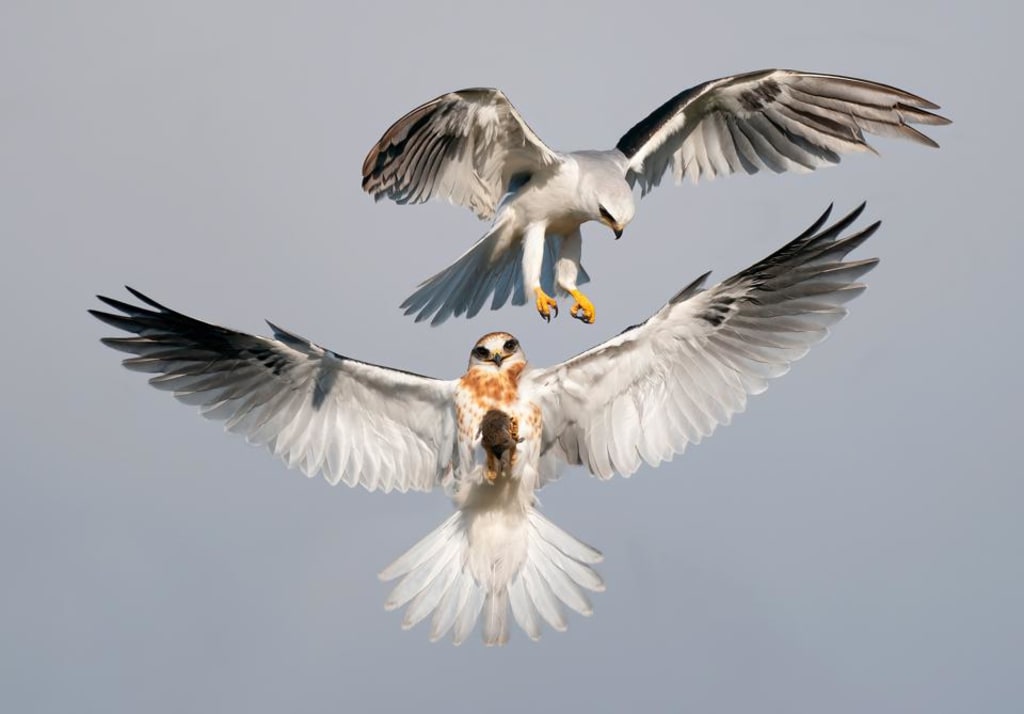
This year’s winners of the annual Audubon Photography Awards are an irresistible spectacle of the wonders of avian life.
The annual competition marking its 13th year and organized by the Audubon Society, a nonprofit dedicated to bird conservation, is open to professional and amateur photographers from the United States and Canada.
The judges awarded eight prizes across five categories from a pool of some 2,500 photographers and videographers who submitted nearly 10,000 entries showing the beauty of birds and the joy of capturing them in their environments.
“From the bold action of a raptor to the subtlest detail in the feather patterns of ptarmigan, take a moment to revel in what you might otherwise miss,” Audubon recommends.
“With their stunning looks and captivating behavior, birds often enthrall us when they cross our path. Many people spend hours or years seeking them out. But just as often, we stumble upon unique moments in a stroke of luck. Sometimes all it takes is simply stopping to appreciate an everyday scene with fresh eyes.”
Threatened by extinction
Audubon’s climate science report, Survival by Degrees, reveals that two-thirds of North American birds are threatened by extinction from climate change, including species featured in the Audubon Photography Awards.
Award winners and honorable mentions will be featured in the Summer 2022 issue of Audubon magazine. The photos also will travel the country as part of an Audubon Photography Awards exhibit in which they will be on display at 28 venues in 19 states between October 2022 and June 2023.
The Grand Prize winner takes a $5,000 prize, while each category winner receives $2,500.Overall Winner
The Overall Winner was White-tailed Kite taken by photographer Jack Zhi in Costa Mesa, California, and showing two white-tailed kites flying with a vole (a mouse-like rodent) as the father teaches his fledglings to hunt. The fledgling flew in and, in a blink, grabbed the rodent as the father let go.
Graceful grassland fliers of North and South America, White-tailed Kites feed mainly on mice, voles, and other small mammals. This bird does almost all its hunting by hovering in one spot, intently scanning the ground below and then rapidly pouncing. This technique requires great dexterity in flight, and adult White-tailed Kites may devote several weeks to training young who have left the nest
.A Western Grebe’s red eyes stare as its two chicks riding on its back each grab at a silver fish in its beak. A male had arrived with a fish and passed it to the mom as one chick got hold of the fish while the second bit the other end. They tugged, back and forth, until the second chick won.
Western Grebes hatch from eggs in nests that float on the water’s surface. Within minutes of emerging, the baby grebes scramble onto the back of their attending parent; the adult grebe soon swims away carrying them, becoming in effect a new living, floating nest.
For up to four weeks, the male and female adults take turns at parental duties, one toting the young while the other hunts for food to bring them.
The larger bird groomed its mate’s head feathers as it clicked, gurgled, cawed and shrieked in what seemed like a a display of sheer affection.
Belonging to the same family as jays and crows, the Common Raven is classified as a songbird — the largest in the world.
It’s also among the smartest of birds. Adults form long-term monogamous pairs, and pairs stay together year-round, seeming to communicate with each other by using a wide variety of calls and nonvocal signals.
About the Creator
Keep reading
More stories from Marinescu Eduard and writers in Earth and other communities.
Green Growth 50: Learning From Companies Boosting Profits While Cutting Emissions
EBay at its very core pioneered the circular economy — of finding new homes for treasures that might otherwise have ended up at the dump. “Avoiding items going into a landfill is very important to our customers,” says Steve Priest, CFO of eBay. “Driving the circular economy is part of everything we do.” But finding new shelves for Beanie Babies is just a small component in eBay’s sustainability efforts, which prioritize slashing greenhouse gas emissions. In eBay’s case, these are mostly tied to electricity used to power vast data centers. Since 2017 eBay has cut its carbon emissions by 29% to 88,000 tons per year. The e-commerce giant became carbon neutral this year and is aiming to achieve a 100% renewable electricity supply for all its offices and data centers by 2025.
By Marinescu Eduard4 years ago in Earth
How Much Do You Need in an ISA for a Passive Income That Beats the State Pension?
For many people in the UK, the State Pension is expected to form the backbone of retirement income. But with rising living costs and growing uncertainty about the future, more savers are asking a crucial question: Can I build a passive income that beats the State Pension — and how much would I need in an ISA to do it?
By Aarif Lashariabout 23 hours ago in Earth
Tiny Lion Cubs Struggle To Keep Up With Mom
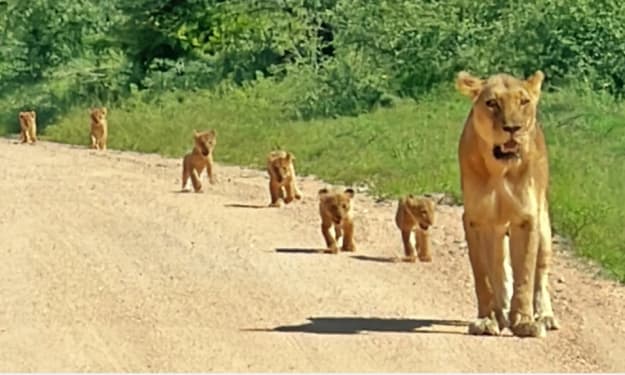
In the heart of the African savannah, life is a constant lesson for young animals. Few scenes are as endearing — or as heartwarming — as tiny lion cubs trying to keep pace with their mother. These little bundles of fur face a world full of challenges, from learning to hunt to avoiding dangers, all while depending on the guidance and protection of their experienced mom. Watching cubs wobble and tumble as they attempt to keep up with their mother reminds us that growing up, even in the wild, is a journey full of struggle, determination, and adorable missteps. The Early Days of Lion Cubs Lion cubs are born blind and helpless, usually in litters of two to six. For the first few weeks, they rely entirely on their mother for warmth, food, and safety. Even after opening their eyes and beginning to explore, the cubs are far from independent. The first months are crucial. Cubs learn social cues, hunting basics, and survival skills simply by watching their mother and the pride. But as anyone who has observed them knows, there’s often a huge gap between observation and action. Tiny cubs often struggle to match their mother’s pace, especially when she moves through long stretches of savannah or leads the family on patrols. A Mother’s Role in the Wild For a lioness, raising cubs is a full-time commitment. She hunts, defends her territory, and teaches her young, all while staying alert to predators such as hyenas, leopards, and even rival lions. The cubs, meanwhile, attempt to mimic her every move — often with clumsy yet charming results. A mother lion’s patience is remarkable; she frequently slows down, nudges them along, or stops to ensure no cub is left behind. These moments, while stressful for the tiny cubs, are vital learning opportunities. Struggling to Keep Up: Why It’s So Hard There are several reasons why tiny lion cubs have trouble keeping pace with their mother: Short Legs, Big Steps: Lion cubs’ legs are tiny and their coordination is limited, making it difficult to cover the same distance as an adult lioness. Curiosity: Cubs are naturally curious. A single butterfly or rustling bush can distract them, leaving mom to pause repeatedly. Energy Levels: Young lions tire quickly. Even with frequent naps, the cubs’ stamina is far lower than their mother’s. Learning Through Play: Play is not just fun; it teaches hunting, balance, and social skills. Running off to pounce on a sibling or chase an insect is all part of their education. Despite these challenges, the cubs’ determination to keep up demonstrates their resilience and growing understanding of the wild world. Lessons in Teamwork and Survival Every cub struggling to keep up is also learning crucial survival skills. The journey across the savannah is more than a test of speed — it’s a lesson in: Coordination: Cubs learn how to move efficiently across different terrains. Patience: They begin to understand the rhythms of adult life and the pace required for survival. Social Skills: Staying with the group teaches cubs how to interact with siblings and the pride, which is essential for their future roles. Observation: By following their mother, cubs study hunting techniques, territorial behavior, and predator awareness. Even the moments when cubs stumble or lag behind are essential for their development. These experiences prepare them for independence, which comes sooner than many might expect. The Cutest Moments in the Wild Anyone who has watched tiny lion cubs knows that their struggles are often irresistibly cute. Video clips from wildlife reserves frequently show cubs toddling along, tumbling over each other, or getting distracted mid-step. Observers often comment that these little stumbles reveal personality, determination, and playfulness, making them one of nature’s most heartwarming spectacles. While their mother is serious and focused, the cubs inject a sense of humor and lightness into life on the savannah. Why This Matters The struggles of lion cubs aren’t just adorable — they’re vital for understanding wildlife behavior. Conservationists and animal behaviorists use these moments to study growth patterns, social structures, and survival strategies in lion populations. These observations also highlight the importance of preserving natural habitats. Cubs must learn in a safe environment to survive; habitat loss, poaching, and climate change make these early struggles even more dangerous. Protecting the African savannah ensures that future generations of lions can experience the same lessons and playful tumbles. The Road to Independence Within a year, these tiny cubs will be more agile, faster, and more confident. By the time they reach two to three years old, males may begin to leave the pride, while females often stay and become caretakers themselves. Every misstep, tumble, and lagging moment is part of the journey toward strength, coordination, and independence. Watching them now gives us a glimpse of the challenges they will overcome, and the survival skills they will carry for life. A Celebration of Motherhood Ultimately, these scenes remind us of the incredible bond between mother and cubs. Her patience, vigilance, and teaching are the foundations of their future. The cubs’ struggles highlight the trials of growing up, while their determination showcases the resilience and beauty of wildlife. For those observing, it’s a powerful lesson in care, guidance, and perseverance, not just in lions but in the natural world as a whole. Final Thoughts Watching tiny lion cubs try to keep up with their mother is both entertaining and enlightening. It’s a story of growth, struggle, and resilience — a reminder that even the fiercest creatures start small, learning step by step. These little lions capture hearts while teaching life lessons: patience, determination, teamwork, and the importance of guidance. As they tumble and waddle across the savannah, they show us that growth is a process, one adorable misstep at a time. For wildlife enthusiasts, animal lovers, and anyone enchanted by nature, these tiny cubs are proof that even in the wild, love, care, and persistence are universal truths.
By Aarif Lashariabout 24 hours ago in Earth



Comments
There are no comments for this story
Be the first to respond and start the conversation.