
Astronomers Find Earth-like Exoplanets Pervasive Across the Universe: Study
- By Kuntal Kundu

Astronomers Find Earth-like Exoplanets Pervasive Across the Universe: Study
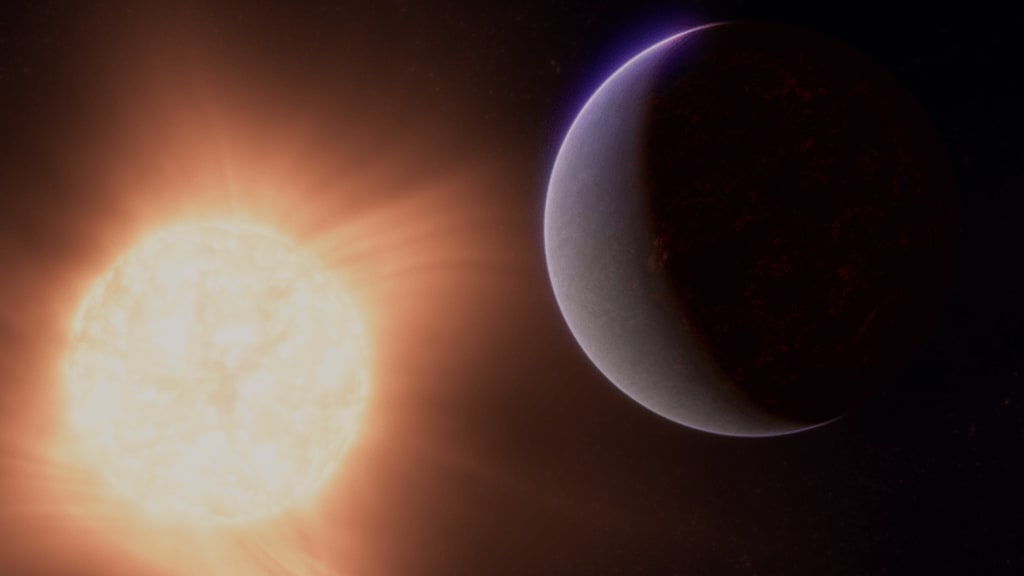
In a revolutionary new research study, astronomers announced that Earth-like planets could be much more widespread throughout the universe than was previously believed. The achievement, made through the design of space telescopes, computer processing, and global cooperation, is that the requirements of life as we know it could be ubiquitous in the universe. The research not only gives new hope to the search for extraterrestrial life but it also increases our understanding of the origin and evolution of planets.
The Breakthrough Discoveries
The research, conducted by an international team of scientists based on observations from NASA's Kepler Space Telescope, the European Space Agency's Gaia observatory, and several ground-based telescopes, searched through thousands of distant stars. They were particularly drawn to sun-like stars — stars roughly the same size, age, and temperature as the Sun — and searched for planets that circle them in the "habitable zone," the region around a star where temperatures may allow liquid water to occur on a planet's surface.
What the scientists found was amazing: Earth-sized planets in the habitable zones of stars similar to the Sun are not rare. In fact, the study estimates the number to be that for each five stars similar to the Sun in the Milky Way galaxy, there would likely be at least one Earth-sized planet in its habitable zone. What this discovery means is that there could be billions of potentially habitable worlds in our own galaxy alone.
How the Study Was Done
The scientists used a technique referred to as the "transit method," wherein starlight is minimally reduced as a planet moves in front of a star. Though Kepler had previously found thousands of exoplanet candidates, the true nature and number of Earth-like planets needed to be explored carefully and adjusted for observational bias.
The researchers combined Kepler's transit information with Gaia's precise star sizes and distances. They were thus able to make better estimates of the planet size and orbit of the stars. They then applied elaborate computer simulations to estimate the number of Earth-like planets that must be there, even in the stars Kepler had not observed directly.
A Universe Full of Possible Life
The implications of this research are vast. The researchers debated for decades about how many Earth-like planets there were. If Earth-like planets are few, then life could be few too. But if they are plentiful, then the chances are better that life has existed elsewhere.
"Earth-like planets are not the exception, but the rule," according to Dr. Elena Martínez, lead author and astrophysicist at the University of Cambridge. "This really boosts the possibility that there are other Earths out there, perhaps even inhabited."
While the study doesn't establish extraterrestrial life, it does present a compelling case that the conditions needed could be common. It does present new targets for later missions to search for biosignatures — signs of life in the presence of atmospheric oxygen, methane, or other chemical imbalances that could indicate biological processes.
Future Missions and the Search for Life This result comes at a propitious moment. A series of new-generation telescopes, including the NASA James Webb Space Telescope (JWST), the European Extremely Large Telescope (ELT), and the soon-to-be-launched Nancy Grace Roman Space Telescope, have the capability of probing the atmospheres of exoplanets to unprecedented sensitivity.
JWST, which was launched late in 2021, has already begun characterizing the atmospheres of some of the exoplanets nearer to Earth. The subsequent missions can then focus on the new Earth-like candidates specifically, analyzing their atmospheres for indications of life or habitability.
Besides, real space missions such as PLATO (Planetary Transits and Oscillations of stars), scheduled to be launched by the European Space Agency in the later part of this decade, are precisely aimed at detecting and observing Earth-like planets orbiting nearby stars.
Challenges Ahead
In spite of all the excitement, scientists point out that there are still many hurdles to cross. Having a planet in the habitable zone does not necessarily mean the planet is habitable. Other factors — atmospheric composition, magnetic fields, geology, and water — come into play and are needed in order to have life.
In addition, it is virtually impossible to diagnose these conditions from light-years away. Even with our best telescopes, to study the atmosphere of a tiny rocky planet around a bright star is to see a firefly next to a lighthouse from thousands of miles away.
There is also the issue of time. Planets can only spend a portion of their lifetimes in the habitable zone, depending on the evolution of their stars. Life may need not only the right conditions but also stability for billions of years, as on Earth.
Philosophical and Cultural Impact
Beyond the scientific implications, the notion that Earth-like planets are the norm has philosophical and cultural significance. For millennia, humans have wondered if we are alone in the universe. These findings suggest that life-sustaining planets could be the norm instead of the exception.
"This find makes us reconsider our place in the universe," said Dr. Raj Patel, co-author of the Max Planck Institute for Astronomy. "We might be one of a number of civilizations spread around the stars, or life might have developed in ways we can't even start to think about."
Such a view stimulates not only scientific curiosity but also inspires art, literature, and a sense of wonder and humility in our place in the universe.
Conclusion The realization that Earth-like planets are abundant in the universe is a milestone in human endeavors to understand our universe. While the search for definitive proof of life continues, the knowledge that there are likely to be billions of potential worlds that can harbor life gives renewed vigor and a sense of urgency to the search. Future missions and telescope surveys will surely be a consequence of this research and bring us closer to a solution to one of humanity's most basic questions: Are we alone? And as we look further into the universe, the answer might someday arrive — on the dim ray of a far-off, life-carrying planet circling a far-off sun.
About the Creator
Kuntal Kundu
Start writing...Passionate about space, sports, science, and humanity. Driven by curiosity, inspired by discovery, and committed to making a positive impact on Earth and beyond.Fueled by a passion for space, sports, science, and humanity.
Keep reading
More stories from Kuntal Kundu and writers in Earth and other communities.
Earth Day: A Celebration of Our Planet and an Impassioned Call to Action
Earth Day: A Celebration of Our Planet and an Impassioned Call to Action Every year, on April 22nd, people from across the globe come together to celebrate Earth Day, a day to raise awareness and ensure support for the conservation of the environment. Having started from a small protest in 1970, Earth Day has grown to be a worldwide movement that has inspired millions of people to labor for the benefit of the planet. With the environmental crisis looming larger, Earth Day is not only a celebration of nature but also a call to action to remind us that it is our job to save our planet.
By Kuntal Kundu 9 months ago in Earth
georgia power outage map
Power outages can be stressful, especially when they happen unexpectedly during severe weather. In Georgia, where storms, heavy rain, and strong winds are common, residents rely on accurate and timely information to stay prepared. One of the most trusted tools during these moments is the Georgia Power outage map, which provides real-time updates about electricity disruptions across the state. As Georgia weather continues to grow more unpredictable, understanding how to use this resource — and how it connects with local news coverage — has become increasingly important for households, businesses, and travelers alike. What Is the Georgia Power Outage Map? The Georgia Power outage map is an online platform that shows active power outages throughout Georgia. It allows users to view affected areas, the number of customers without power, and estimated restoration times. The map updates regularly, making it a reliable source during fast-changing situations such as thunderstorms or widespread weather events. During major storms, residents often check the outage map alongside local Atlanta news broadcasts to confirm whether power interruptions are isolated or part of a larger issue. This combination of real-time data and trusted reporting helps people make informed decisions. The Role of Weather in Atlanta Power Outages Weather in Atlanta can shift rapidly, particularly during spring and summer storm seasons. Thunderstorms, lightning strikes, falling trees, and high winds frequently contribute to power disruptions. Even during winter, ice accumulation and strong gusts can damage power lines and equipment. Meteorologists covering weather Atlanta events often explain how certain conditions increase the risk of outages. When these forecasts are paired with updates from Georgia Power, residents gain a clearer picture of what to expect before, during, and after a storm. Local outlets like WSBTV and Channel 2 News regularly provide storm coverage that includes outage information. Their reporting often highlights which counties or neighborhoods are most affected, offering context that goes beyond the map alone. Why Local News Coverage Matters While the outage map shows where electricity is down, local journalism adds depth and explanation. Atlanta news stations frequently interview GA Power representatives, emergency officials, and meteorologists to explain restoration efforts and safety concerns. For example, WSBTV may report on how many repair crews are deployed or whether road closures are slowing response times. Channel 2 News often shares safety reminders, such as avoiding downed power lines or using generators responsibly. This type of coverage is especially valuable during large-scale outages caused by severe Georgia weather, when thousands of customers may be affected at once. Impact on Travel and Critical Infrastructure Power outages don’t only affect homes. Transportation hubs, hospitals, and businesses must also prepare for potential disruptions. The Atlanta airport, one of the busiest in the world, closely monitors regional power conditions. Although the airport has backup power systems, widespread outages in surrounding areas can still cause delays or operational challenges. That’s why outage updates are often mentioned during breaking Atlanta news, especially when storms impact travel schedules. Businesses across metro Atlanta also rely on timely updates to decide whether to close early, switch to backup systems, or allow employees to work remotely. How Georgia Power Responds to Outages When outages occur, Georgia Power dispatches crews to assess damage and begin repairs as quickly as possible. Restoration times can vary depending on the severity of the damage and the number of customers affected. During major storms, GA Power often prioritizes critical facilities such as hospitals and emergency services. Local news outlets frequently explain this process so customers understand why some areas regain power sooner than others. By checking the outage map and following updates from Atlanta news sources, residents can track progress without relying on rumors or unverified social media posts. Staying Prepared During Georgia Weather Events Preparation is key when it comes to power outages. Experts recommend keeping emergency supplies on hand, including flashlights, batteries, and portable phone chargers. Staying informed through trusted sources like WSBTV, Channel 2 News, and official Georgia Power updates can reduce uncertainty during stressful situations. Understanding both weather in Atlanta forecasts and outage data allows residents to plan ahead — whether that means charging devices early, adjusting travel plans, or checking on vulnerable neighbors. Final Thoughts The Georgia Power outage map has become an essential tool for navigating power disruptions across the state. When combined with accurate reporting from Atlanta news outlets and up-to-date Georgia weather forecasts, it provides a clear and reliable picture during uncertain times. In a region where storms can develop quickly, staying informed isn’t just convenient — it’s necessary. By using the outage map and following trusted local coverage, Georgians can remain prepared, connected, and safer when the power goes out.
By Saboor Brohi 7 days ago in Earth
Warships and Fighter Jets: What Is the ‘Massive’ US Armada on Its Way to Iran?
A Show of Force in a Volatile Region The United States has begun deploying what officials and analysts are describing as a “massive” military armada toward the Middle East, amid rising tensions with Iran. The movement includes aircraft carriers, guided-missile destroyers, submarines, and advanced fighter jets, signaling one of the most significant American military postures in the region in recent years.
By Aarif Lashari3 days ago in Earth



Comments
There are no comments for this story
Be the first to respond and start the conversation.