
Asteroid Hitting Earth: NASA’s Role in Planetary Defense and What You Need to Know
The idea of an asteroid hitting Earth has long been a staple of science fiction, from blockbuster movies like Armageddon to novels depicting apocalyptic scenarios. But what happens when fiction meets reality? Could an asteroid actually strike Earth, and what is NASA doing to prevent such a catastrophe? This article delves into the science of asteroids, the potential risks they pose, and NASA’s efforts to protect our planet from these celestial threats.

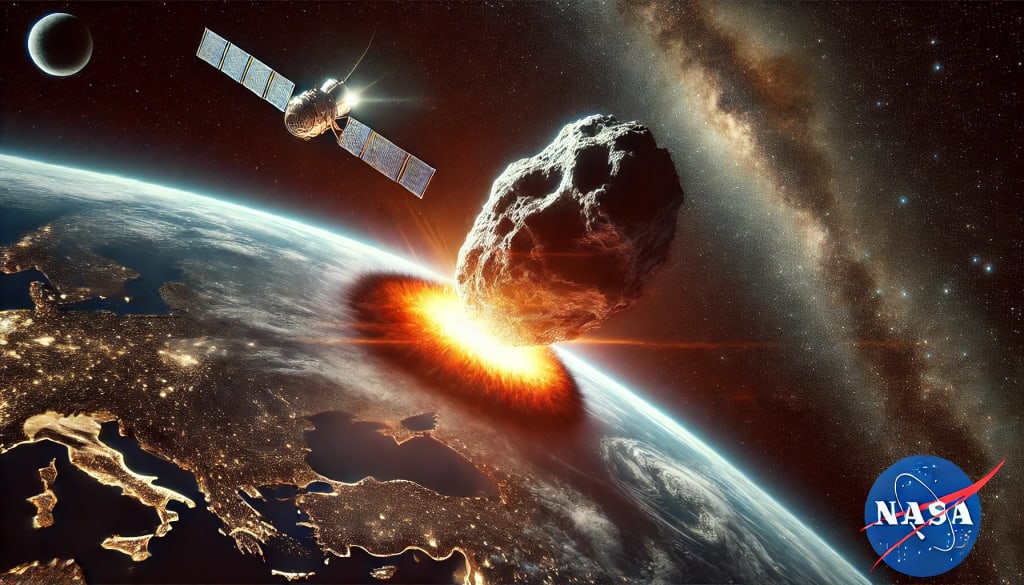
What Are Asteroids and Why Are They a Threat?
Asteroids are rocky remnants left over from the early formation of the solar system about 4.6 billion years ago. Most of them orbit the Sun in the asteroid belt between Mars and Jupiter, but some have orbits that bring them closer to Earth. These are known as Near-Earth Objects (NEOs), and they are the primary focus of NASA’s planetary defense efforts.
While the majority of asteroids are small and harmless, larger ones—those measuring more than 140 meters (460 feet) in diameter—could cause significant damage if they were to collide with Earth. The impact of such an asteroid could release energy equivalent to hundreds of nuclear bombs, leading to massive destruction, tsunamis, and even global climate change.
Historical Impacts: A Reminder of the Threat
Earth has been hit by asteroids before, and the consequences have been devastating. The most famous example is the Chicxulub impactor, a massive asteroid that struck Earth around 66 million years ago. This event is widely believed to have caused the extinction of the dinosaurs, along with 75% of all species on the planet.
More recently, in 2013, a smaller asteroid exploded over Chelyabinsk, Russia, releasing a shockwave that injured over 1,500 people and damaged thousands of buildings. This event served as a wake-up call, highlighting the need for better detection and preparedness.
NASA’s Planetary Defense Program: How NASA is Protecting Earth
NASA has taken the threat of asteroid impacts seriously for decades. Through its Planetary Defense Coordination Office (PDCO), established in 2016, the agency works to detect, track, and characterize potentially hazardous asteroids and comets. Here’s how NASA is tackling the challenge:
1. Detection and Tracking
The first step in planetary defense is knowing what’s out there. NASA uses a network of ground-based telescopes and space-based observatories to identify and track NEOs. One of the most important tools in this effort is the Pan-STARRS telescope in Hawaii, which scans the sky for moving objects.
In addition, NASA’s NEOWISE mission, a space telescope, has been instrumental in discovering and characterizing thousands of NEOs. By mapping the orbits of these objects, scientists can predict their future paths and determine if they pose a threat to Earth.
2. The Sentry Impact Monitoring System
Once an asteroid is detected, NASA’s Sentry system evaluates its potential to impact Earth. Sentry uses advanced algorithms to calculate the probability of a collision over the next 100 years. If an asteroid is found to have a non-zero chance of hitting Earth, it is added to the Sentry Risk Table, which is continuously updated as new data becomes available.
3. The DART Mission: Testing Asteroid Deflection
In September 2022, NASA made history with the Double Asteroid Redirection Test (DART) mission. DART was the first-ever attempt to change the trajectory of an asteroid by crashing a spacecraft into it. The target was Dimorphos, a small moonlet orbiting the asteroid Didymos.
The mission was a resounding success, demonstrating that kinetic impactors could be used to deflect an asteroid away from Earth. This groundbreaking experiment marked a major milestone in planetary defense and provided valuable data for future missions.
4. International Collaboration
Asteroid impacts are a global threat, and addressing them requires international cooperation. NASA works closely with organizations like the European Space Agency (ESA) and the United Nations Office for Outer Space Affairs (UNOOSA) to share data and coordinate efforts. For example, the ESA’s Hera mission, scheduled to launch in 2024, will study the aftermath of the DART impact and provide further insights into asteroid deflection techniques.
What Would Happen if an Asteroid Hit Earth?
The consequences of an asteroid impact depend on its size, speed, and location of impact. Here’s a breakdown of potential scenarios:
Small Asteroids (up to 25 meters): These typically burn up in the atmosphere, causing little to no damage. The Chelyabinsk meteor was an example of this category.
Medium Asteroids (25 to 1,000 meters): These could cause significant regional damage. For instance, an asteroid 500 meters in diameter could devastate an area the size of a small country.
Large Asteroids (over 1,000 meters): An impact from an asteroid of this size would have global consequences, potentially triggering tsunamis, wildfires, and a “nuclear winter” caused by dust blocking sunlight.
What Can We Do to Prepare?
While NASA and other space agencies are working tirelessly to protect Earth, there are steps individuals and governments can take to prepare for a potential asteroid impact:
Public Awareness: Educating the public about the risks and what to do in the event of an impact is crucial. This includes understanding evacuation procedures and emergency response plans.
Investment in Technology: Continued funding for asteroid detection and deflection technologies is essential. Missions like DART show that we have the capability to defend our planet, but more research and development are needed.
International Cooperation: Governments around the world must work together to share resources and expertise. Asteroid impacts are a global issue that requires a united response.
The Future of Planetary Defense
NASA’s efforts in planetary defense are ongoing, and the agency has ambitious plans for the future. One of the most exciting projects on the horizon is the NEO Surveyor, a space telescope set to launch in 2026. NEO Surveyor will be specifically designed to detect and track potentially hazardous asteroids, significantly enhancing our ability to identify threats early.
In addition, NASA is exploring other asteroid deflection techniques, such as gravity tractors (using a spacecraft’s gravity to alter an asteroid’s orbit) and nuclear explosive devices (as a last resort for large asteroids).
Conclusion: A Call to Vigilance
The threat of an asteroid hitting Earth is real, but thanks to NASA’s efforts, we are better prepared than ever to detect and mitigate this danger. While the chances of a catastrophic impact in our lifetime are low, the potential consequences make planetary defense a critical priority.
As we continue to explore the cosmos and learn more about the objects that share our solar system, we must remain vigilant. By investing in science, technology, and international collaboration, we can ensure that Earth remains safe from the threat of asteroid impacts for generations to come.
In the words of NASA’s Planetary Defense Officer, Lindley Johnson, “The dinosaurs didn’t have a space program, but we do.” Let’s make sure we use it wisely.
About the Creator
denizan Lawyer
A skilled attorney with a passion for clear and effective communication. I combine legal expertise with creative writing to deliver informative and engaging content.
Keep reading
More stories from denizan Lawyer and writers in Earth and other communities.
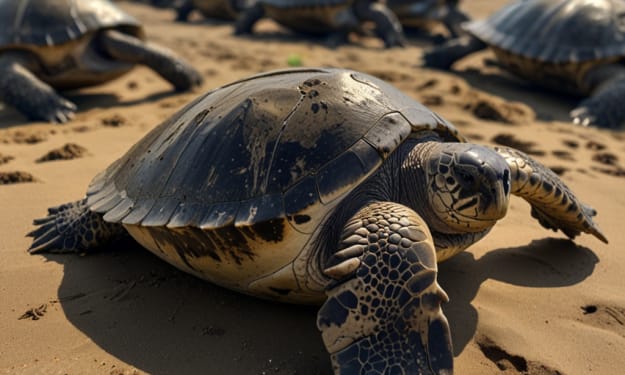
Record-Breaking Arribada: Over 700,000 Olive Ridley Turtles Nest at Odisha’s Rushikulya Beach
In a stunning natural phenomenon, more than 700,000 Olive Ridley turtles swarmed on Rushikulya beach in India's eastern Odisha state on Friday, February 21, 2025. This record-breaking gathering is the largest number of these critically endangered sea turtles to show up for their annual mass nesting, or Arribada. The phenomenon, which is only found in the Olive Ridley species, has caught the world's attention, bringing into focus the need for conservation efforts to ensure the protection of these incredible creatures.
By denizan Lawyer11 months ago in Earth
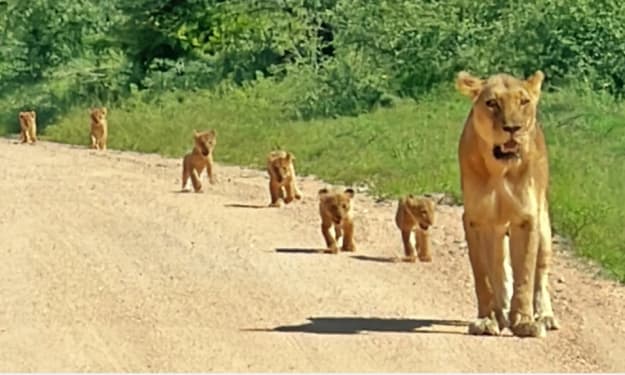
Tiny Lion Cubs Struggle To Keep Up With Mom
In the heart of the African savannah, life is a constant lesson for young animals. Few scenes are as endearing — or as heartwarming — as tiny lion cubs trying to keep pace with their mother. These little bundles of fur face a world full of challenges, from learning to hunt to avoiding dangers, all while depending on the guidance and protection of their experienced mom. Watching cubs wobble and tumble as they attempt to keep up with their mother reminds us that growing up, even in the wild, is a journey full of struggle, determination, and adorable missteps. The Early Days of Lion Cubs Lion cubs are born blind and helpless, usually in litters of two to six. For the first few weeks, they rely entirely on their mother for warmth, food, and safety. Even after opening their eyes and beginning to explore, the cubs are far from independent. The first months are crucial. Cubs learn social cues, hunting basics, and survival skills simply by watching their mother and the pride. But as anyone who has observed them knows, there’s often a huge gap between observation and action. Tiny cubs often struggle to match their mother’s pace, especially when she moves through long stretches of savannah or leads the family on patrols. A Mother’s Role in the Wild For a lioness, raising cubs is a full-time commitment. She hunts, defends her territory, and teaches her young, all while staying alert to predators such as hyenas, leopards, and even rival lions. The cubs, meanwhile, attempt to mimic her every move — often with clumsy yet charming results. A mother lion’s patience is remarkable; she frequently slows down, nudges them along, or stops to ensure no cub is left behind. These moments, while stressful for the tiny cubs, are vital learning opportunities. Struggling to Keep Up: Why It’s So Hard There are several reasons why tiny lion cubs have trouble keeping pace with their mother: Short Legs, Big Steps: Lion cubs’ legs are tiny and their coordination is limited, making it difficult to cover the same distance as an adult lioness. Curiosity: Cubs are naturally curious. A single butterfly or rustling bush can distract them, leaving mom to pause repeatedly. Energy Levels: Young lions tire quickly. Even with frequent naps, the cubs’ stamina is far lower than their mother’s. Learning Through Play: Play is not just fun; it teaches hunting, balance, and social skills. Running off to pounce on a sibling or chase an insect is all part of their education. Despite these challenges, the cubs’ determination to keep up demonstrates their resilience and growing understanding of the wild world. Lessons in Teamwork and Survival Every cub struggling to keep up is also learning crucial survival skills. The journey across the savannah is more than a test of speed — it’s a lesson in: Coordination: Cubs learn how to move efficiently across different terrains. Patience: They begin to understand the rhythms of adult life and the pace required for survival. Social Skills: Staying with the group teaches cubs how to interact with siblings and the pride, which is essential for their future roles. Observation: By following their mother, cubs study hunting techniques, territorial behavior, and predator awareness. Even the moments when cubs stumble or lag behind are essential for their development. These experiences prepare them for independence, which comes sooner than many might expect. The Cutest Moments in the Wild Anyone who has watched tiny lion cubs knows that their struggles are often irresistibly cute. Video clips from wildlife reserves frequently show cubs toddling along, tumbling over each other, or getting distracted mid-step. Observers often comment that these little stumbles reveal personality, determination, and playfulness, making them one of nature’s most heartwarming spectacles. While their mother is serious and focused, the cubs inject a sense of humor and lightness into life on the savannah. Why This Matters The struggles of lion cubs aren’t just adorable — they’re vital for understanding wildlife behavior. Conservationists and animal behaviorists use these moments to study growth patterns, social structures, and survival strategies in lion populations. These observations also highlight the importance of preserving natural habitats. Cubs must learn in a safe environment to survive; habitat loss, poaching, and climate change make these early struggles even more dangerous. Protecting the African savannah ensures that future generations of lions can experience the same lessons and playful tumbles. The Road to Independence Within a year, these tiny cubs will be more agile, faster, and more confident. By the time they reach two to three years old, males may begin to leave the pride, while females often stay and become caretakers themselves. Every misstep, tumble, and lagging moment is part of the journey toward strength, coordination, and independence. Watching them now gives us a glimpse of the challenges they will overcome, and the survival skills they will carry for life. A Celebration of Motherhood Ultimately, these scenes remind us of the incredible bond between mother and cubs. Her patience, vigilance, and teaching are the foundations of their future. The cubs’ struggles highlight the trials of growing up, while their determination showcases the resilience and beauty of wildlife. For those observing, it’s a powerful lesson in care, guidance, and perseverance, not just in lions but in the natural world as a whole. Final Thoughts Watching tiny lion cubs try to keep up with their mother is both entertaining and enlightening. It’s a story of growth, struggle, and resilience — a reminder that even the fiercest creatures start small, learning step by step. These little lions capture hearts while teaching life lessons: patience, determination, teamwork, and the importance of guidance. As they tumble and waddle across the savannah, they show us that growth is a process, one adorable misstep at a time. For wildlife enthusiasts, animal lovers, and anyone enchanted by nature, these tiny cubs are proof that even in the wild, love, care, and persistence are universal truths.
By Aarif Lashariabout 3 hours ago in Earth
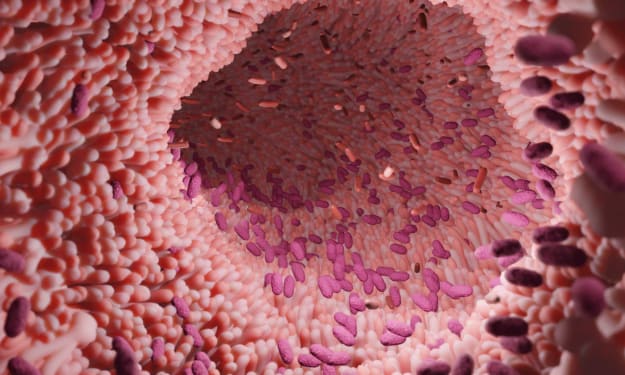
Microbiota, microbiome or microflora: how to speak correctly and why it is for health.
You've probably heard the phrase, "We are what we eat." But modern science says more precisely: we are also those who live in us. Until 2016, it was believed that there are many times more bacteria in our body than our own cells. The latest calculations by mathematicians show that we divide the body with our microorganisms by about 50/50: about 30 trillion of our cells versus 38 trillion bacterial ones.
By Yaroslav Gorohov4 days ago in Earth

Comments (1)
Hello, just wanna let you know that if we use AI, then we have to choose the AI-Generated tag before publishing 😊